For decades, Animal Aid alongside many others, has called for the end of the Grand National due to its particularly high incidence of injury and death. The course and the industry, however, have reluctantly made course adjustments that have made little to no impact on the risk to life. Evidently, they don’t want to rid the race of its selling point – the danger.
The 2026 Aintree Grand National Festival is over, and once again, lives have been lost. Gold Dancer became the course’s 76th victim since 2007 on Thursday, just days from his 7th birthday. He looked tired approaching the final fence and was made to jump it anyway. The fence took his back legs from under him, and he barely recovered them for the landing, leading to a broken back. He got back to his feet and Paul Townend, the abuser on his back, whipped him. He was whipped to cross the finishing line first, winning the prize money, but paying with his life. Just moments after the race finished, he was killed on the track.
The following day the second victim of the year suffered a sickening broken leg just two jumps from the finish line in the second race of the day. Spectators at the course, and those at home, could see Get on George’s back leg swinging from his body as he tried to continue running. He had just turned 6 years old. Horses can live well into their thirties when not forced to race, yet most of the horses we see die in racing are under 10. These are young lives being stolen in the name of entertainment.
The moment of Gold Dancer's fatal injury at the last fence
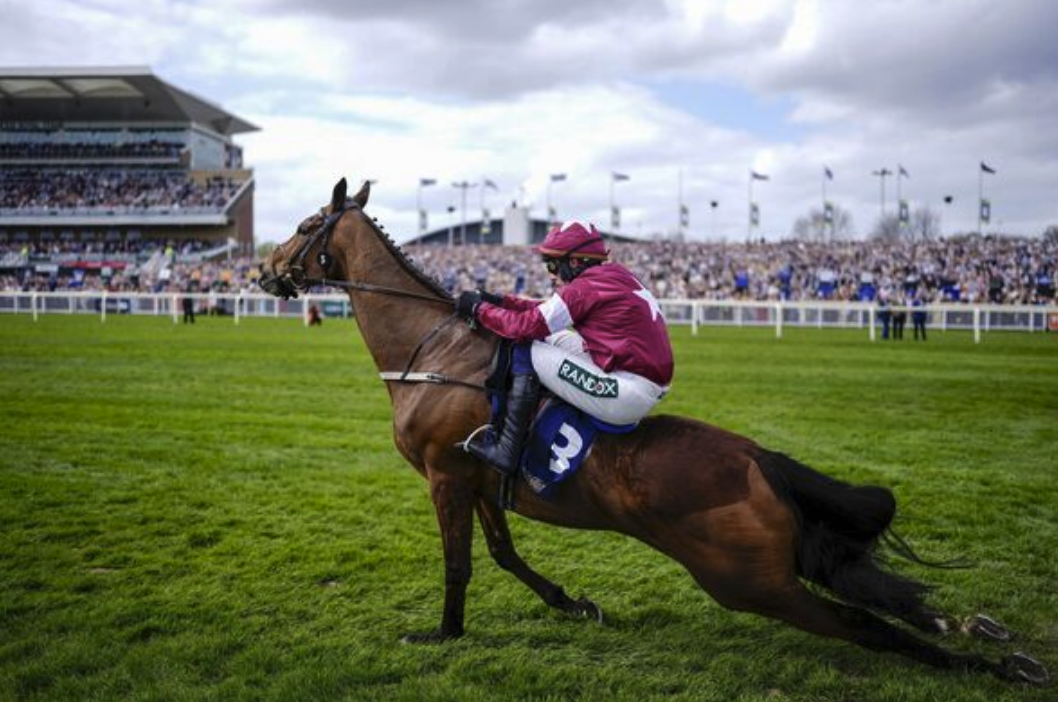
Credit: Daily Express
Both incidents prove one thing: that horses try to continue running, even when in agonising pain. This is not because they’re enjoying the race, they continue to run because that’s what herd animals do. When a herd is running at top speed it usually means they are evading a predator, and failing to keep up with the herd is a surefire way of being picked off and killed by that predator. Add to that the years of conditioning horses have been subjected to, often with a whip, and of course they continue to run, despite injuries. Every horse you see in a race is running not for enjoyment, but for a primal urge to survive. Racing manipulates their nature, capitalises on their fear, and kills them anyway.
Get on George suffered a broken leg on the final day of racing
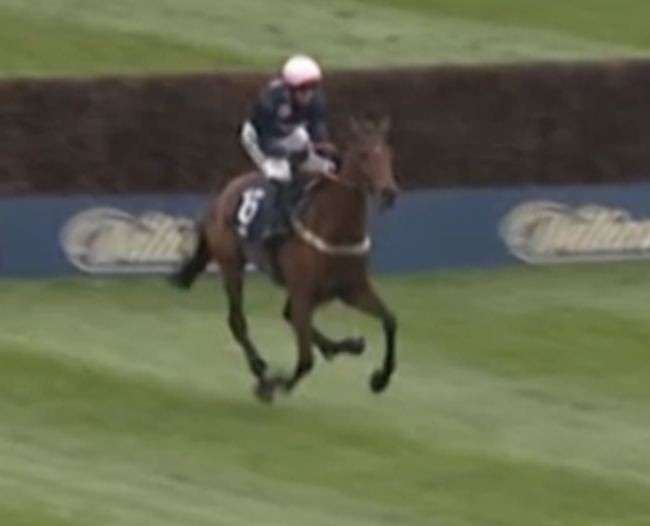
Credit: X
Every year we get asked if racing could be made safer, and if ‘welfare’ improvements could solve the problem. The simple answer is no. Where an animal is being used for human gain, there will always be a problem. There will always be people who will break an animal’s body before jeopardising their own ‘earnings’. Alongside the deaths are also the close calls, such as in the Grand National race itself in which Top of the Bill fell having been forced over a fence when too tired to clear it. The jockey, Tobey McCain-Mitchell has been suspended for 10 days for not pulling the horse up. But what does that matter to him now? He’s already competed in the biggest race of the year, and a horse has almost died for his ambition. This is precisely why society should not be supporting these so-called ‘sports’. The less simple answer is that those questions are irrelevant because the industry does not want to make racing safer: the excitement is in the danger.
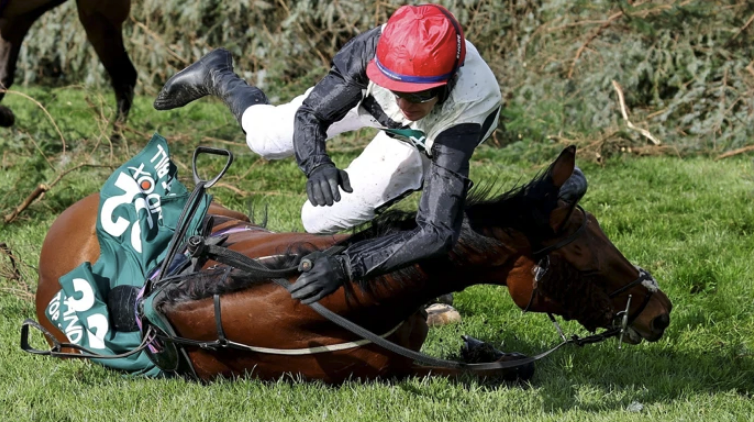
Credit: Daily Mail
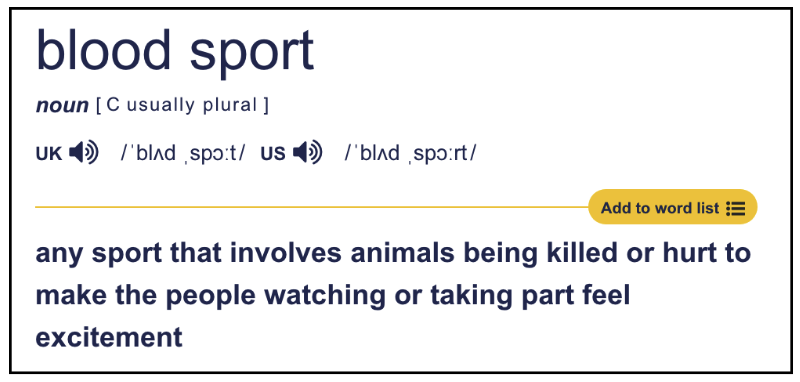
In an interview in the run-up to this year’s festival, Sulekha Varma, Aintree’s clerk of the course, told The i Paper, “we still want it to be exciting”. The course and the industry is open about how reluctant they are to protect horses because they want to maintain the danger, it’s part of what they’re selling. It’s up to us, a progressive, modern society, simply to decide if we’re buying. We live in an era of endless entertainment options, most of which don’t use animals. But if we are buying into the racing of horses, by placing bets, watching coverage, or attending the races, then we are engaging in a sport in which the excitement is, by the admission of its organisers, derived from the likelihood of animals being killed or hurt – the very definition of a blood sport.
Britain has a very proud history of putting a stop to cruel practices, regardless of the money tied up in them. We abolished the slave trade, banned industry from using child labour, and eradicated cockfighting, bear baiting, and wild animal circuses. When we did all those things, we became a better society for it. Ending the racing of horses for sport is the necessary next step in this country’s ethical evolution, because it is, like so many other practices that we have banned, a blood sport.
Put the racing industry out of its misery
The easiest way to protect horses is to boycott an industry who consistently puts them in danger. Please pledge to never attend or bet on horse racing.