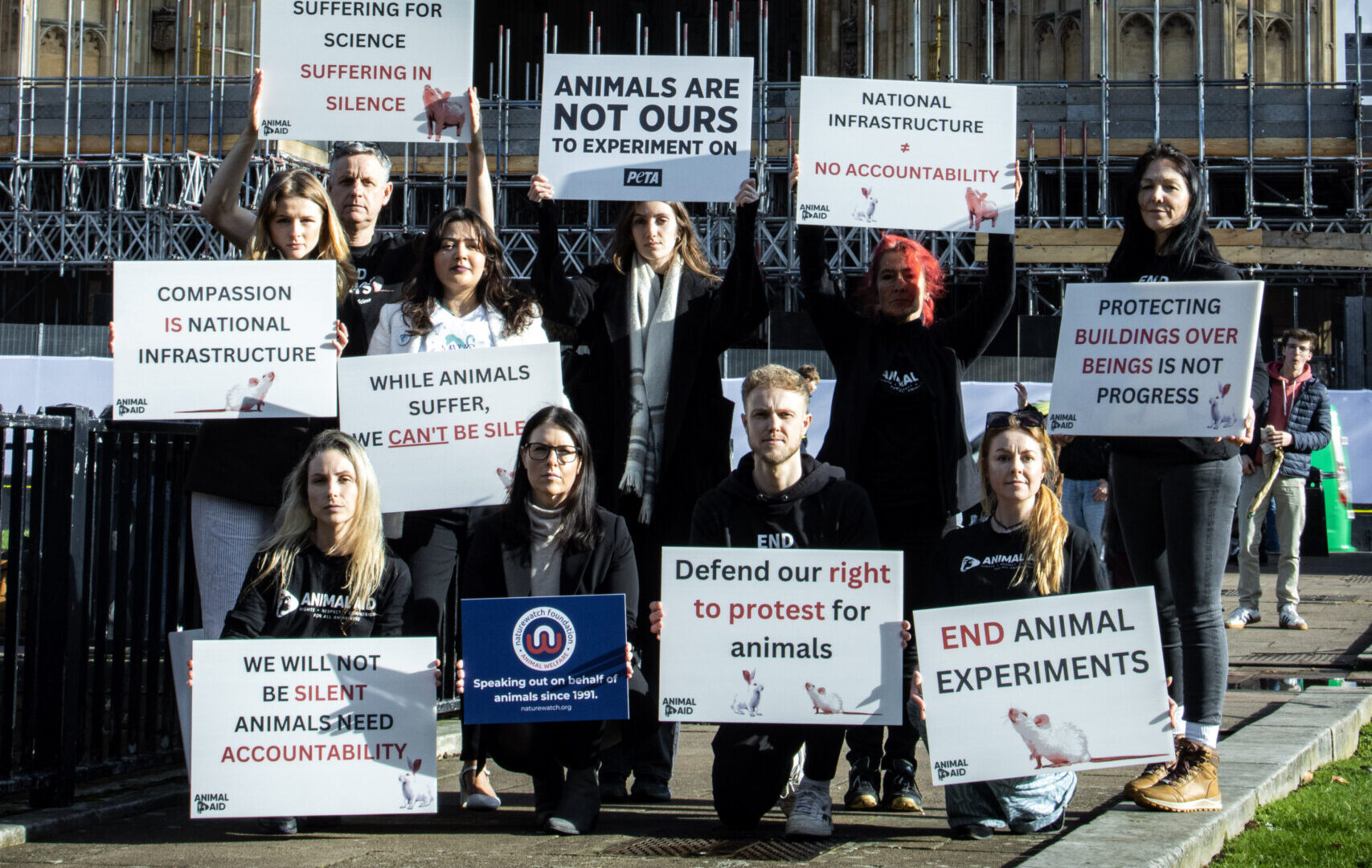
On 12 February 2026, The Public Order Act 2023 (Interference With Use or Operation of Key National Infrastructure) Regulations 2026 came into force. These regulations amend what constitutes “key national infrastructure” under the controversial Public Order Act 2023 to include “life sciences infrastructure”.
This change means that those deemed to be interfering, or intending to interfere, with key national infrastructure, including through protest activity, could now be convicted of a criminal offence.
Animal Aid is challenging the regulations in court on the basis that this amendment is a stark signal of the growing pressure on civil liberties. The wording is so broad that even the most peaceful, non‑disruptive advocacy could now be treated with the full severity of the law.
This law change also arrives shortly after the Government’s own Replacing Animals in Science strategy calling into question whether that objective will be realised. After almost fifty years of peaceful advocacy, we know this work is vital for ensuring the Government and institutions are held to account and meaningful change is delivered.
Animal Aid considers the amendment to be unlawful because it exceeds the limited power in section 7(7) of the Public Order Act 2023, which only allows the Secretary of State to add a kind of key national infrastructure to the existing list.
We argue that the new category of “life sciences infrastructure” does not fall within the ordinary or statutory meaning of infrastructure, nor within the existing statutory context, which is confined to nationally significant systems such as transport, energy and utilities. The new definition captures a wide range of universities, laboratories and licensed animal research facilities that are not of critical national importance and therefore goes beyond what Parliament authorised.
There are also serious concerns that the consultation was not conducted fairly. Informal engagement took place only with policing bodies and stakeholders from the life sciences sector whose interests the amendment was designed to protect. However, no consultation or engagement was carried out with animal protection groups or organisations representing the right to protest.
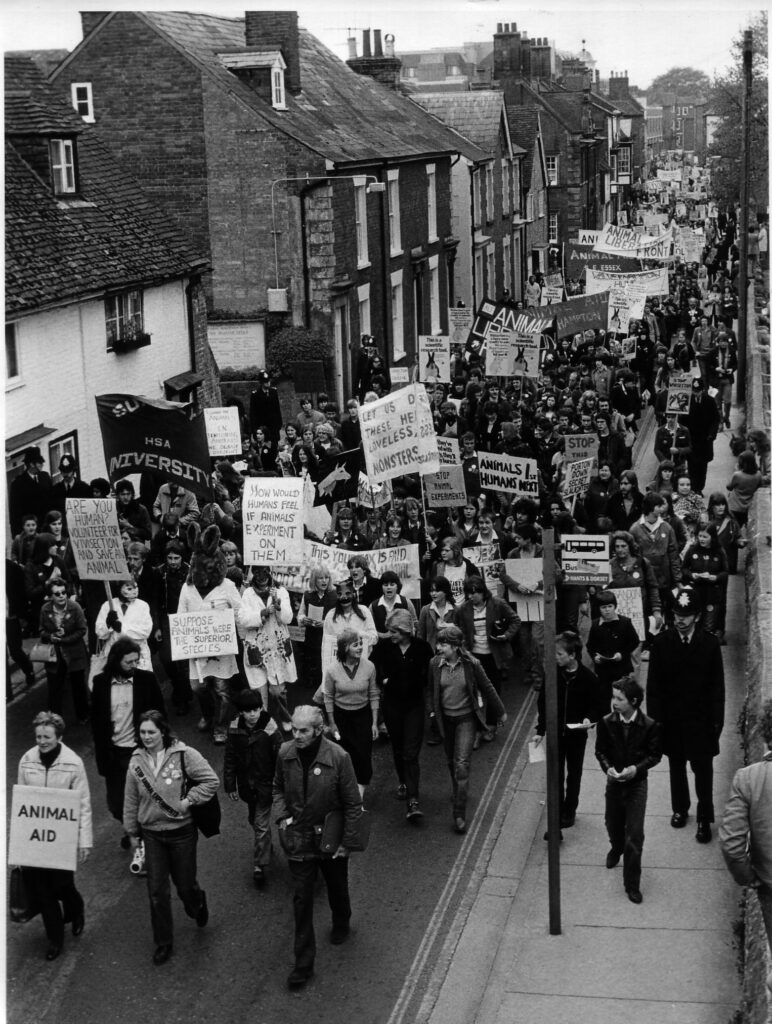
Animal Aid has been protesting against experiments on animals since 1980
Advocates for Animals is acting as solicitor and has instructed Alex Shattock and Rossen Roussanov of Landmark Chambers.
Edie Bowles, Solicitor at Advocates for Animals, representing Animal Aid, said:
“My client is deeply concerned that these new regulations go beyond what Parliament authorised and risk criminalising peaceful protest without proper legal basis. The government has sought to expand serious public order offences through a broad amendment, following a consultation process that excluded the very groups most affected. Our client’s position is simple: measures that restrict fundamental rights must be lawful, proportionate, and developed through a fair and transparent process.”