Conducted during the 2026 breeding season, the investigations uncovered barren breeding cages, injuries and feather loss, bird mortality, and concerns relating to waste and carcass disposal. The findings raise important questions about animal suffering on factory farms breeding birds for shooting.
The investigations took place at Bettws Hall, Brick Kiln Game Farm and Hilltop Game Farm, and form part of Animal Aid’s ongoing work to expose conditions within the shooting industry.
A pattern across the industry
Despite differences between the sites, several recurring themes emerged.
Breeding pheasants and partridges were confined in barren cages offering little opportunity to express natural behaviours. Investigators also documented the use of behaviour control devices, including masks, bits and saddles, fitted to birds to reduce the aggression and feather pecking that comes from barren, intensive conditions
Instances of feather loss, injuries and bird mortality were recorded, while the scale of the farms highlight how these wonderful birds are bred in large numbers to supply shoots across the UK.
Bettws Hall
Animal Aid investigators visited Bettws Hall on three occasions between February and May 2026.
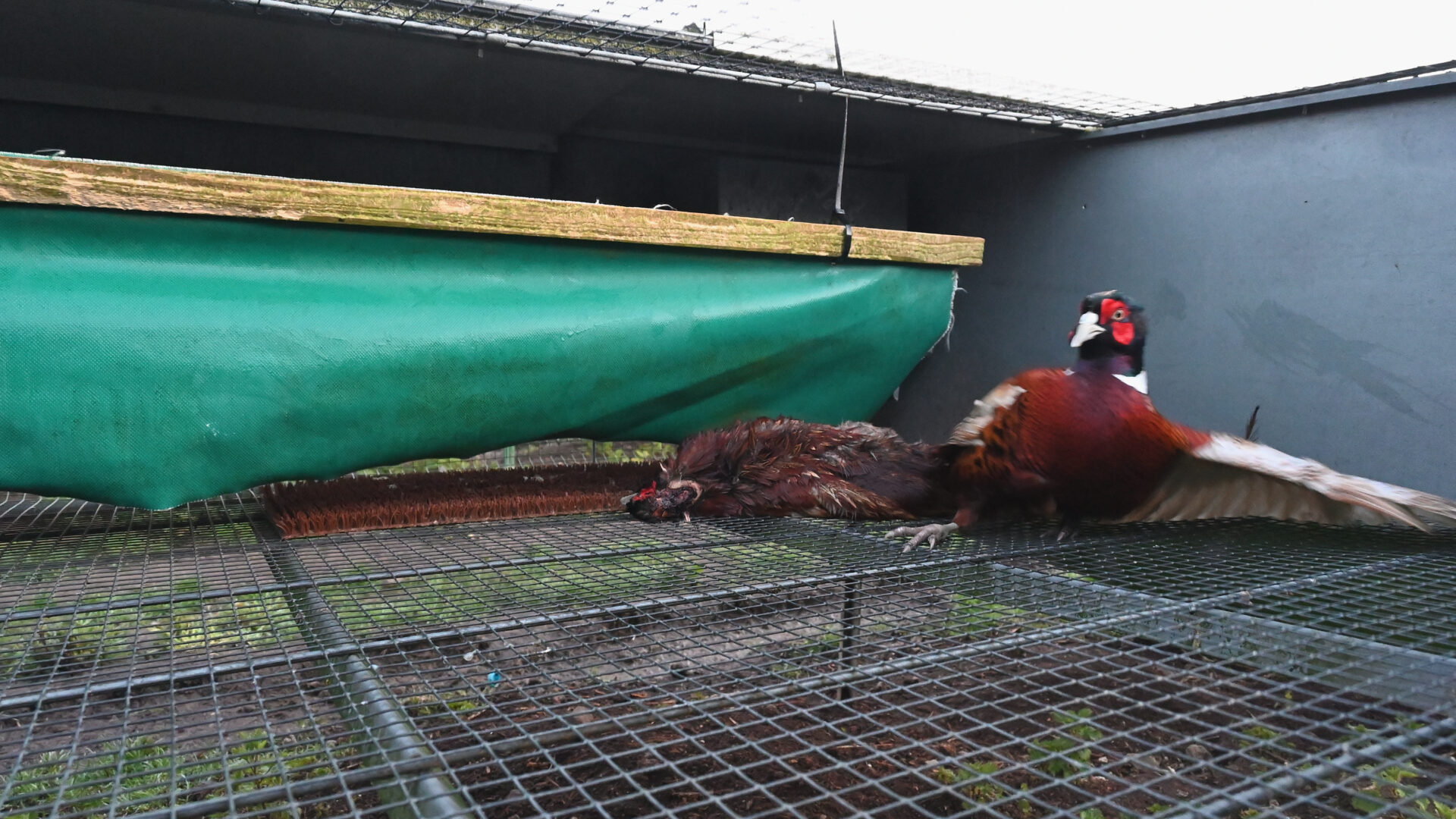
During a March visit, investigators sampled a full row of 50 raised laying unit cages. Four dead pheasants, in various stages of decay and cannibalisation, were photographed within the cages.
The cages contained wooden perches, privacy screens and scratch pad areas, but much of this equipment appeared poorly maintained. Screens were damaged or falling, while perches were heavily soiled.
When investigators returned in May, all cages at the main site were empty and the facility appeared to have ceased operating. The reasons for the absence of birds could not be determined from observations made during the visit.
Brick Kiln Game Farm
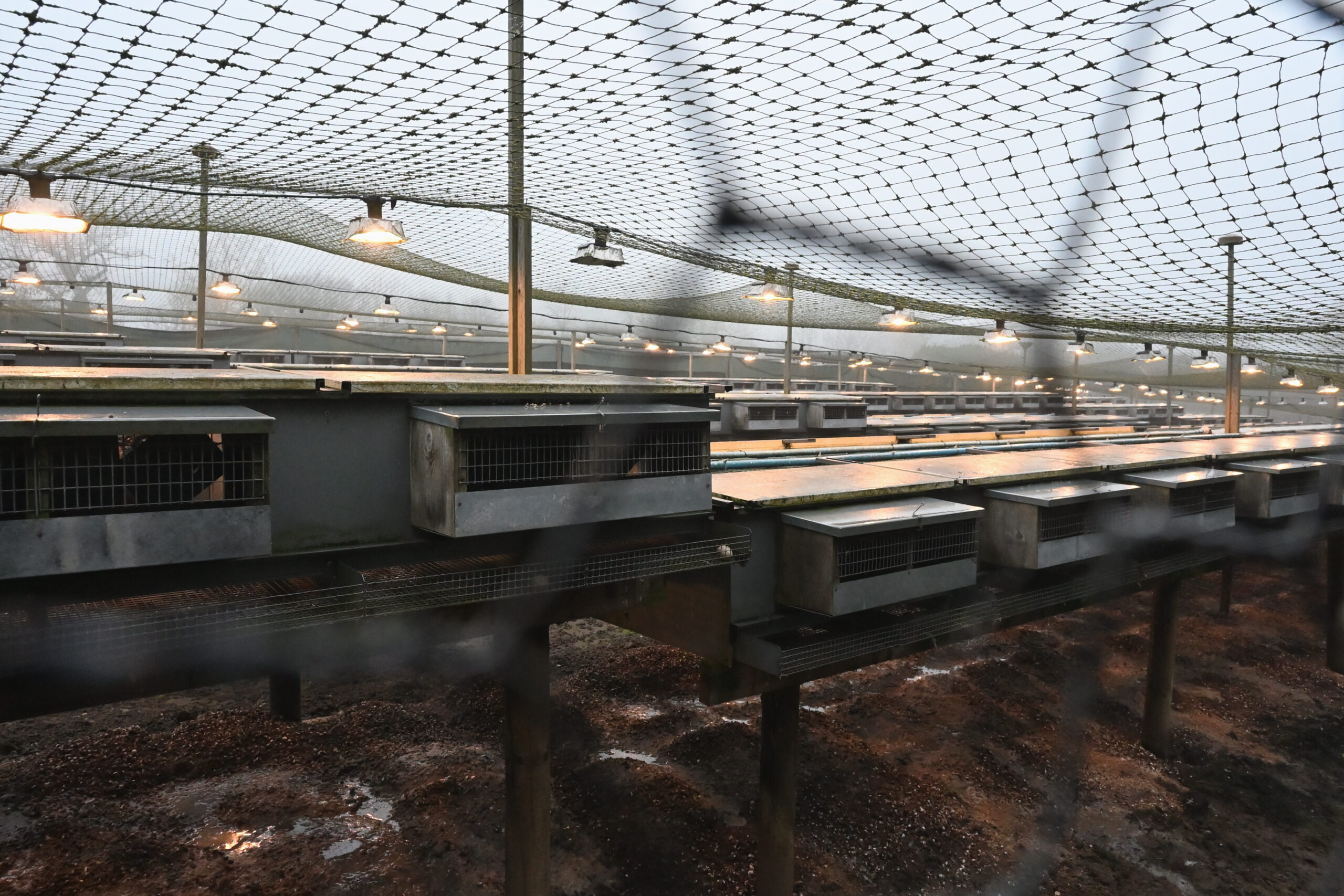
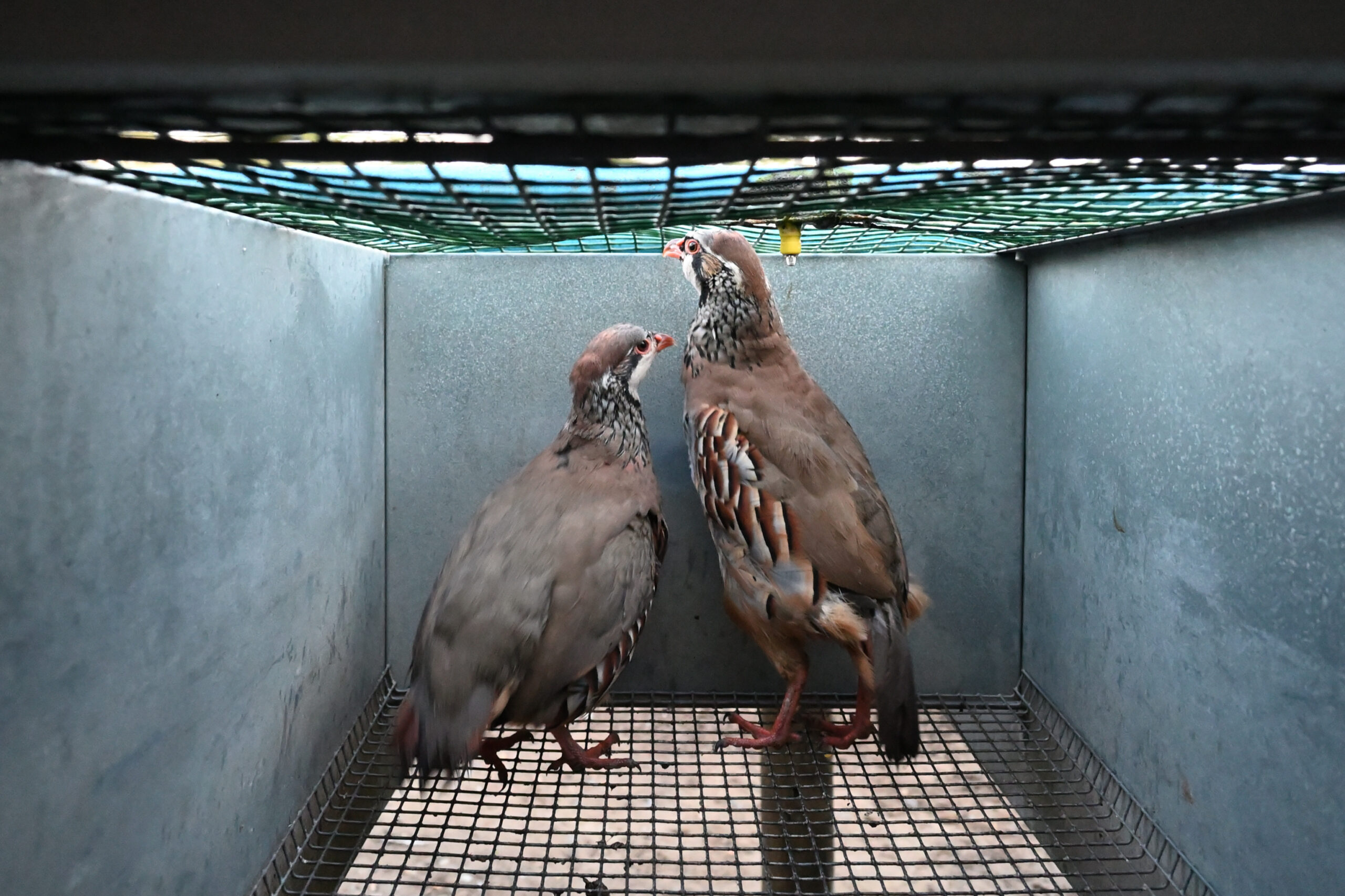
At Brick Kiln Game Farm, investigators observed 552 raised cages housing partridges, amounting to approximately 1,100 breeding birds.
Pheasants at the site were kept in traditional ground pens. All female pheasants observed were fitted with saddles and masks, with the masks restricting the birds’ forward vision. Some of the partridges were fitted with bits attached to their beaks.
Hilltop Game Farm
Hilltop Game Farm was operating on a particularly large scale, with around 800 pheasant cages on site. At full capacity, these cages could house as many as 8,000 breeding pheasants.
The cages were once again barren, containing little or no enrichment. Around half of the female pheasants observed were fitted with masks, while many had noticeable bare patches on their backs due to mating. Very few male pheasants were masked.
During an earlier visit, investigators also observed male pheasants housed in separate ground pens, all of whom were fitted with masks.
Waste and carcass disposal concerns
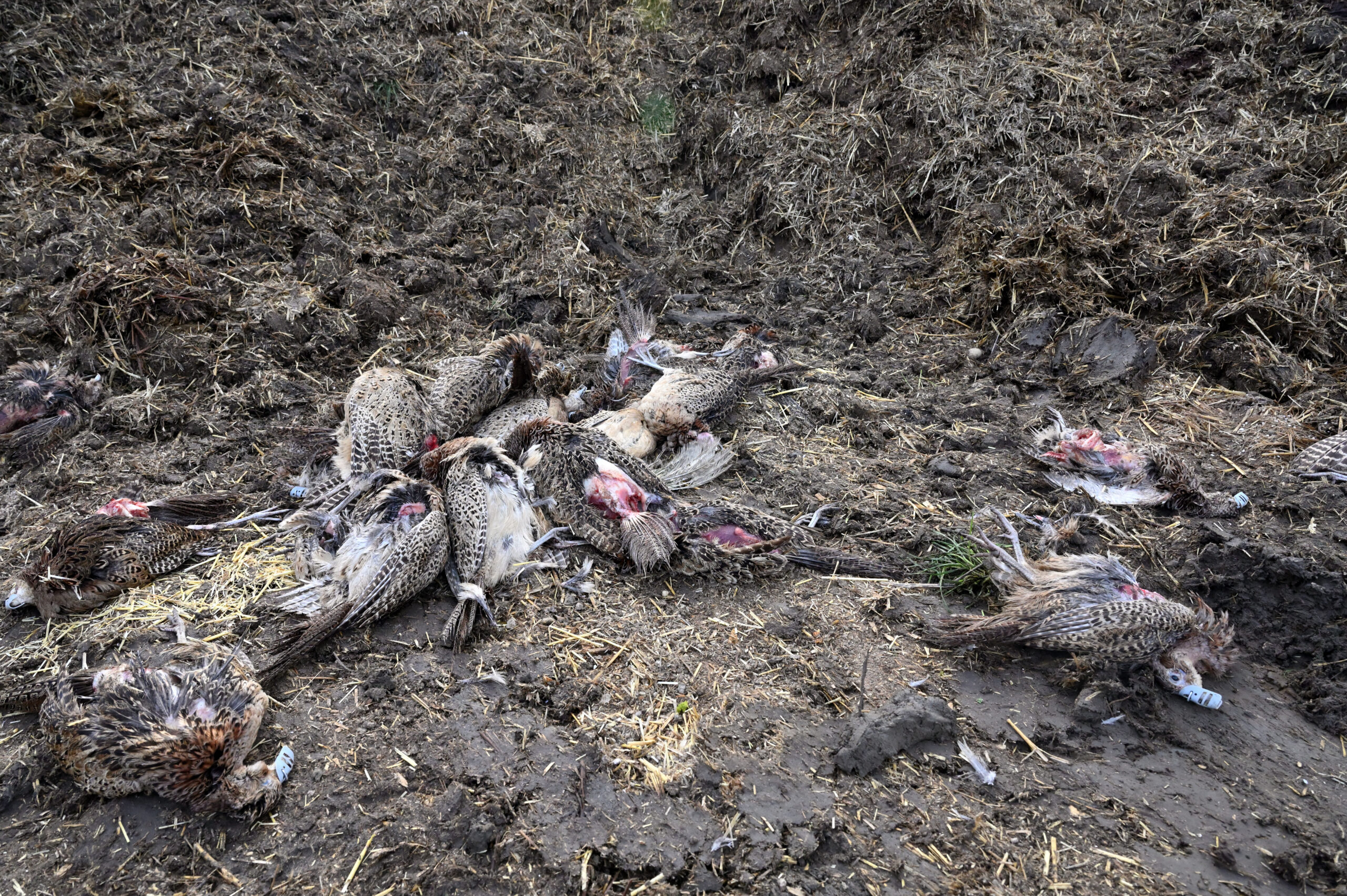
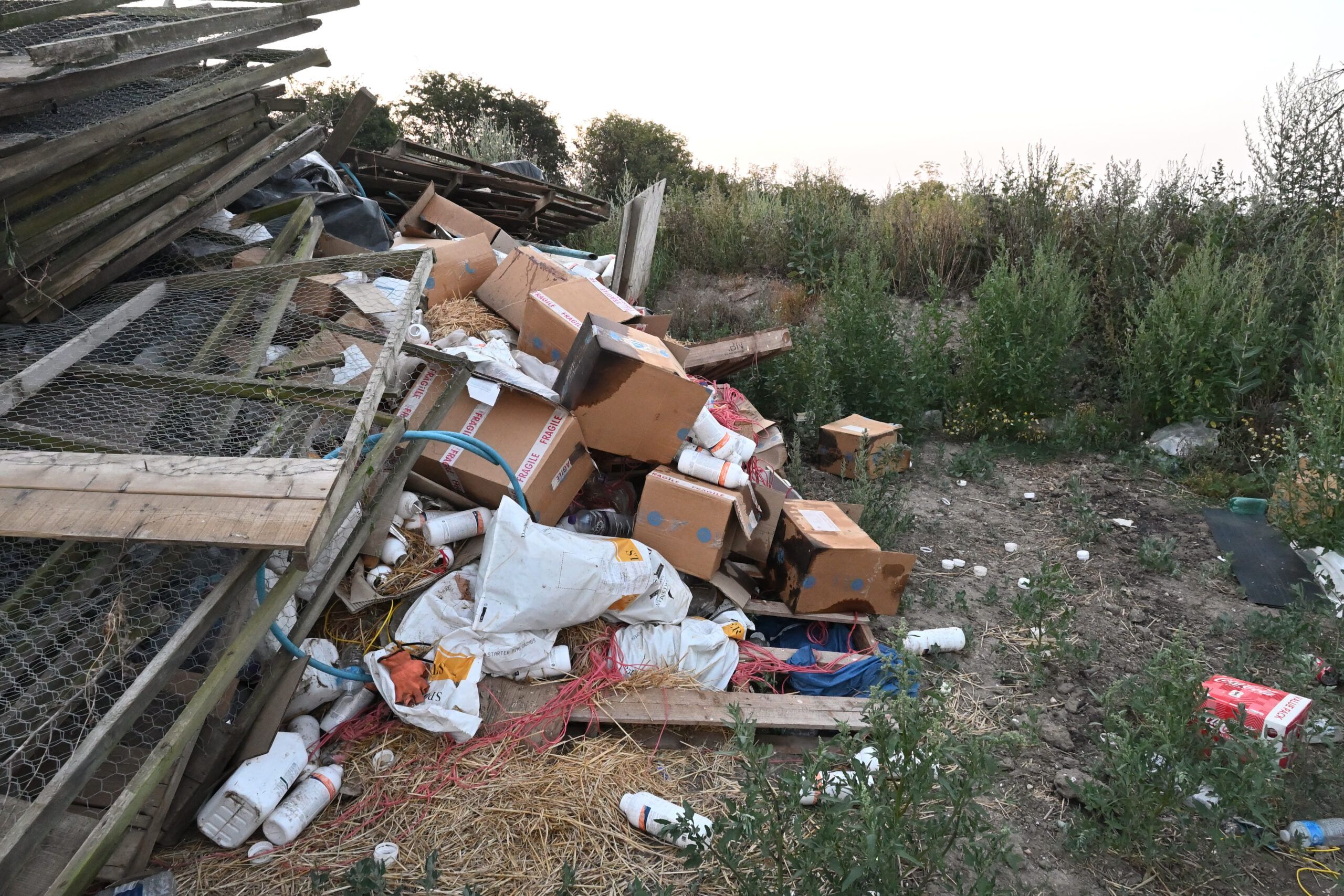
Animal Aid investigators monitored waste disposal areas at Hilltop Game Farm over several months, which allowed us to build a picture of ongoing risk and disregard for the countryside, particularly with the continued risk of avian influenza.
During a July visit, a trailer containing dead poults and adult birds remained on site. Carcasses and maggots were exposed and accessible to scavenging animals.
Investigators also identified an open dump site adjacent to the trailer containing empty bottles of Toltra-K, a medication used to treat coccidiosis.
Growing scrutiny of the industry
These findings add to Animal Aid’s growing body of evidence on the shooting industry and come as Department for Environment, Food and Rural Affairs (Defra) considers evidence relating to game bird breeding and farming practices.
Animal Aid has continued to engage with regulators and policymakers regarding concerns identified through its investigations and believes the latest findings raise serious questions about continued breeding and exploitation of birds for the shooting.
Take action
Please help our campaign by writing to your MP, bringing much-needed attention to this cruel industry.