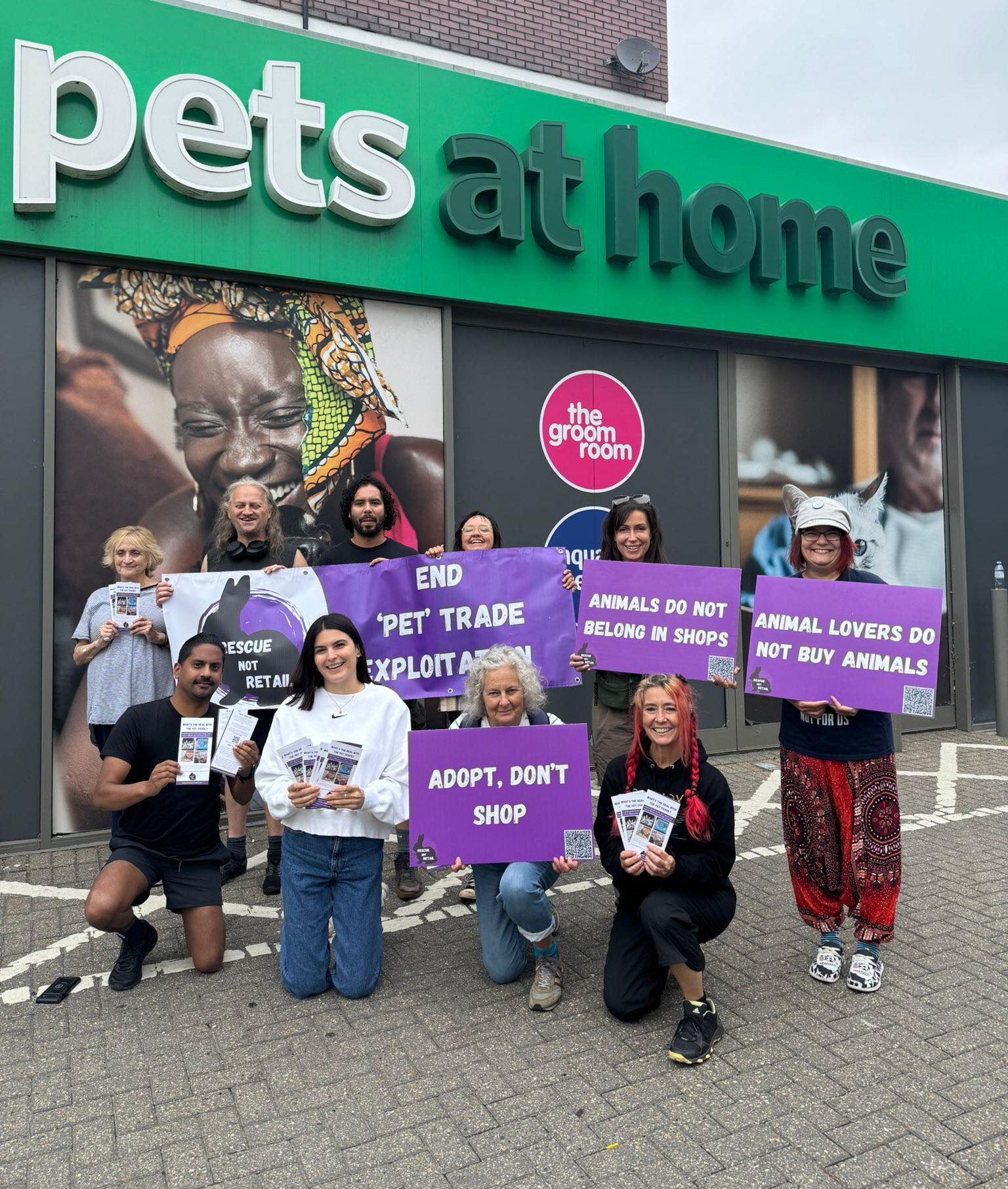
Every time we buy into the ‘pet’ trade, whether by giving money to a highstreet chain, a breeder, or a pet shop, we reinforce a system that objectifies and commodifies living beings. That’s why Animal Aid has signed Rescue Not Retail’s open letter to Pets at Home urging them to move away from selling live animals.
The letter has been signed by Dame Joanna Lumley, Lucy Watson, Dale Vince, and Animal Aid patrons Chris Packham and Peter Egan, as well as veterinary professionals and rescue centres.
It comes ahead of Rescue Not Retail’s Week of Action 13-20 December, which will see local people across the UK coming together with one shared message: live animals do not belong on shop floors (more information below!)
The UK pet industry
In the UK, the ‘pet’ industry is big business with around 57% of households sharing their home with at least one animal — but at what cost?
Despite its cutesy exterior, the breeding, selling, and buying of animals causes untold suffering to countless individuals. Some animals are stolen from the wild, others are bred intensively in breeding mills. Before being sold, animals may be transported long distances in unsuitable conditions or without access to food and water. Many will be confined to tiny, unsuitable cages for their whole lives. For example, snakes are the only animal who can be legally kept in conditions where they aren’t able to stretch the full length of their bodies. Meanwhile, hamsters are often marketed to children as ‘starter pets’ instead of the complex individuals they are.
Even for the most common ‘pets’ like cats and dogs, the industry involves selective breeding, health issues, impulse buying, neglect and abandonment once the novelty has worn off.
‘Pets’ belong in the animal rights movement
Just as we reject exploiting animals for food, experiments, or entertainment, we should also challenge any industry that treats animals as property even if their lives appear comfortable. Animal rights tell us that the problem with animal exploitation is not how we use animals but that we use them at all — keeping animals as ‘pets’, even if well intentioned, places their lives under human control, whether that’s food, movement, social opportunities, and even their lifespan. For many species, especially those not domesticated over generations, such captivity denies essential freedoms.
With hundreds of thousands of animals in shelters, adoption is a far better option because it values the lives of animals who are already living and in need, rather than creating new lives who need to be cared for.
Finally, the ‘pet’ industry encourages speciesism, which is the assumption that some animals – those we share our homes with – are more deserving of rights, respect, and compassion than others, such as those we eat or exploit in laboratories or entertainment venues. Including pets within the animal rights movement challenges that assumption and asks us to treat all animals with consistent respect and justice.
Rescue Not Retail
Rescue Not Retail is a UK based campaign group that raises awareness of animal exploitation in the ‘pet’ trade. Their week of action (13-20 December) will see local events taking place outside Pets at Home stores nationwide, with one simple message: animals are not goods to be traded, and their lives are not products to be purchased.
Visit the Rescue Not Retail Facebook page to get involved, and sign their petition below: