Right now, across the country, calls to end greyhound racing are strong and loud. Meanwhile, tracks open on race days to dwindling crowds, and some races don’t even open to the public at all. So, what’s keeping this fading industry going? The answer is simple – online and high street gambling. Ladbrokes is one of the brands that keeps the wheels of dog racing, under which hundreds of dogs are killed annually, in motion.
Greyhound racing is a gambling product; one that uses innocent, non-consenting lives as consumable resources to deliver what it’s trying to sell. The gambling industry plays an active role in perpetuating dog racing by broadcasting races, and taking bets on results. When a person places a bet on a dog race, a percentage of that stake is given to the industry in the form of a voluntary levy paid to its governing body, the Greyhound Board of Great Britain. It is this money that goes into the projects that keep racetracks in operation. In the financial year 2024-25, £6.75m was collected from bookmakers’ contributions. If betting companies didn’t take bets on dog racing, it simply wouldn’t exist.
Romford Greyhound Stadium is owned by Ladbrokes Coral (Entain) and is Greater London’s last remaining greyhound racing track.
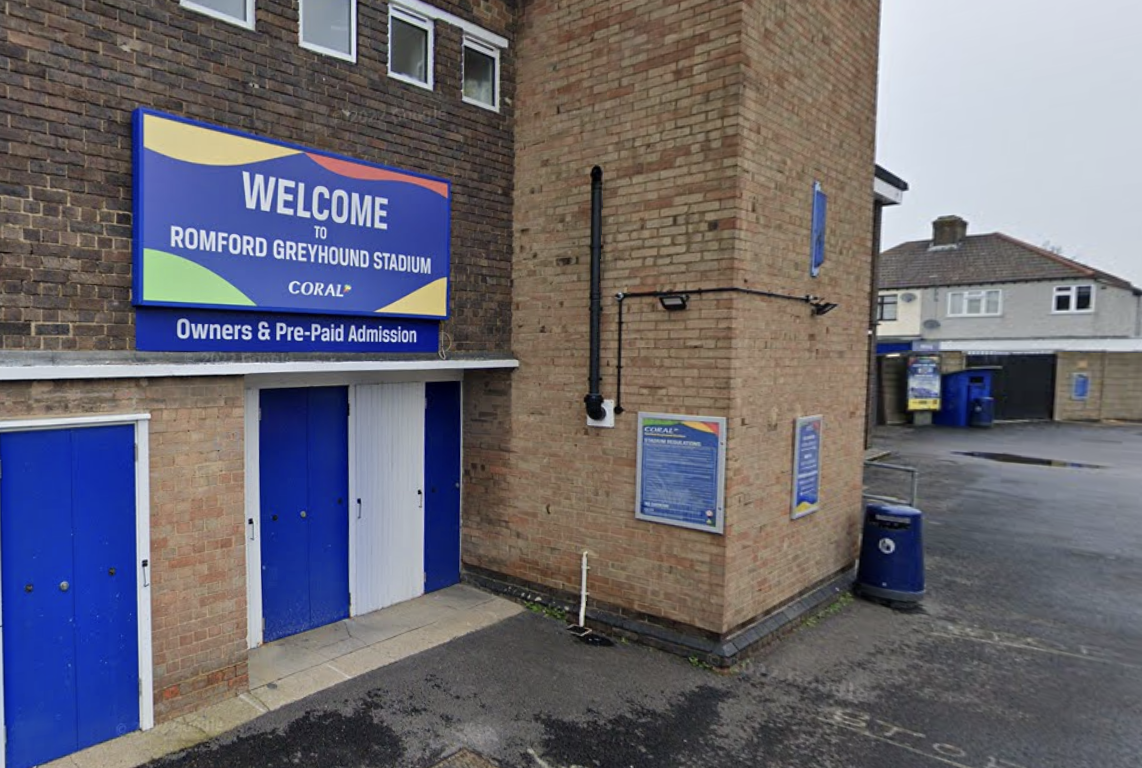
Photo: Google
Though all bookmakers bear responsibility for propping up dog racing, one bears more shame than the others: the Entain Group, better known under its trading names, Ladbrokes and Coral. Not only does this business take bets on greyhound racing online and in its high street betting shops, but it also owns and operates three tracks in England; Brighton & Hove Greyhound Stadium, Romford Greyhound Stadium, and Monmore Green Stadium in Wolverhampton.
Though Entain has a lot of money tied up in greyhound racing, it is just a fraction of its multi-billion-pound annual profits. It absolutely can and should divest from its involvement in a so-called ‘sport’ that last year alone took 161 lives on racetracks, and 245 more behind closed doors. It is also a ‘sport’ that surrendered 3,532 dogs to rescue charities and contributed a mere few hundred pounds towards each dog’s future, despite the fact that rehabilitating and rehoming a dog is more likely to cost those charities upwards of £2,000. Of the miniscule contribution the greyhound racing industry makes towards rehoming dogs who are no longer being used for racing, not one penny comes from the gambling companies that profit from these dangerous races.
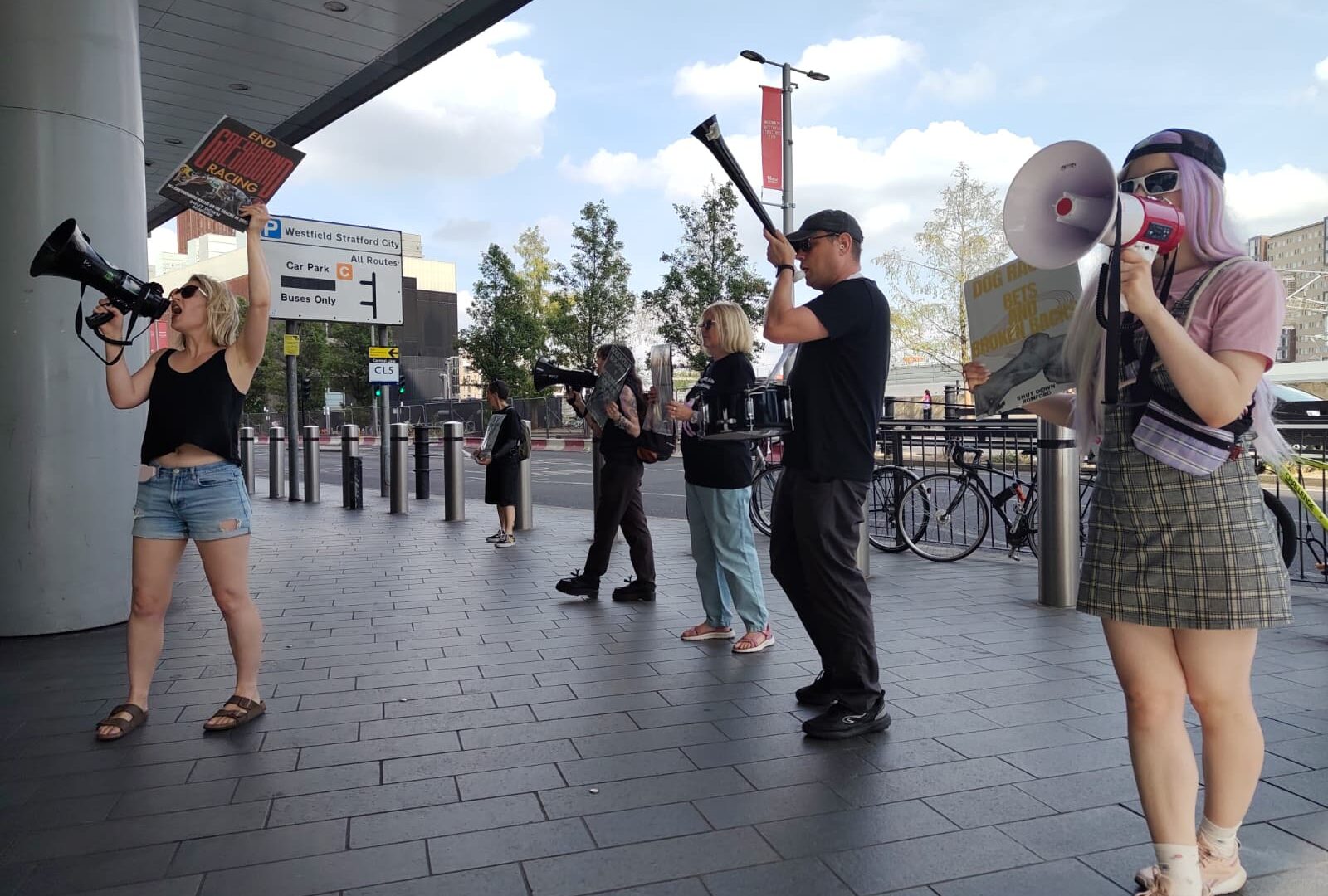
Activists in London forced the Stratford headquarters of Ladbrokes Coral (Entain) to close on International Dog Day in protest of their involvement with the deadly dog racing industry.

Photo: Shut Down Campaigns
Our friends at Shut Down Campaigns have protested Ladbrokes’ headquarters yesterday to draw attention to the responsibility it ignores every day. It’s a business that occupies the shameful position of using dogs’ lives to fuel its own enormous profits, even more than other betting companies do. It can choose not to. It can close those tracks and give that land back to the community to be redeveloped for much needed housing or community projects. It can decide to rise above exploiting innocent animals for entertainment.
There are increasing conversations at all levels about whether an industry that sells an addictive product, such as gambling, can ever be ethical. But what is certain is that when innocent lives are being lost as a direct result of that gambling then that is absolutely, unequivocally unethical and immoral. Will Ladbrokes have the courage to reform itself and move on from dog racing? Or will another bookmaker lead the way in becoming the first not to bet on animals’ lives?