The meat industry prides itself on world-leading welfare and is tightly regulated by the Food Standards Agency (FSA). But data obtained from the FSA’s own audits tells a completely different story. These statistics, as of June 2026, are a window into a system where chaos, failure, and suffering are built into the daily routine – where breaches occur even with official vets and CCTV present.
The fact that the industry cannot follow its own basic legal standards when it knows it is being audited shows that the system itself is fundamentally broken. Importantly, this system is the same regardless of whether animals are raised in intensive factory units or on small, local farms.
The meat industry actively prioritises business continuity over the lives and legal protections of animals. The system is rigged to keep the production lines moving, no matter how severe the abuse.
The slaughterhouse audits: Exposing the hidden cruelty and failures
- 3,716 Total Failures: Across 246 operational UK slaughterhouses, inspectors logged thousands of official non-compliances, averaging 15 violations per facility.
- Over 99% Failure Rate: Out of all 246 sites, just one single slaughterhouse managed to operate with a completely clean record. Over 99% of UK slaughterhouses failed to fully comply with the rules.
- Major Breaches: More than 40% (102 sites) racked up at least one MAJOR non-compliance.
After years working as a slaughterhouse inspector, I came to understand that the failures I witnessed were not isolated incidents, they were the predictable consequences. Success is measured by production.
David Magna - Former slaughterhouse inspector
What does a “good” rating mean
The industry prides itself on “good” ratings from the government. But the FSA’s own metrics show that “good” actually means “routine failure.”
For example, ABP York logged 26 separate non-compliances in a single audit window. Pilgrim’s Pride Ltd Westerleigh logged 28, and J & E MEDCALF LIMITED logged 29.
Yet, the government officially graded every single one of these facilities as “good.”
In what other industry can a business fail dozens of safety, structural, or handling checks and still receive a top-tier state gold star?
The reality of “generally satisfactory”
The next tier down is “Generally Satisfactory,” a bureaucratic and misleading label.
Consider C Humphreys & Sons. This facility accumulated 34 minor and 13 major non-compliances in a single audit window. Major non-compliances include severe failures like stunning equipment malfunctioning, animals left in pens without water, or improper handling.
Yet their official status is considered “generally satisfactory.”
Tom Woollard / We Animals
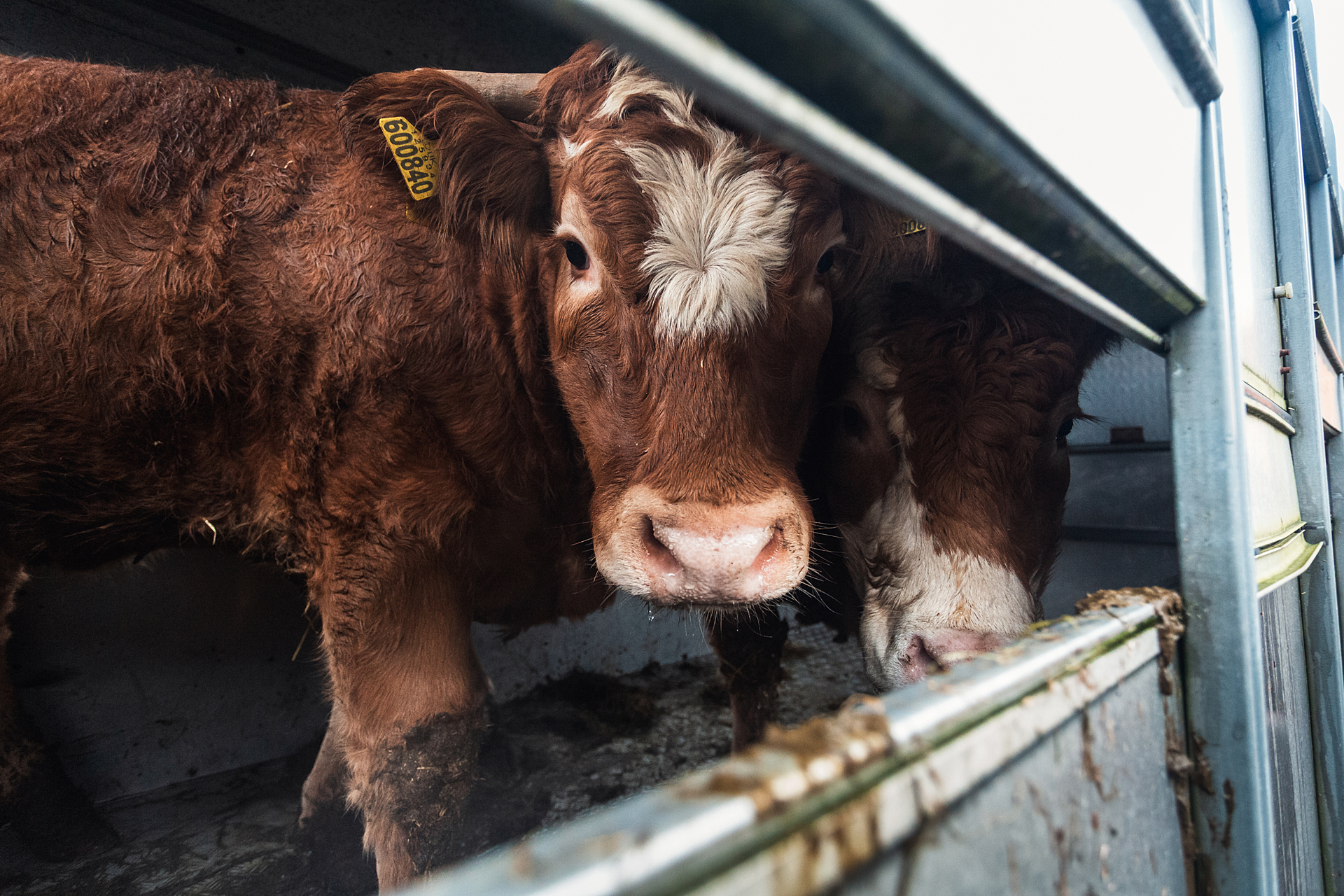
The British public has been fed a marketing myth that UK slaughterhouses are gold standard of animal welfare. This data proves that ‘humane slaughter’ is a bureaucratic lie. When the government’s highest rating allows for hundreds of systemic violations, and high-risk facilities are left to operate in the dark without required audits, the system isn’t just failing, it is working exactly as intended to keep the assembly line of death moving at all costs.
However, the answer is not stricter rules and better standards. Animals are not property or units of production, they are individuals who feel fear and pain, and do not want to die. The only ethical solution to this systemic horror is the total abolition of animal agriculture and a shift to a plant-based food system.
When you reduce animals to mere commodities, biological chaos and structural disorder are built into the design. The system cannot be reformed, cleaned up, or fixed with more rules, it must be completely abolished, and replaced with plant-based food systems.
Take action for the animals
Animal freedom begins with small but powerful actions. From petitions to pledges, help make a difference with these quick actions for animals.