Royal Ascot is heralded as the most prestigious event in the racing calendar, and the one with the greatest total prize money. It is a festival steeped in tradition, in which men are required to wear top hats and women’s dress styles are explicitly restricted. Its traditions are stuck firmly in the past, as is its attitude to horses.
Since 1825 Ascot has opened with a daily procession of horse-drawn carriages in which the reigning monarch and their friends and family arrive to the musical accompaniment of the national anthem. Those who pull the carriages in the royal procession are animals whose entire lives have been taken in servitude. Everywhere you look at Ascot there is a harmful message at play: horses are here as a function, not as individuals.
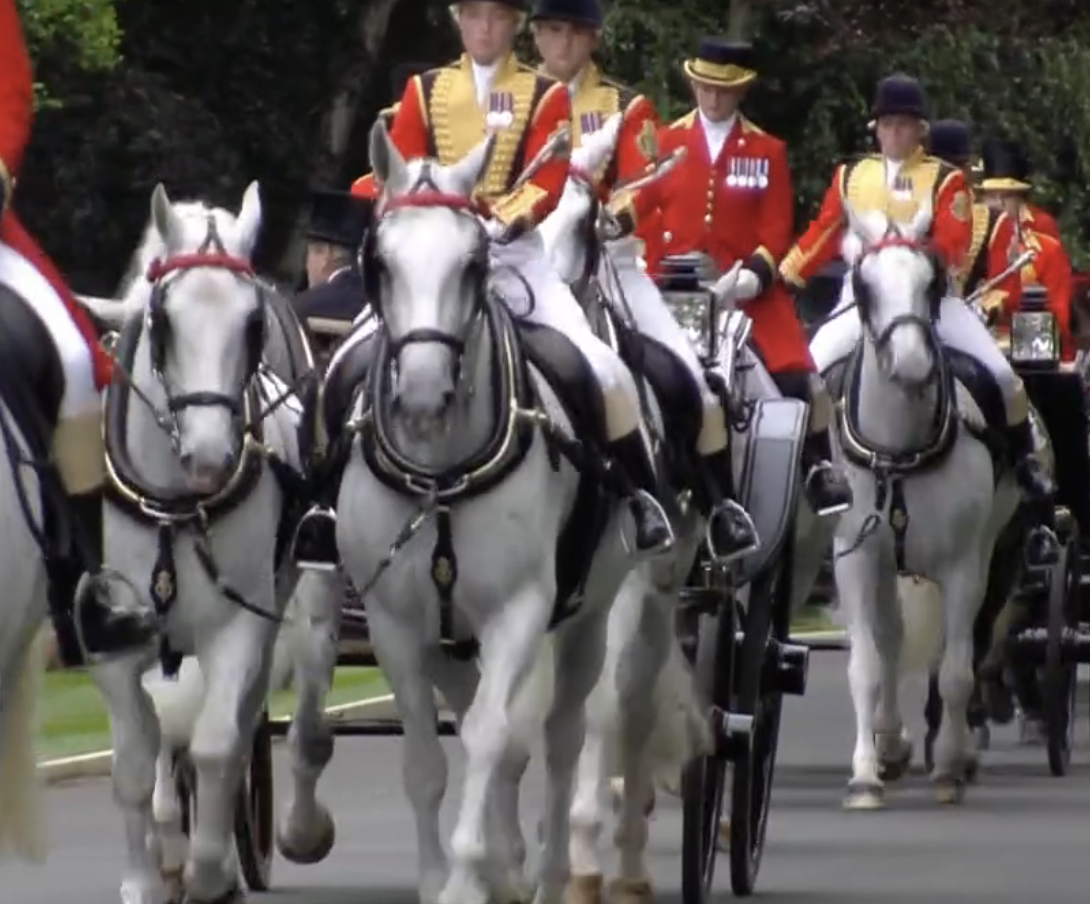
Milford Haven and Shadow are half-siblings who are regularly used for royal ceremonies
Not only were paying adult spectators in attendance daily and being exposed to this message, but 400 local schoolchildren were watching on-site every day. These are young people being indoctrinated from a very early age into the notion that animals are here to serve a human purpose rather than to live their own lives. As children, we tend to have more sensitivity to animals and be able to recognise their emotions and respect them. However, the children at Ascot have that instinct challenged and overridden time after time with the insistence that subjugating horses is normal, and even with the fantasy that horses enjoy racing.
Horses, plainly, do not enjoy being raced. Every single day horses clearly resist being loaded into the starting stalls but are forced into them anyway. Aix La Chapelle thrashed and reared in the stall and was removed, having to be taken away from the track in a horse ambulance. As the temperatures climbed each day across the five-day festival horses were seen sweating to the point where it comes out in a white foam. This is a clear sign that the horse it trying to regulate their body temperatures in the extreme heat, yet these signs were consistently ignored by jockeys and officials, and the horses were forced into exhausting races regardless.
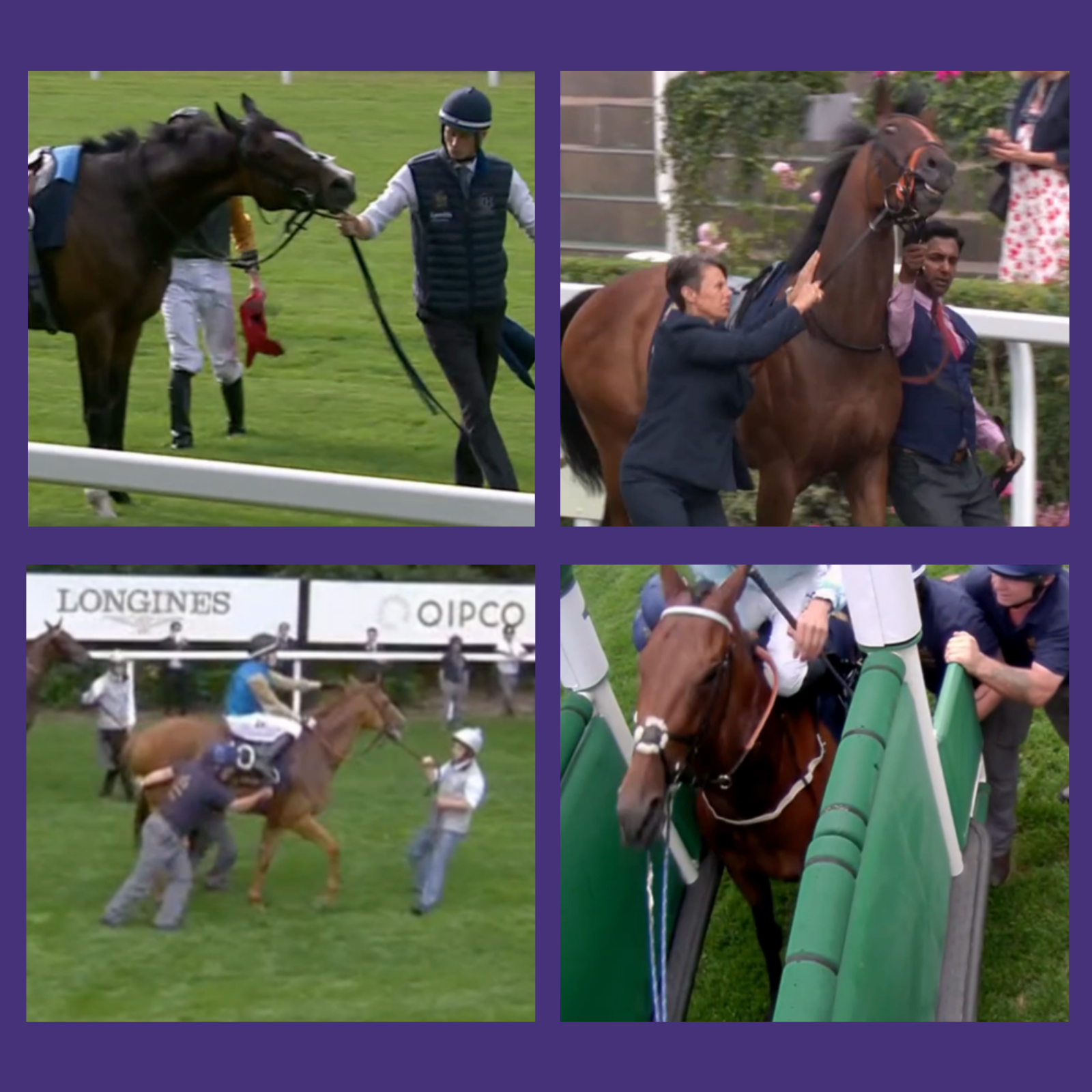
Horses were often seen pulling away and resisting being loaded into stalls but were only met with increased force from their handlers
As the horses resisted loading for the last race of day 2, Luke Harvey of ITV’s coverage team said, “Don’t forget these are babies, many of these horses just having their second ever career start”. He’s right. The race was for 2-year-olds, which means undeveloped bodies being subjected to extreme endurance and pressure, as well as having juvenile minds attempting to cope with an extremely stressful environment. The very next day as Guildmaster was blindfolded and jostled by 5 men into the starting stalls, Harvey commented that “he didn’t really have any choice”. These animals may not speak the same language as us with their voices, but what they are saying with their bodies could not be more clear: “I don’t want to do this”.
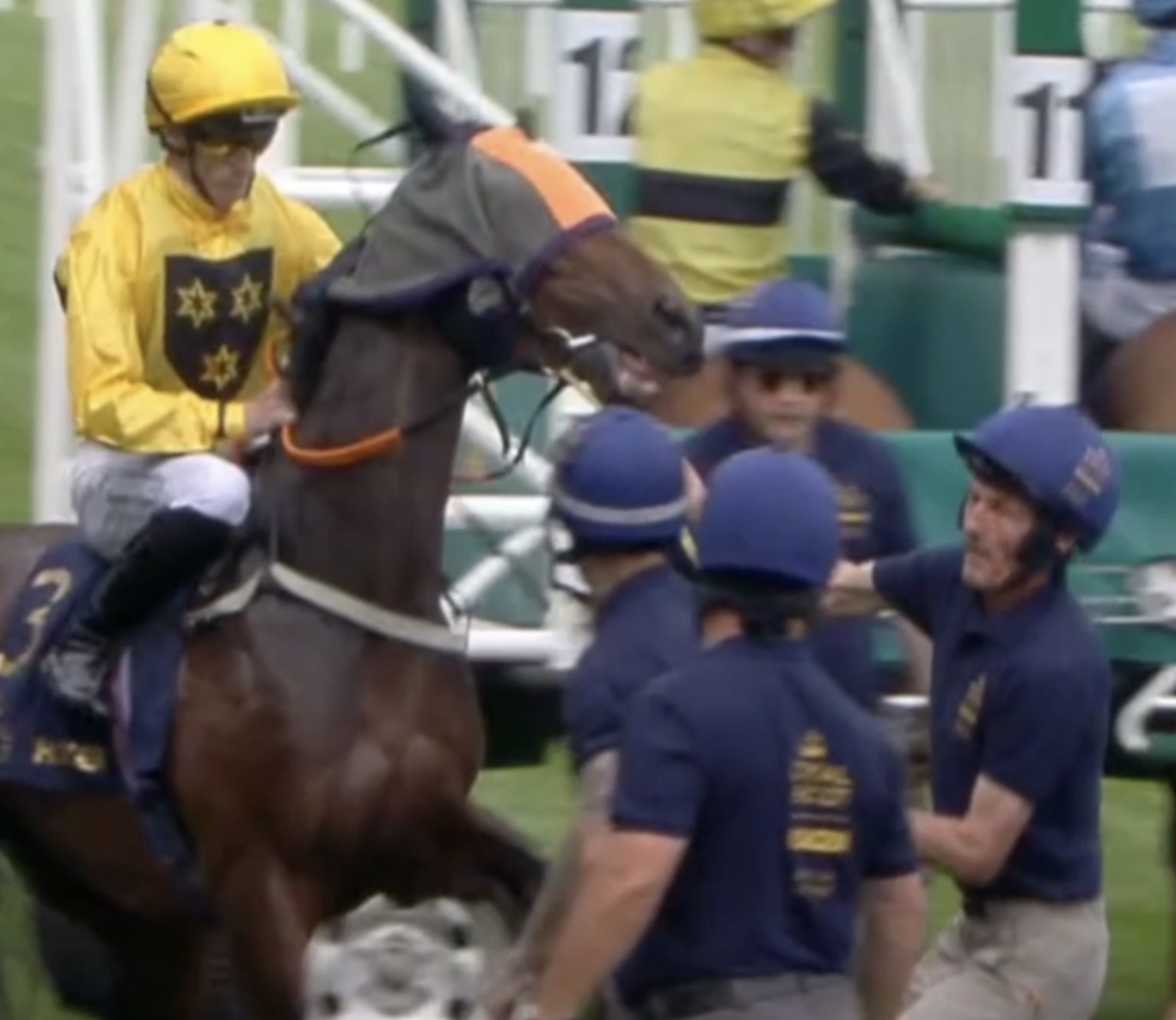
Dark Lucinda was one of the horses who was visibly distressed being loaded into stalls and was blindfolded in an attempt to make her more compliant
Defenders of horse racing claim that there is no way to force a horse to do something they don’t want to do. It is clear from the pre-race parades and the sight of the horses being loaded into the starting stalls that this is either a fantasy or a lie. To make it to the track, they have already been through a process of ‘breaking’, where their will to resist is broken so that they can tolerate being ridden. Even after this, staff and the trainers come equipped to races with tools designed specifically to overrule a horse’s autonomy; things like blindfolds, hoods, blinkers, visors, lip chains, tongue ties, nosebands, cheek pieces, grackles, and of course, whips. All of these range from restrictive to painful methods of control, and racing horses would not be possible without them. That’s why there is no way of racing horses ethically, and only ending this exploitation is sufficient to give horses the lives they deserve.
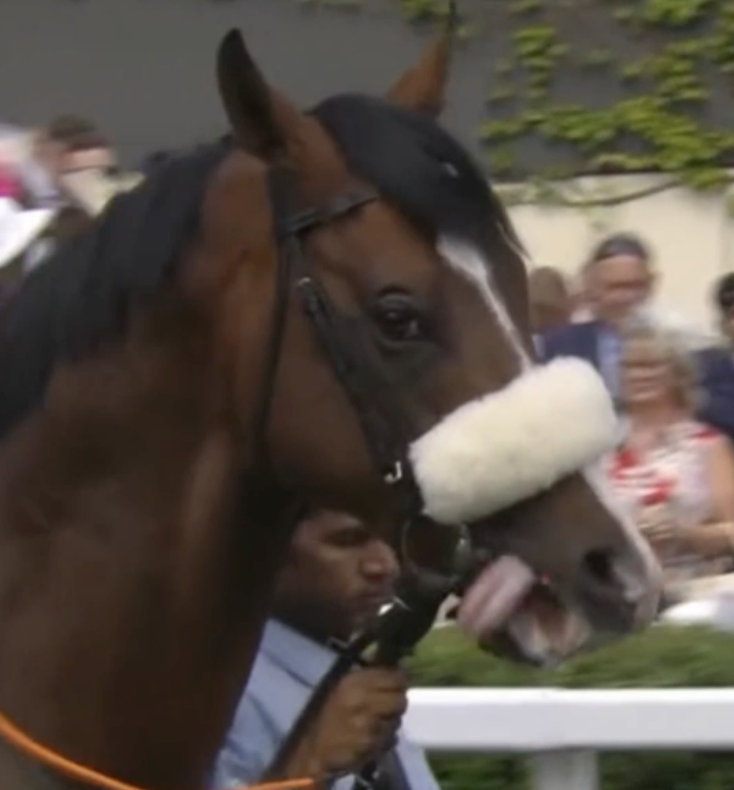
Hammer the Hammer was visibly struggling with his tongue tie on parade – a piece of equipment used to hold a horse’s tongue in place so that they can take in more air and run faster
Though this year the horses raced at Ascot survived the ordeal, that is not true of every horse on that track or indeed across the country. This year alone 90 horses have been killed racing in the UK so far. Many have been killed following sustaining painful injuries that simply would not have happened if they were not being forced to race, such as broken necks, shoulders, and necks. Last Thursday’s World Cup tie between Canada and Qatar saw Ismaël Koné suffer a gruesome broken leg, ending his World Cup, but hopefully not his career. Broken legs are seen in horses on racetracks on a regular basis, and they are almost always a death sentence. Make no mistake, a broken leg hurts a horse just as much as it hurts a human; both animals have a central nervous system that delivers pain signals to the brain from the body. Imagine feeling that agony and then, rather than being surrounded by friends and medics who have come to help, being surrounded by screens to shield the public from the sight of you, as someone approaches and puts a gun to your head.
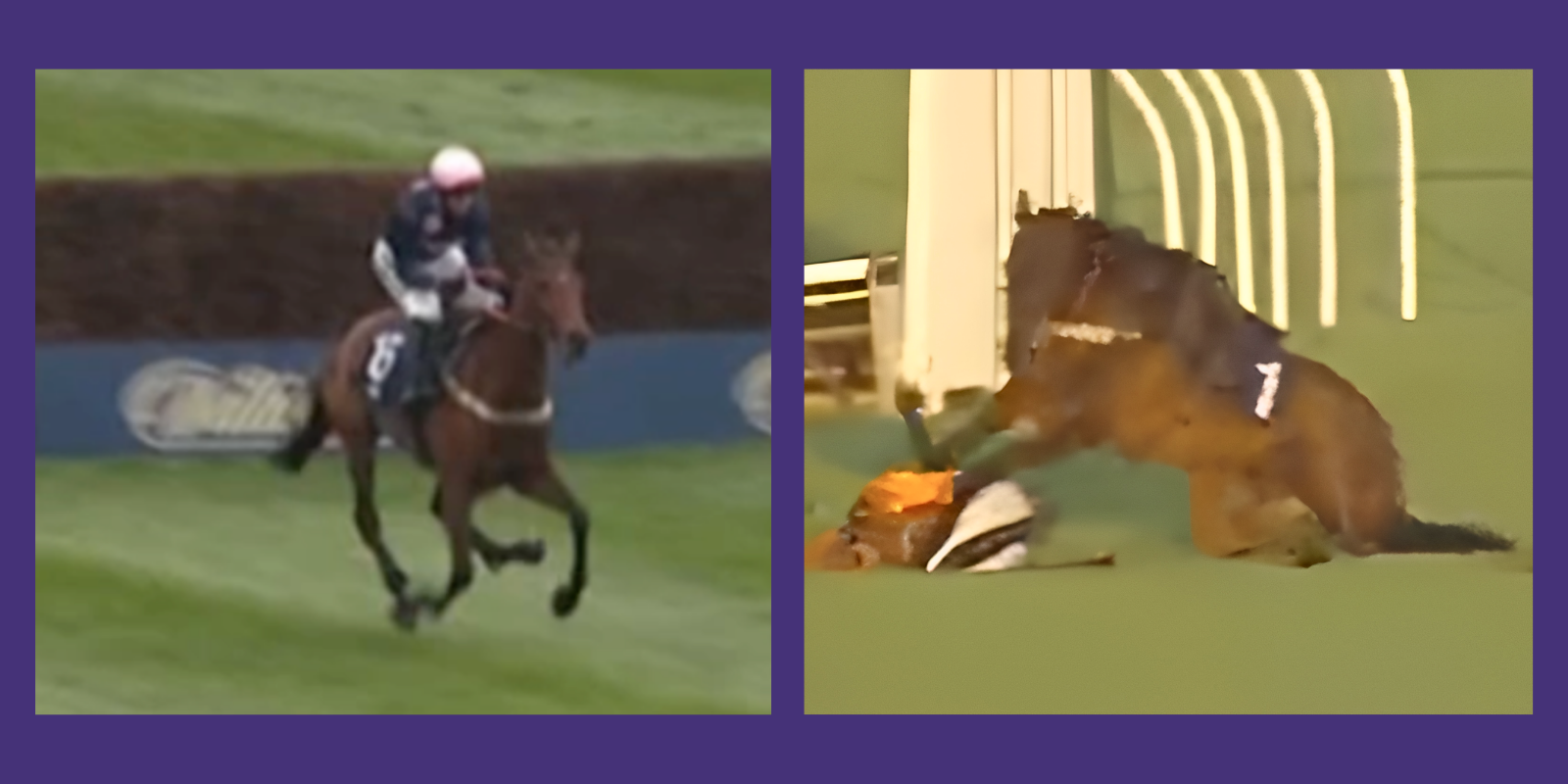
Get on George in April and Lightfingered Jack in June are just two of the horses who have broken legs on UK racecourses in 2026 and been killed as a result
Royal Ascot is a festival of opulence and privilege that uses horses’ bodies as the puppets by which those at the top of the sport can gain financially at the expense of the gamblers who lose money and the horses who lose their liberty and often their lives. The reduction of horses to a function is represented clearly by ITV Racing’s own opening sequence, depicting a mechanical horse made of a metal frame, draped with what appear to be restrictive and coercive equipment like leather reins and straps. But the reality is that the horses used for racing and other forms of entertainment are thinking, feeling individuals who would not choose this life if they were given the choice.
There is a better future for horses that many are already enjoying. After millennia of belonging a species that is almost entirely held captive, across the world now, there are herds of semi-wild and feral horses. The UK has our famous Dartmoor and Exmoor ponies as well as a few other pockets of free-living horses in the wild and in rescue. Nova Scotia’s Sable Island horses are an entirely unmanaged, feral population, and in Australia the Brumbies are free-roaming feral horses descended from released and escaped domesticated horses. All of these animals are living a life of their own, but, due to the persistence of ancient attitudes towards horses, not even they are free from persecution. Dartmoor’s ponies are being threatened with decimation to in an effort to address overgrazing that is being caused by the farming of sheep, and the Brumbies are being threatened with a shooting campaign to reduce their populations. Millennia of control and killing of horses has taught humans that we have that right, and it is this notion that needs to be unlearned if horses are going to win their freedom.
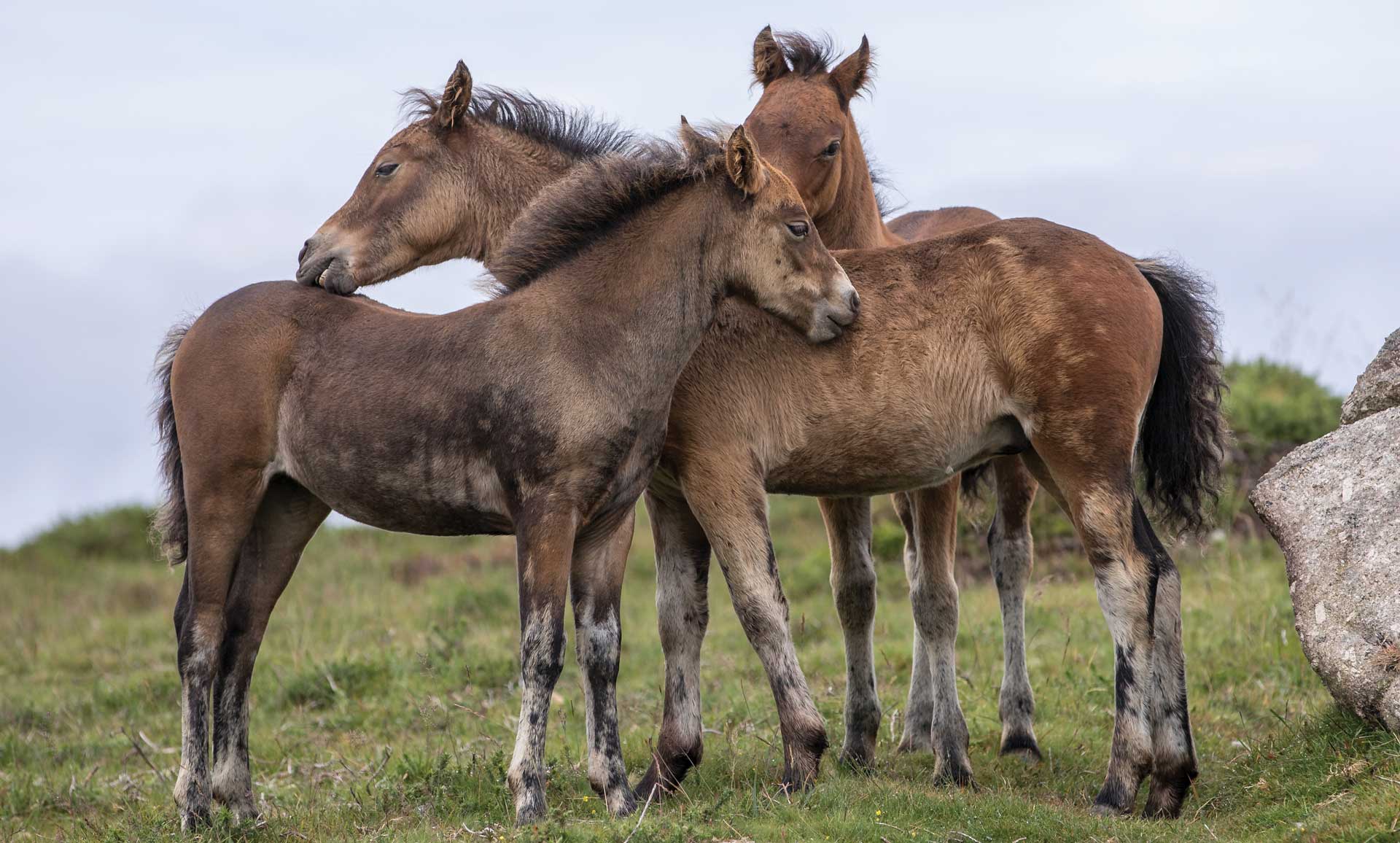
The ponies on Dartmoor enjoy freedom, rich social lives, and run when they want to, not when they are forced. Photo: Visit Dartmoor
Our relationship with horses has already gone a long way down a very dark path, but it is not past the point of no return. There is a way to restore horses to the lives they deserve but to achieve that society needs to make urgent and decisive changes to our attitudes to them. We need to abandon the notion that tradition excuses abuse, recognise horse sentience and individuality, and stop putting our own entertainment or convenience above the rights of animals to live the life that is natural to them. It has been thousands of years since humans brought horses under our control – respect, compassion, and freedom are rights that they are long overdue.
