Words are never neutral. They shape how we think and how we see the world around us. When it comes to our animal cousins, language doesn’t just describe their reality, it creates it. The way we talk about animals can literally reinforce their exploitation – or help dismantle it.
Language shapes our moral boundaries
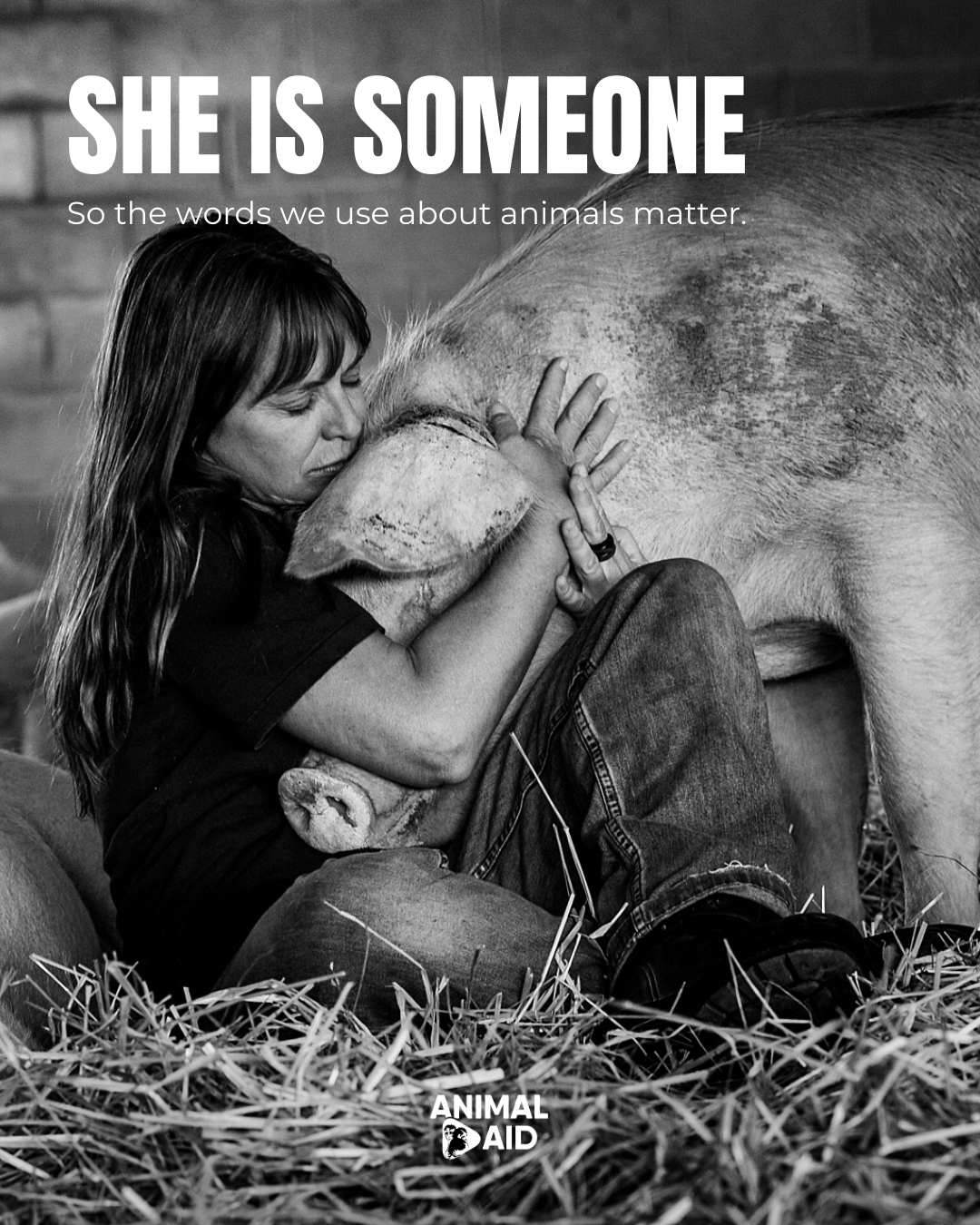
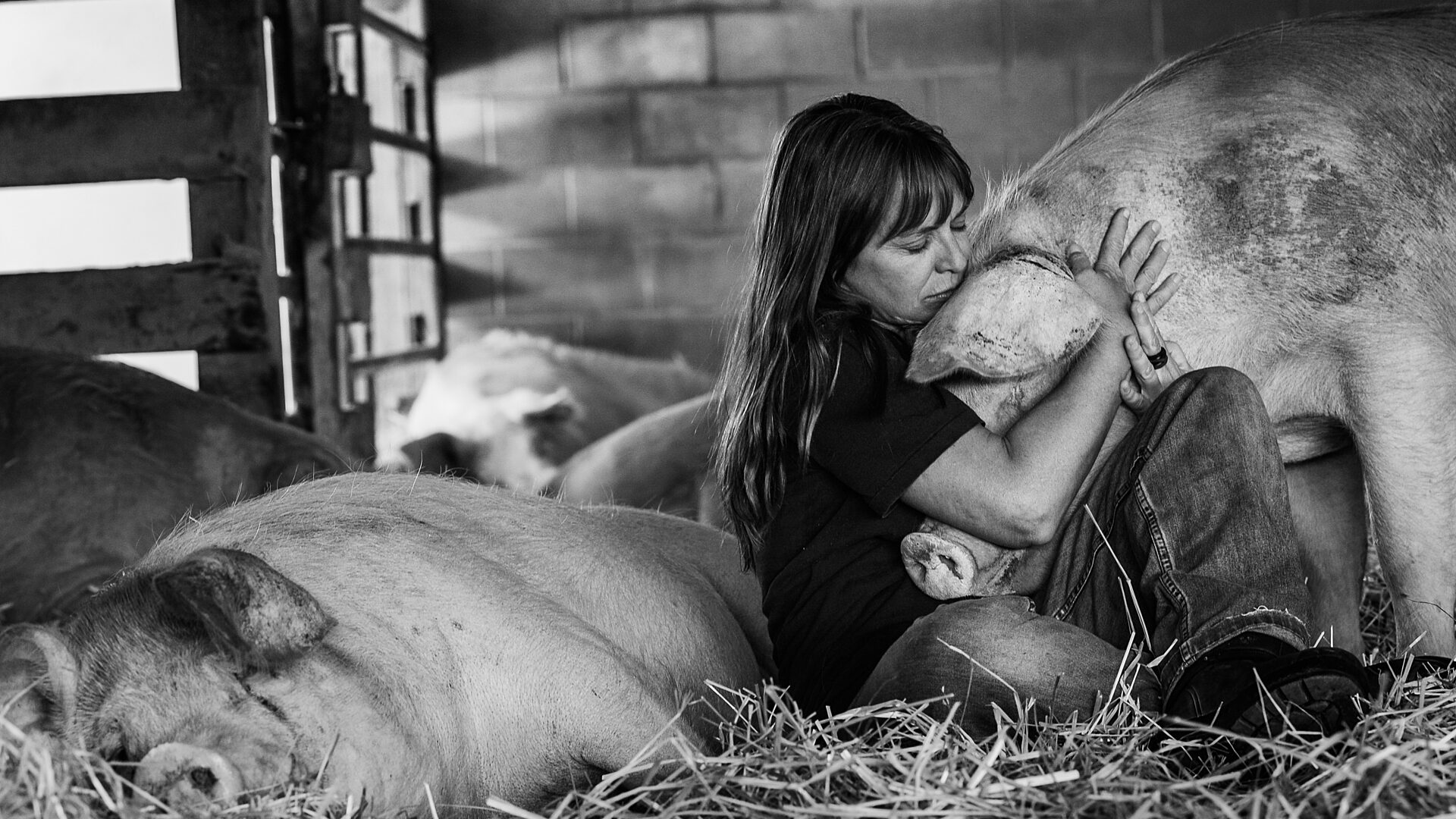
When animals are referred to as it rather than someone, or products rather than individuals, their suffering becomes easier to ignore. Words like ‘livestock’ and ‘units’ reduce animals to the status of resources to be produced and managed, rather than living beings to be respected and treated with compassion. Such language strips them of their individuality, their agency, and their right to life.
And this isn’t accidental.
Exploitative industries rely on language that creates a distance between us and them, so that consumers never question the morality of using animals for food, entertainment, fashion, sport, or in medical experiments.
Words have the power to normalise violence against animals
Words like harvesting, processing and culling sanitise acts of violence. They conceal the lived experiences of animals, their fear and pain hidden behind industry jargon.
But we can also use the power of words to challenge violence against animals. Saying someone was “killed” instead of “processed” or “separated from their family” instead of “weaned” forces us to face reality and means we’re more likely to challenge it. Here are more examples:
Populations ➔ Families, communities
Culling ➔ Killing
Housed ➔ Confined
Debeaking, tail docking ➔ Mutilations
It ➔ He, she, they
Artificially inseminated ➔ Impregnated without consent