
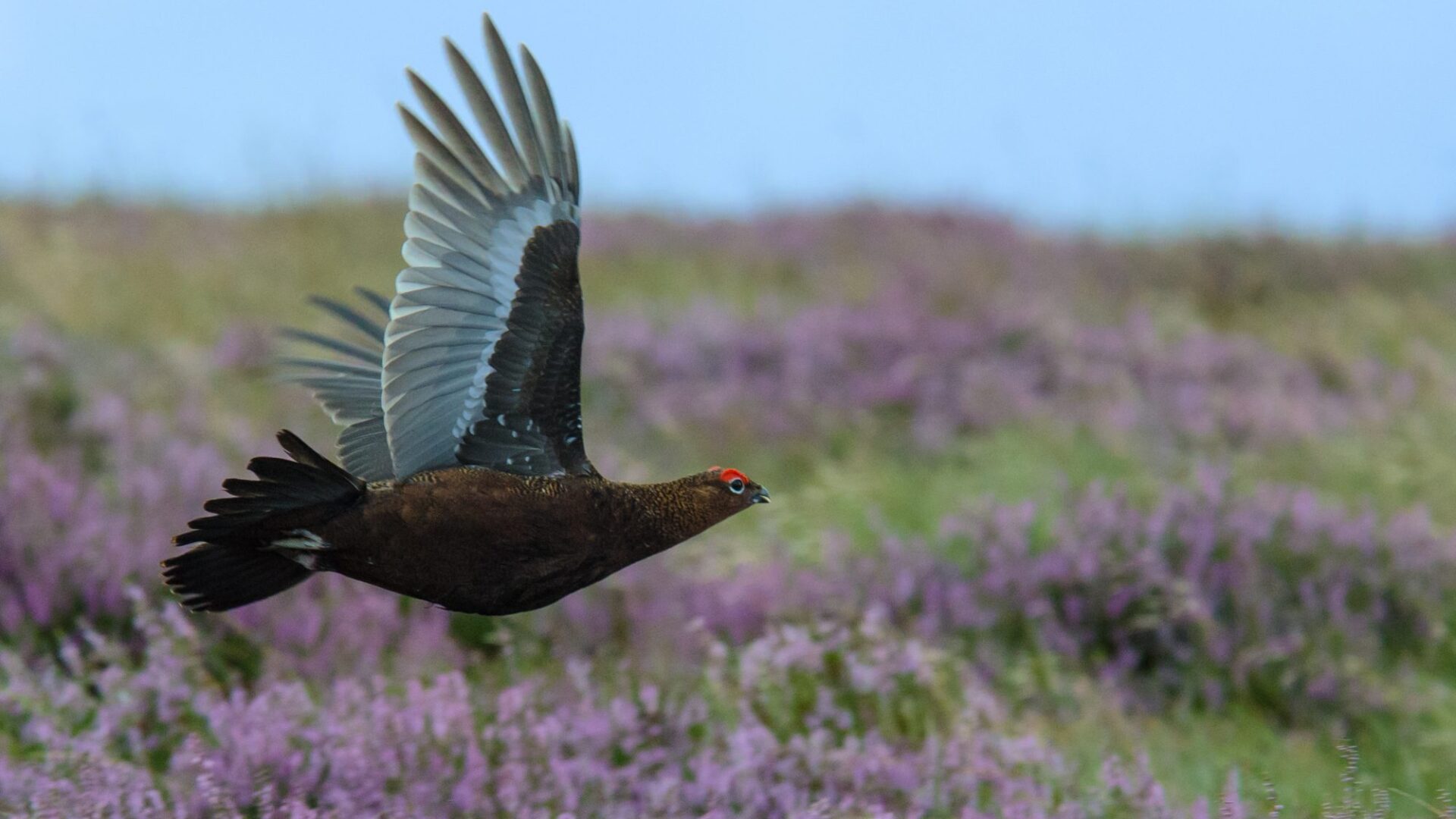
Each year, more than half a million grouse are shot for ‘sport’. The season runs from 12 August – known as the ‘Glorious Twelfth’ – until 10 December, during which time shooters can pay as much as £3,000 each for a day’s shooting. Outrageously, while grouse shoot operators tend to be extremely wealthy, they are able to claim financial subsidies, funded by the taxpayer.
But opposition to the ‘sport’ has rocketed in recent years, following revelations of the damage done by grouse moor operators.
What's wrong with the shooting industry?
What is Animal Aid doing?
In 2013 a major report by Animal Aid, Calling the Shots: the power and privilege of the grouse-shooting elite, examined a shooting estate in the South Pennines owned by retail tycoon Richard Bannister.
Accused of environmentally damaging activities on his Walshaw Moor Estate by government agency Natural England, Bannister faced 43 charges and a public inquiry. In March 2012 the action was unexpectedly dropped and, in a deal worked out between the two sides, the tycoon was awarded public subsidies worth £2.5 million over 10 years, or £250,000 annually. That was about half the reported running costs of his shoot.
The report also detailed the extensive damage done to the uplands by burning, as well as the immense persecution of animals to ensure there are plentiful grouse to shoot come 12 August.
*In 2014 we updated the report to reveal that wealthy moorland shoot owners are receiving even more financial and regulatory encouragement to devastate sensitive moorland habitats.
In 2016 Animal Aid created a new film about grouse shooting. Filmed across several upland areas in the UK, the footage contains scenes that are typical of grouse shooting operations, including:
- The persecution of wildlife, including traps, snares and ‘stink pits’. These pits are used to lure animals perceived to be a threat to grouse and to ruin the shooters’ ‘fun’.
- Environmental damage, including evidence of burning moorland to create heather, which provides food and shelter for the intended quarry. Burning the moors damages delicate ecosystems and degrades the carbon-rich peat, releasing carbon dioxide, which contributes to climate change.
- Destruction of the landscape, including building roads and tracks across ecologically important upland areas, to access the grouse butts.
In 2016 Animal Aid also interviewed people living in Hebden Bridge. Residents of the close-knit town live below an area of moorland that has come under intense criticism.
In the short set of interviews, residents argue that the land management practices carried out on the moor in previous years mean the land is less able to soak up rain. The consequence, residents say, is that water runs off the moor, flooding villages and towns in its path.
Grouse shooting is a bloodsport carried out by a minority. As well as the grouse who suffer and die, grouse moor managers brutally kill and maim huge numbers of wild animals to protect their profits. They also leave vast swathes of precious peatland burnt dry and scarred with vehicle tracks. This is all done so that unnaturally large populations of red grouse can be nurtured, on the moors, as live targets for wealthy ‘guns’.
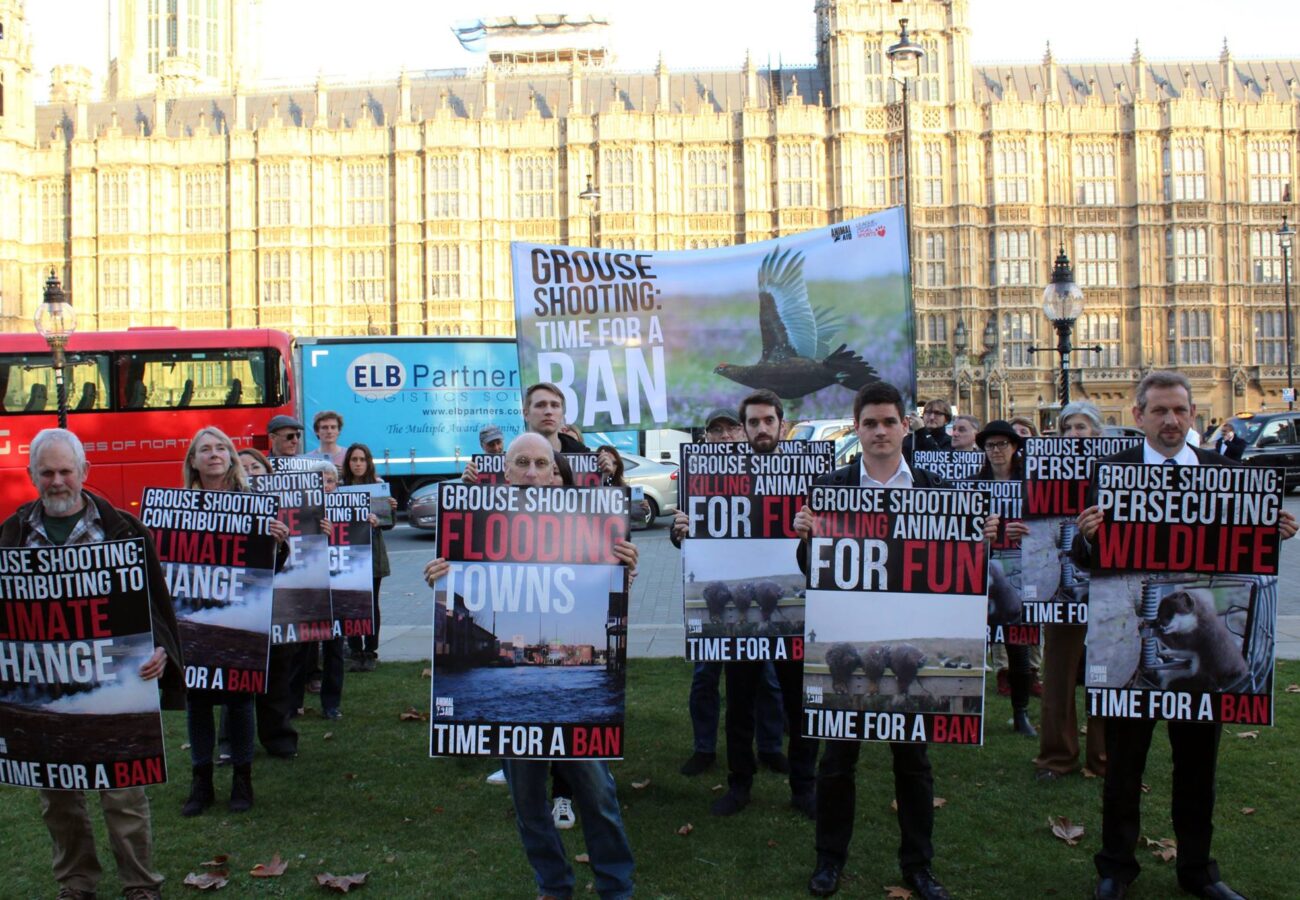
Take action against grouse shooting
Grouse shooting is unnatural, uncontrolled and unkind. Take action by ordering leaflets ahead of the grouse shooting season, which starts on 12 August.