
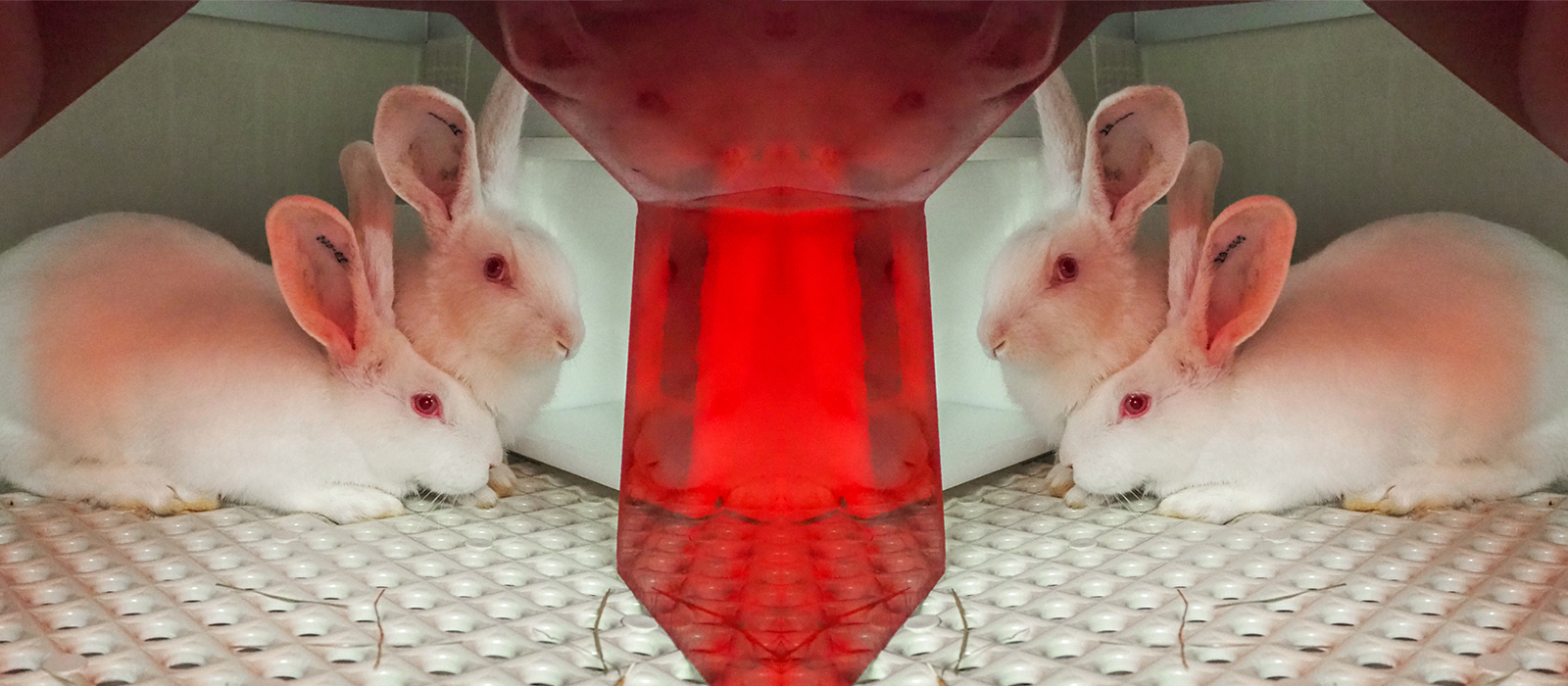
Most of us care deeply about animals and want them to be treated well. But profit-driven industries like the pharmaceutical industry (the most profitable industry in the world) are deliberately secretive and complex, misleading the public and convincing us that experimenting on animals is a ‘necessary evil’.
We believe that better science is possible and that animal freedom begins with raising awareness of this notoriously secretive industry.
In Britain, around 2.7 million animals are used each year in experiments, with the actual figure varying each year, and most are killed at the end of the experiment. Even more animals are bred but not used in experiments, but as this number is no longer reported on, we do not know the true extent of animals born and dying in laboratories.
Animals harmed in British laboratories include mice, rats, guinea pigs, rabbits, cats, dogs, ferrets, horses, pigs, sheep, birds, fish, amphibians and monkeys.
A small proportion of experiments (around 11–12%) are required by law – the rest are not, but they continue anyway.
Experiments are done for a variety of reasons, including ‘basic research’, which is solely to obtain knowledge and is often conducted at universities; translational research, which aims to study and cure disease; and for the purposes of education, surgical training or warfare.
Yes. Being forced to live in captivity – even without the additional pain and distress of experiments – is stressful and unethical. Animals are denied all agency, unable to make even the most basic choices about what food to eat and when, and who they live or mate with. And they cannot escape lights, noise, vibrations or being handled. For example, mice and rats prefer opaque containers, but they are kept in clear boxes because it’s easier for laboratory staff to see the animals.
Routine procedures, such as taking a blood sample, can be very distressing for animals, and it’s not easy to find a vein in small, frightened animals – especially when they struggle – leading to repeated attempts and further distress.
In safety tests, animals are force-fed test chemicals by having a tube pushed down their throats and into their stomachs. The purpose is to measure any vomiting, diarrhoea, convulsions, skin lesions, ulcers, breathing difficulties or damage to eyes, lungs, kidneys or heart caused by the test chemical.
In experiments conducted for ‘medical research’, animals are deliberately injured, either surgically or with chemicals, to give them the symptoms of a disease that can then be studied. For example, some may have large tumours transplanted into their bodies. Others may be infected with AIDs or other viruses, or made to suffer painful conditions such as arthritis.
As shocking as it might sound, they often do the exact opposite. Animals are not reliable ‘models’ for predicting human reactions to drugs, with a prediction rate of just 5–25% – and this figure comes from Huntingdon Life Sciences (since merged into Inotiv), a company notorious for experimenting on animals, so it’s likely to be even lower.
Millions of people suffer adverse reactions to drugs and prescription medications despite them having been ’safety tested’ on animals. High-profile examples include the arthritis drug Vioxx, which was tested on animals and deemed not only safe but also protective but withdrawn from market after 88,000-140,000 people suffered heart attacks.
And in 2006, six men took a drug known as TGN1412 in a clinical trial in London and suffered organ failure and brain swelling in less than 2 hours. The same drug had been given to monkeys (at a dose 500 times higher!) and showed no ill effects.
Animal testing is used by manufacturers to claim their products are safe even when proper, scientific methods show otherwise. Smoking was said to be safe for decades because lung cancer is difficult to induce in animals, and millions of people have died as a result.
No. Experimenting on animals is not the ‘necessary evil’ we have been led to believe. In fact, using animals as ‘models’ for human disease has misled science and delayed medical progress for many decades.
Typically, symptoms of a disease are artificially induced in animals so researchers can try to cure them. However, the induced disease is never the same as it would be in humans, so decades of research and funding have been diverted away from making real progress.
Everything we know about HIV and AIDS, for example, was learned by studying people with the disease – but this has not prevented millions of pounds and animals’ lives from being wasted in a fruitless search for a reliable animal ‘model’.
Equally, our understanding of important diseases like polio – including how it is transmitted – was hampered by using animals. Dr Albert Sabin, the inventor of the polio vaccine, explained that work on the vaccine ‘was long delayed by the erroneous conception of the nature of the human disease, based on misleading experimental models of the disease in monkeys’.
The truth is that by using animals as surrogate humans, we hurt not just them but also ourselves.
In 1981 the former director of the world’s largest cancer research institute, Sloan-Kettering, testified before US Congress, saying that ‘while conflicting animal results have delayed and hampered advances in the war on cancer, they have never produced a single substantial advance either in the prevention or treatment of cancer’. He concluded that ‘the moral is animal model systems not only kill animals but kill people as well’.
The main reason why animals continue to suffer in laboratories around the world is money. The pharmaceutical industry is the most profitable industry in the world, and its interests are protected by governments.
Experimenting on animals means drugs can be marketed more quickly and – most importantly – provides a legal defence for the company when people are injured or killed by adverse reactions to its drugs. The company will argue that because it tested the product on animals, it cannot be blamed.
Individual scientists tend not to question the practice because it is so ingrained in how they are taught, and how their lecturers and supervisors before them were taught. The use of animals in research has become a habit – one that is considered too inconvenient to break. It’s also possible that scientists are unaware of the alternatives. If they are aware, they may be unfamiliar with how to access them, use them or trust their data.
The greatest contributions to modern medicine have come from animal-free research techniques such as clinical observation (monitoring patients), epidemiology, which links lifestyle factors to disease, and advanced technologies such as MRI scanners and ultrasound. And now, with artificial intelligence and ‘organ on a chip’, the scientific knowledge at our fingertips is increasing.
In recent years, the public has increasingly turned to holistic therapies and healthcare, where the focus is on strengthening and nourishing the body’s immune defences rather than waging a self-destructive war against pathogens, tumours and diseases.
Those who oppose experiments on animals would rather choose drugs that have not been tested on animals, but this is not possible. All pharmaceutical products are tested on animals, so we have no choice.
Artificial moral dilemmas like this one are often used to emotionally blackmail people into accepting experiments on animals. The real choice is between good science and bad science. Research that relies on animal experiments is bad science because it does not predict how well a drug will work in humans. Cutting-edge alternatives, such as those discussed earlier, are good science because they are human-relevant, humane and do not harm animals.
Most of us who oppose experiments on animals do so because of a compassionate desire to end all suffering, and to build a future that is kind and safe for everyone. We are often supporters of a wide range of charities and causes aimed at helping disadvantaged or marginalised people as well as animals.
But it’s also perfectly logical to oppose experiments on animals from a human health perspective, even if you don’t care about animals at all. For example, many scientists who work to improve human health do not use animals simply because the human-relevant science provides more reliable data.
We link to peer reviewed research and official statistics wherever possible in our published articles and resources.
Evidence, references and FOI (Freedom of Information) sources are kept on file and are available upon request.
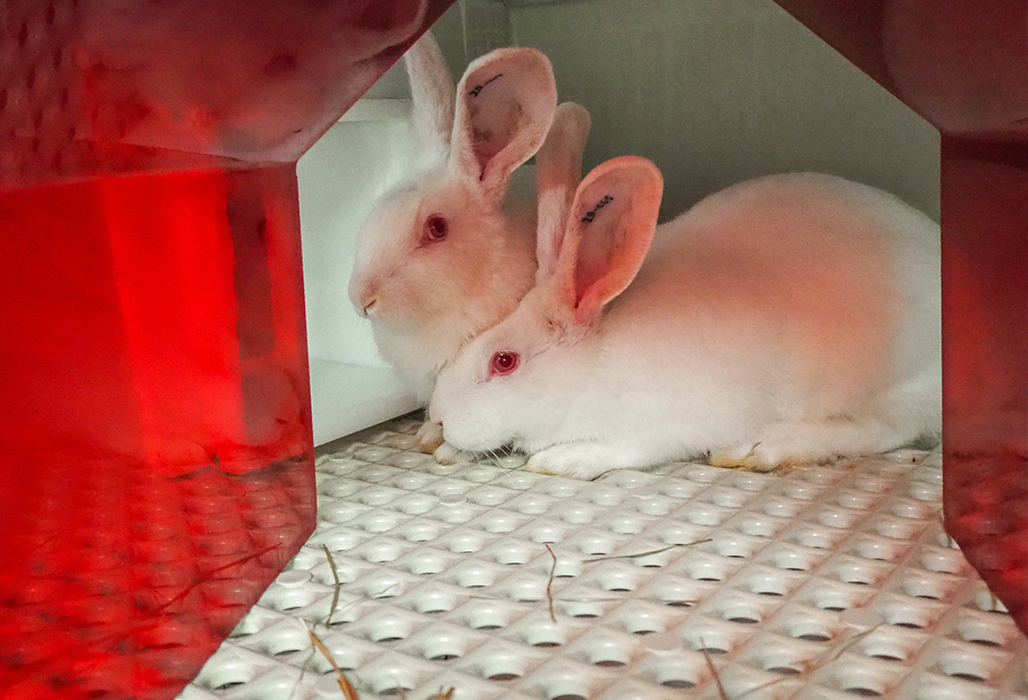
Take action for animals in laboratories
There is no justification for harming and exploiting animals when cruelty-free science is possible. Ask Your MP to strengthen the Government’s animal testing strategy.