A life sentence: What animals experience inside UK laboratories

Millions of animals are harmed every year in UK laboratories. Behind this incomprehensible number, are the individuals; living animals capable of feeling joy and playfulness, as well as suffering.

Experiments on animals can often feel like a dense sea of statistics, from the number of animals used to the number of procedures conducted on them. We should never forget, however, that behind each statistic is a living animal capable of feeling joy and affection as well as confusion and fear.  

Shocking new footage released this weekend (19th April) reminds us of this.

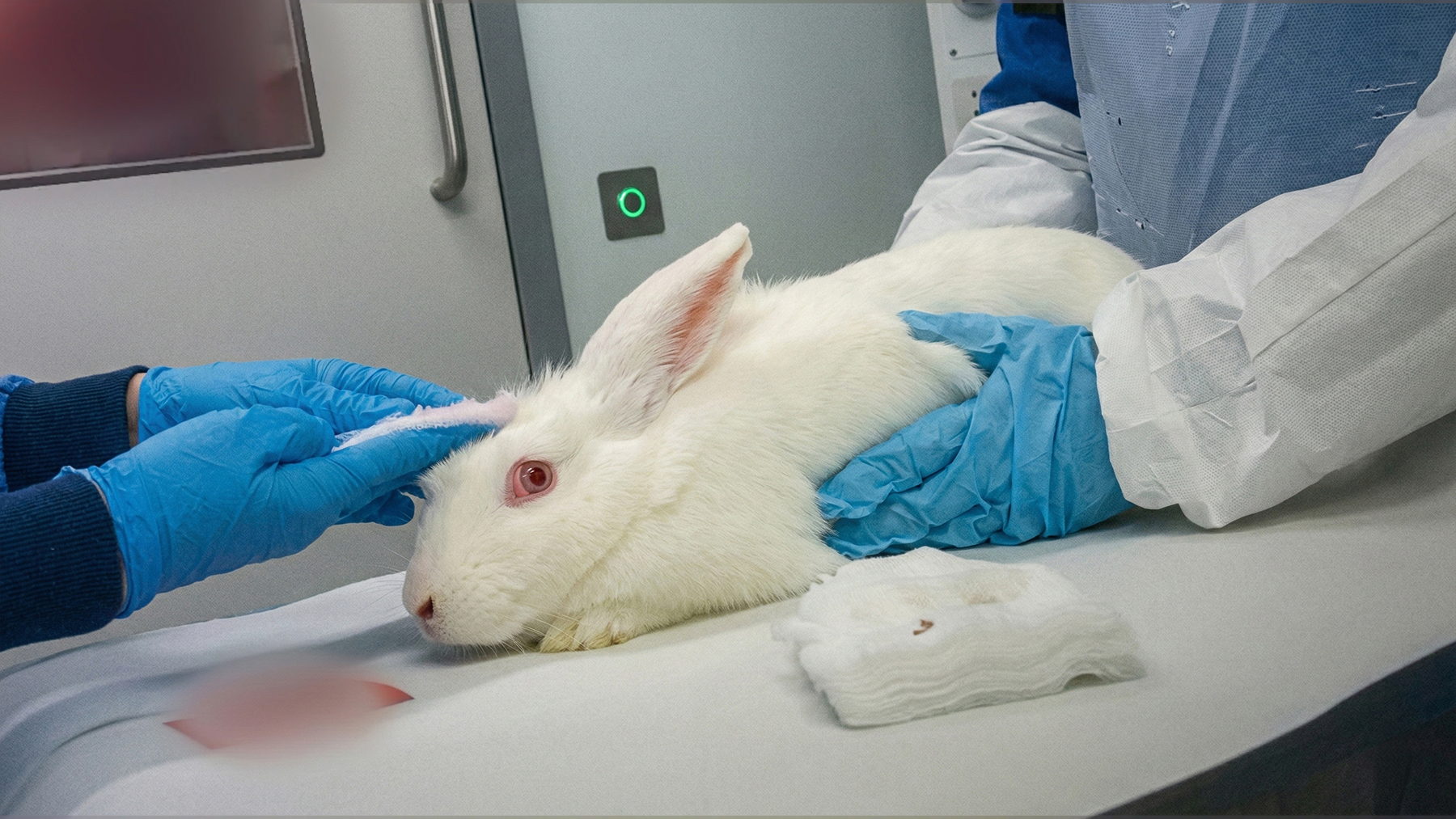
Beagles, rabbits, rats, mini-pigs and primates are shown being deliberately harmed in a process known as ‘toxicity testing’, designed to test whether a substance is harmful – and if so, how harmful? 

New footage released

Please watch if you can (there is a ‘safe mode’ option) and share it widely.

Animal torture dressed up as science

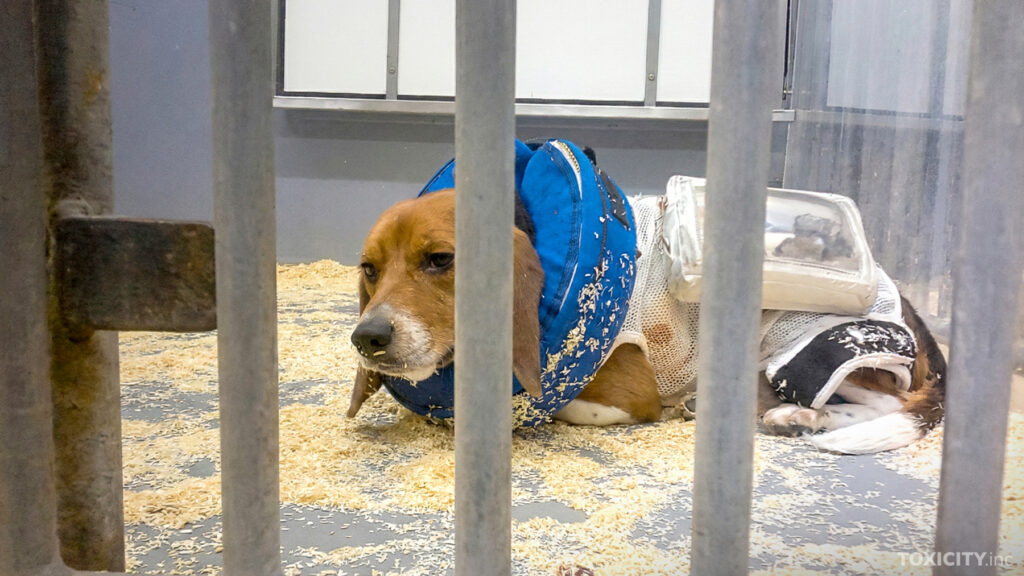
Beagles are chosen for experiments because of their placid nature. Even when they are subjected to harmful tests, they continue to seek the affection of their caretakers. 

New footage shows young beagles fitted with masks and forced to inhale chemical vapours, in tests that took place daily for many months.  

During a practice called ‘continuous infusion toxicity’, dogs have a catherter surgically implanted into a vein. They are then made to wear cumbersome jackets that contain a test substance, pumped directly into ther blood stream. 

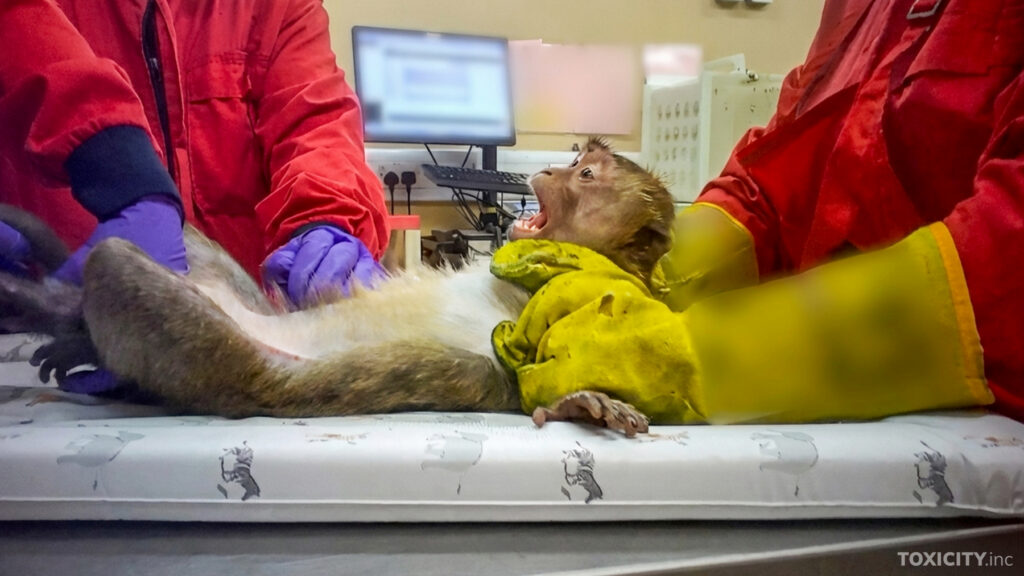
Primates are intelligent, socially complex animals who experience fear and distress deeply.  

Restraint devices have to be specially designed to immobilise primates for toxicity testing. These are called ‘primate chairs’ and restrain individuals by their necks so that sealed masks can be placed over their faces, forcing them to breathe in the test chemicals. 

Footage shows undeniable signs of distress and panic. 

In another particularly harrowing clip, a monkey is held down whilst blood is collected – his expression is one of sheer terror. 

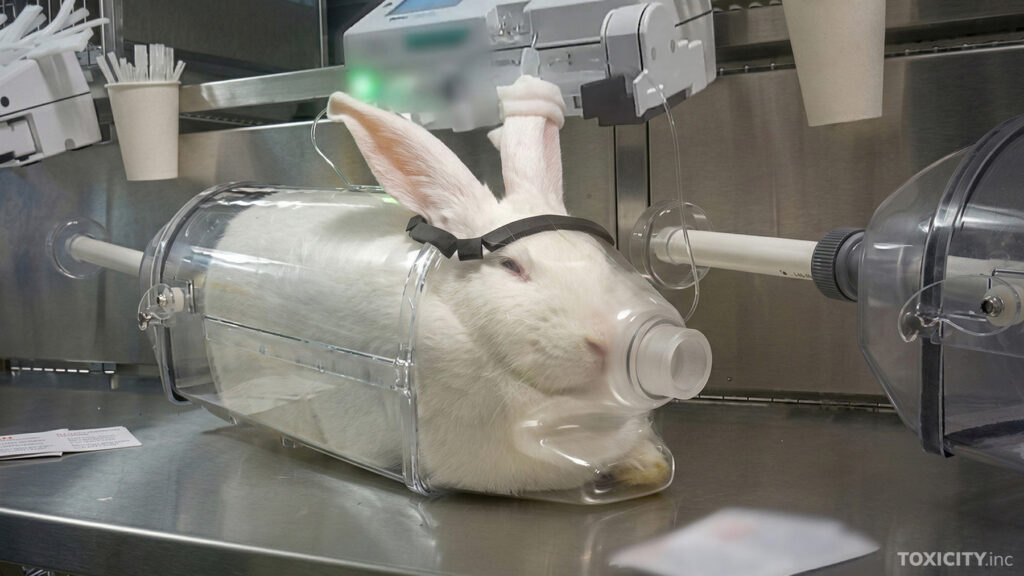
The size and defencelessness of rabbits make them particularly vulnerable to harmful procedures and restraint apparatus. Despite being active and social animals, they are typically housed in isolation, in small cages. 

Shocking new footage shows pregnant rabbits completely immobilised in plastic containers. These containers are rabbit-shaped and so snugly fitted, that rabbits cannot move at all. Test substances are then injected into a vein in their ears. The purpose? To see whether the substance will harm their unborn kits.  

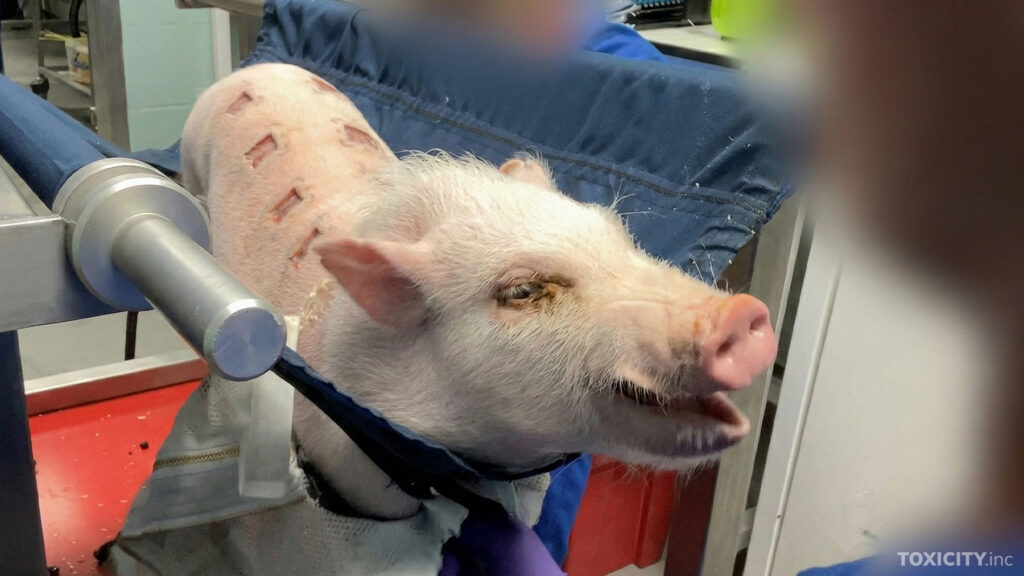
Despite being one of the most intelligent and sensitive of species, mini-pigs are being increasingly subjected to invasive and distressing procedures for toxicity testing. 

To test substances used on the skin, rectangles of flesh are surgically cut out of pigs’ backs so that test substances can be applied directly onto the wounds. Footage shows pigs struggling and crying out; this must be excruciating. 

In another clip, multiple workers surround a pig and immobilise her on her back while blood is taken.  

Rats are highly intelligent and social, known for their empathy. They are one of the most used species in toxicity testing. 

Fully conscious rats are squeezed into narrow, plastic tubes. Rows upon rows of these tubes are stacked upon one another forming an ‘inhalation tower’, designed and manufactured for the purpose of forcing rats to breathe in chemical vapours. 

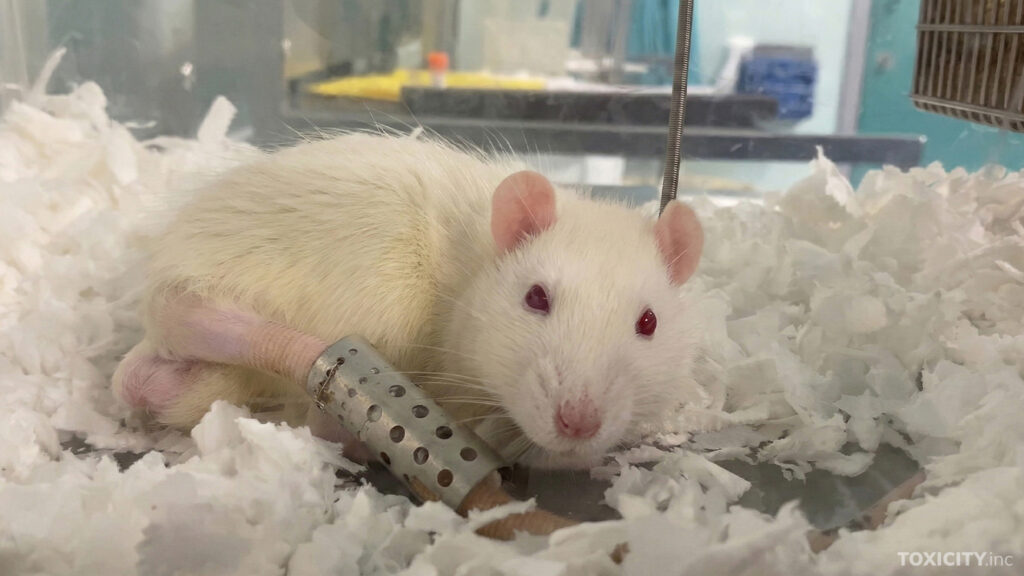
Rats are incredibly social animals and take comfort from being with others. But in laboratories, rats may be isolated in glass jars with a ‘tether device’ fitted to them, severely restricting their movement. The intravenous infusion of test substances can last up to two years. 

The effects of these tests are difficult to do justice in words. Animals may endure vomiting, weight loss, tremors, collapse, loss of limb movement, loss of coordination, convulsions and even death. 

At the end of the study, animals are killed by lethal injection and their bodies dissected for further research. 


One “severe” experiment is one too many 

One thing that all animal experiments have in common, whether carried out for toxicity testing or research, is a ‘severity classification’. This is the amount of “pain, suffering, distress and lasting harm” to which an animal will be subjected during an experiment. 

In response to new footage released this weekend, Understanding Animal Research claimed the footage showed the “rarest and most severe experiments” permitted by law.  

Yet we’re not aware that any of the tests recorded were classified as ‘severe’. 

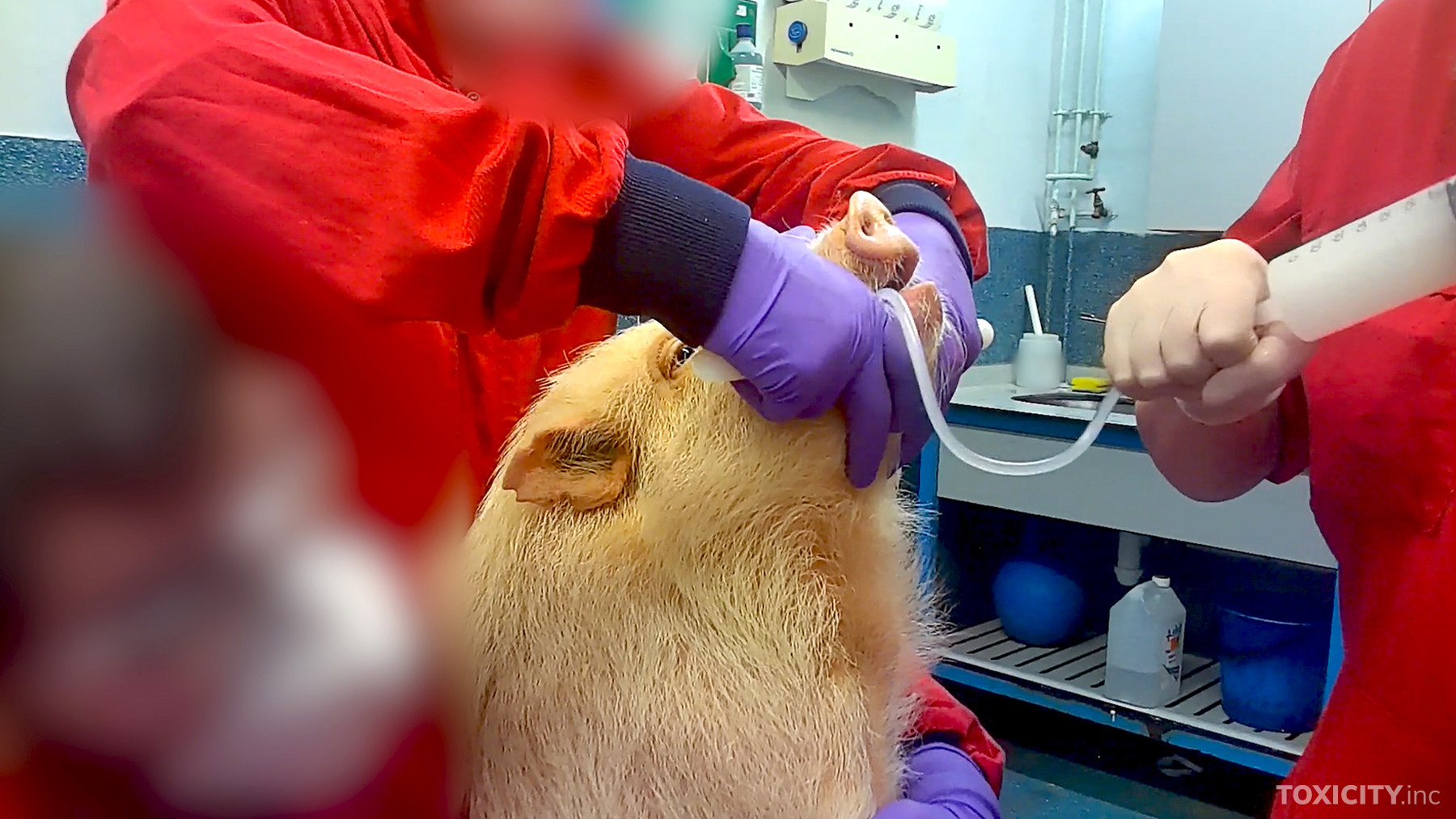
Meanwhile, ‘oral gavaging’ (the process of forcing a tube down an animal’s throat into their stomach) is the standard method of administering test substances despite its potential for distress, injury, even death. This procedure is certainly not “rare”. 


Oral gavaing (pictured here) is neither rare nor classified as 'severe'.

Importantly, any suffering that occurs outside of an experiment is not included in this severity classification. The constraints of laboratory housing, often inadequate and barren; the artificial light and strange noises; the inability to escape the presence of humans; and the anticipation of experiments, are not included. The stress and trauma of many hours of transport – primates may travel for days by air, road, or sea, confined to small cages and even arriving injured – none of this counts.

Shockingly, this cruelty is totally legal. In fact, it is licensed and regulated by the Home Office – despite growing evidence that using animals does not reliably predict how substances will affect humans. 

Tell your MP it’s time to end tests on animals

We’re calling on the Government to suspend all new tests, conduct a full review of all current licenses, and deliver on its promise to replace animals in science.