




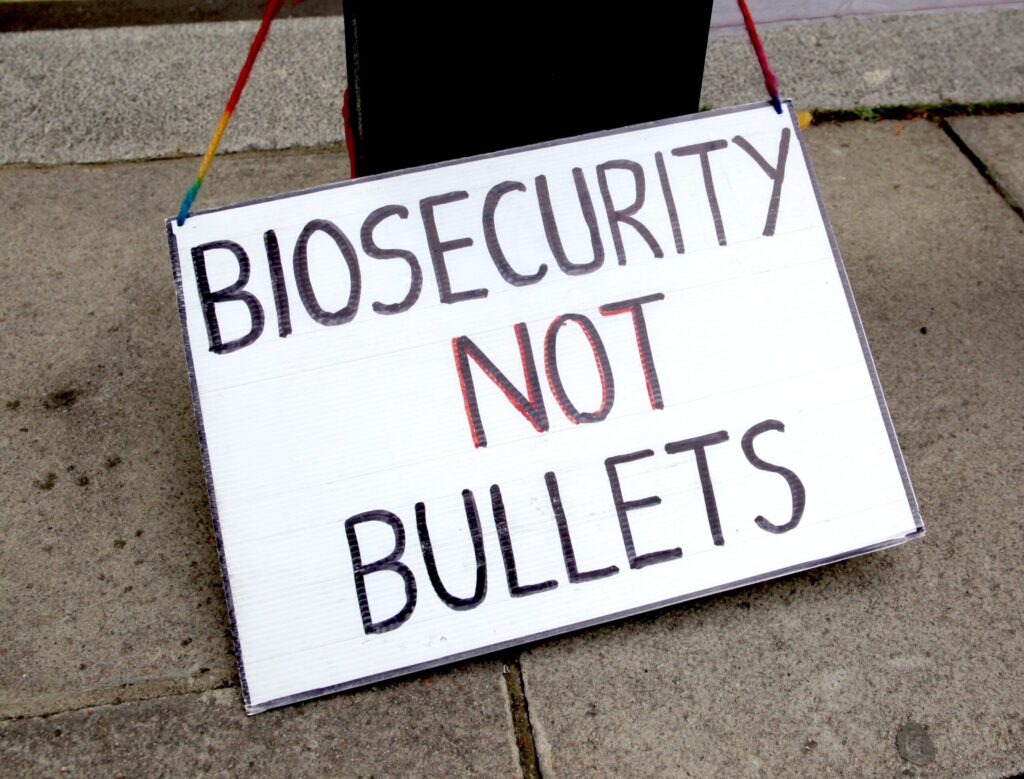
The truth about bTB and badgers
While cows can catch bovine tuberculosis (bTB) from wildlife, the science has long shown that most infections are transmitted from cow to cow. They are also more likely to catch the disease if kept in poor conditions or suffering ill health, which affects their ability to withstand dangerous pathogens and disease [1].
It was encouraging to hear several expert speakers, including ex-pig veterinarian and whistleblower, Dr Alice Brough, address the absurdity of fighting the badger cull whilst supporting animal agriculture: “to save nature, we must remove the unnatural and there is nothing more unnatural than animal farming”.
Dr Brough went on to say that poor practices and husbandry on farms – such as spreading vast quantities of slurry over grazing land, crops and waterways – is a much greater risk of spreading disease than badgers. The issue of infected slurry has been under renewed public scrutiny since the airing of Sir Brian May’s BBC2 documentary ‘The Badgers, The Farmers and Me’, which showed that a single gram of infected faeces was enough to infect a cow. And yet, dairy cows are frequently left to stand or lie in their own waste, confined to poorly ventilated sheds, or sent to graze on potentially infected land.
The bigger picture
Animal farming creates conditions that are ideal for the rapid emergence and spread of disease. Huge numbers of highly stressed animals bred for fast growth and high production, who are housed in overcrowded, unsanitary conditions provide the perfect breeding ground for infections. And it’s not just bTB: outbreaks of avian flu are more likely in countries, including the UK, who operate large-scale, intensive chicken farming [2,3] while cases of swine flu have increased in line with the intensification of pig farming seen over the past 50 years.
As long as the relationship between humans and animals is one based on production and profit rather than respect and compassion, animals will continue to suffer – from the cows exploited as milk machines to the wildlife treated as scapegoats. The one thing we can all do for the planet and its inhabitants, including the badger, is to adopt a cruelty-free, plant-based lifestyle.
Find out more here or order your FREE Guide to Going Vegan.
[1] Schuck-Paim, C., Alonso, W.J., & Slywitch, E. (2023). Animal welfare and human health. In A, Knight, C. Phillips, & P. Sparks (Eds.), Routledge handbook of animal welfare (pp.321-335). Routledge.
[2] Shortridge, K.F., Peiris, J.S.M., & Guan, Y. (2003). The next influenza pandemic: Lessons from Hong Kong. Journal of Applied Microbiology, 94(1), 70-79.
[3] Greger, M. (2006). Bird flu. New York: Lantern Books.