Better Science: The rise of animal testing alternatives

From Artemis II to the supercomputers we call phones, technology has advanced beyond our wildest imaginations. Yet some science still relies on animal testing methods as old as 1927, like the LD50 test - but it doesn’t have to.

For decades, we’ve been told that using animals is a necessary step in scientific and medical progress. But today that assumption is being increasingly challenged – not just on ethical grounds but on scientific ones too, supported not just by animal rights and animal protection groups, but by academics, scientists, politicians and policymakers. 

At the same time, a wave of innovative, human-relevant technologies is transforming how we carry out research. These non-animal methods (NAMs) are more ethical and may also be faster and more precise. 

Science is being reshaped by smarter, more compassionate alternatives. 
In-vitro (meaning ‘in glass’) testing uses human cells and tissues grown in controlled laboratory environments to study biological processes and to test substances. Because these systems are based on human biology, they can provide more accurate insights than ‘animal models’ as they are more relevant and are not subject to ‘species differences’. 

Organ-on-a-chip systems are tiny, engineered devices. Lined with living human cells, they can mimic processes which happen in the human body, like blood flow, our lungs expanding as we breathe, or digestion. This allows researchers to observe how drugs or chemicals interact with the human body in real time – without the need for animals. 

With advancements in computing power, scientists can now simulate complex biological systems using sophisticated computer modelling. These “in-silico” methods predict how substances behave in the body based on existing data. 

Currently, animals in laboratories may be exposed to doses of test substances hundreds of times higher than they’d ever be administered to humans. In contrast, microdosing (the process of administering tiny, safe quantities of a test substance) may be the answer, as it would allow researchers to enlist the help of consenting human volunteers, rather than animals who cannot consent. 

Organoids are miniature, simplified versions of human organs which are typically grown from stem cells. Despite their small size, they replicate key structural and functional features of real organs. This makes them powerful tools for studying diseases and testing substances in a way that is both ethical and highly relevant to human health. 

Artificial intelligence (AI) is revolutionising how we analyse biological data. By identifying patterns across vast datasets, AI can predict how drugs and chemicals will affect the human body. This now only reduces the need for animal testing but also enhances the speed and accuracy of scientific progress.  

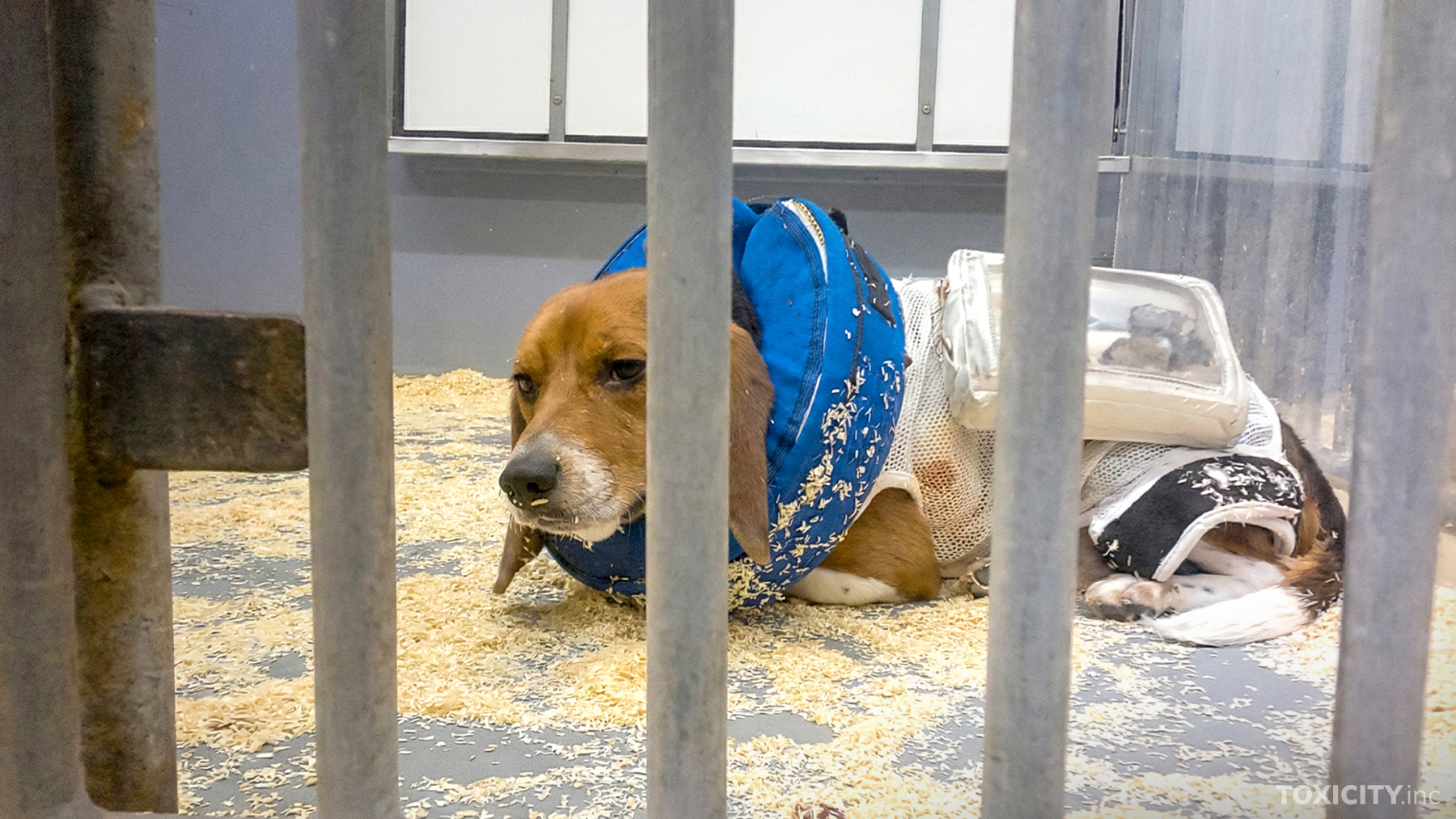
New footage shows that, as a society, we have to do better.

Crucially, even if none of these scientific methods existed, the ethical case against animal testing would remain. As new footage shows, the cost is just too great: animals suffer immensely in the name of ‘science’, suffering that is at odds with a kind and progressive society. 

Thankfully, we don’t have to make that choice.

By embracing technologies that are both cruelty-free and human-relevant, we can build a future where scientific progress no longer comes at the expense of animals’ lives. The question is no longer whether we can move beyond animal testing – but how quickly we are willing to do so. 

Tell your MP it's time to end animal testing

We’re calling on the Government to suspend all new tests, conduct a full review of all current licenses, and deliver on its promise to replace animals in science.