
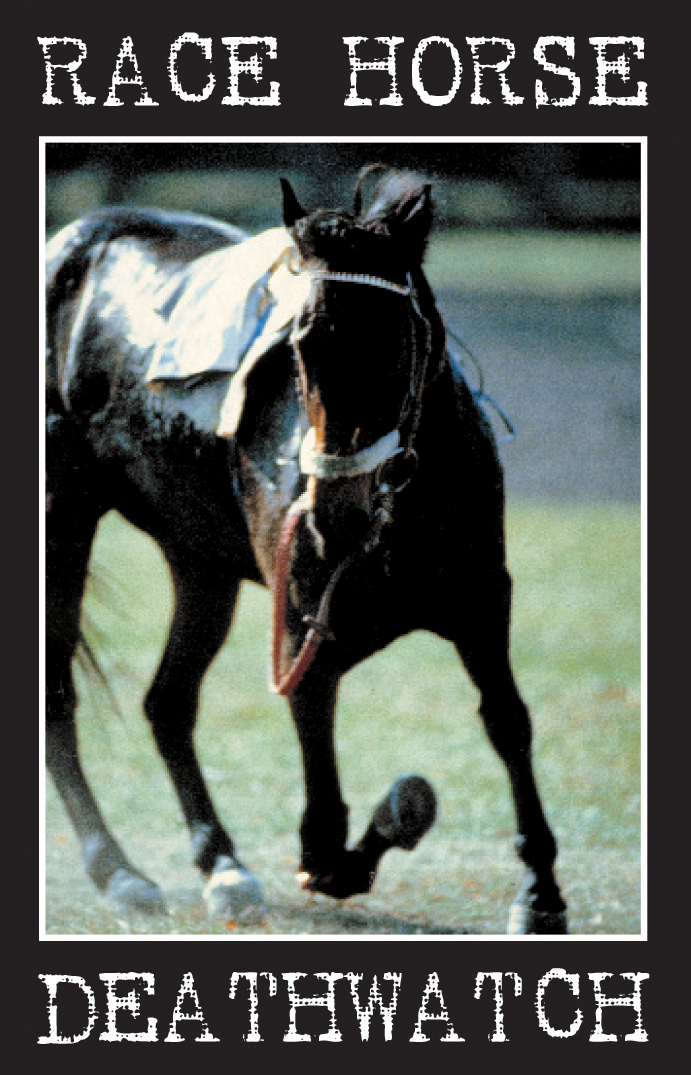
One Thoroughbred Death Every Other Day on a British Racecourse
Unique research by national campaign group Animal Aid demonstrates that a horse dies on a British racecourse approximately every other day.
Race Horse Deathwatch was started in March 2007. Since that time, nearly 500 horses have perished – typically, from a broken limb or neck; severe tendon injuries; spinal injuries; or a heart attack. The latest Deathwatch summary, published this week, reveals that Sedgefield Racecourse has killed most horses and that, across Britain, jumps racing is more than four times as dangerous as racing on the Flat.
Says Animal Aid Horse Racing Consultant, Dene Stansall:
‘That race horses routinely die horrific deaths on British racecourses is the industry’s dirty secret. As shocking as our statistics are, they do not account for all the deaths on racecourses and in training. We challenge the industry regulatory body, the British Horseracing Authority, to come clean with the public and publish a full account of all horse injuries and deaths, so that people can make their own judgement about what we regard as an inherently exploitative industry.’
More information:
- A detailed analysis follows.
- For full background and interviews, contact Andrew Tyler or Dene Stansall on 01732 364546
- An ISDN line is available for broadcast-quality interviews.
Notes to editors:
- Animal Aid’s Horse Racing Awareness Week – seven days of campaigning and awareness raising – runs from 4-10 April 2010.
- Initiatives include a billboard in Liverpool city centre, opposing the Grand National.
- View our powerful 90-second web film and the Liverpool city centre billboard at www.stopkillinghorses.com
- Of the approximately 18,000 horses bred each year by the closely related British and Irish racing industries, only around 40 per cent go on to race. Many of the ‘low quality’ newborns are destroyed, while those who do enter racing suffer a high level of fatal injuries and stress-related illnesses, such as gastric ulcers and bleeding lungs. Around 7,500 race horses leave British racing each year, yet very few go on to a sanctuary or adoptive home.