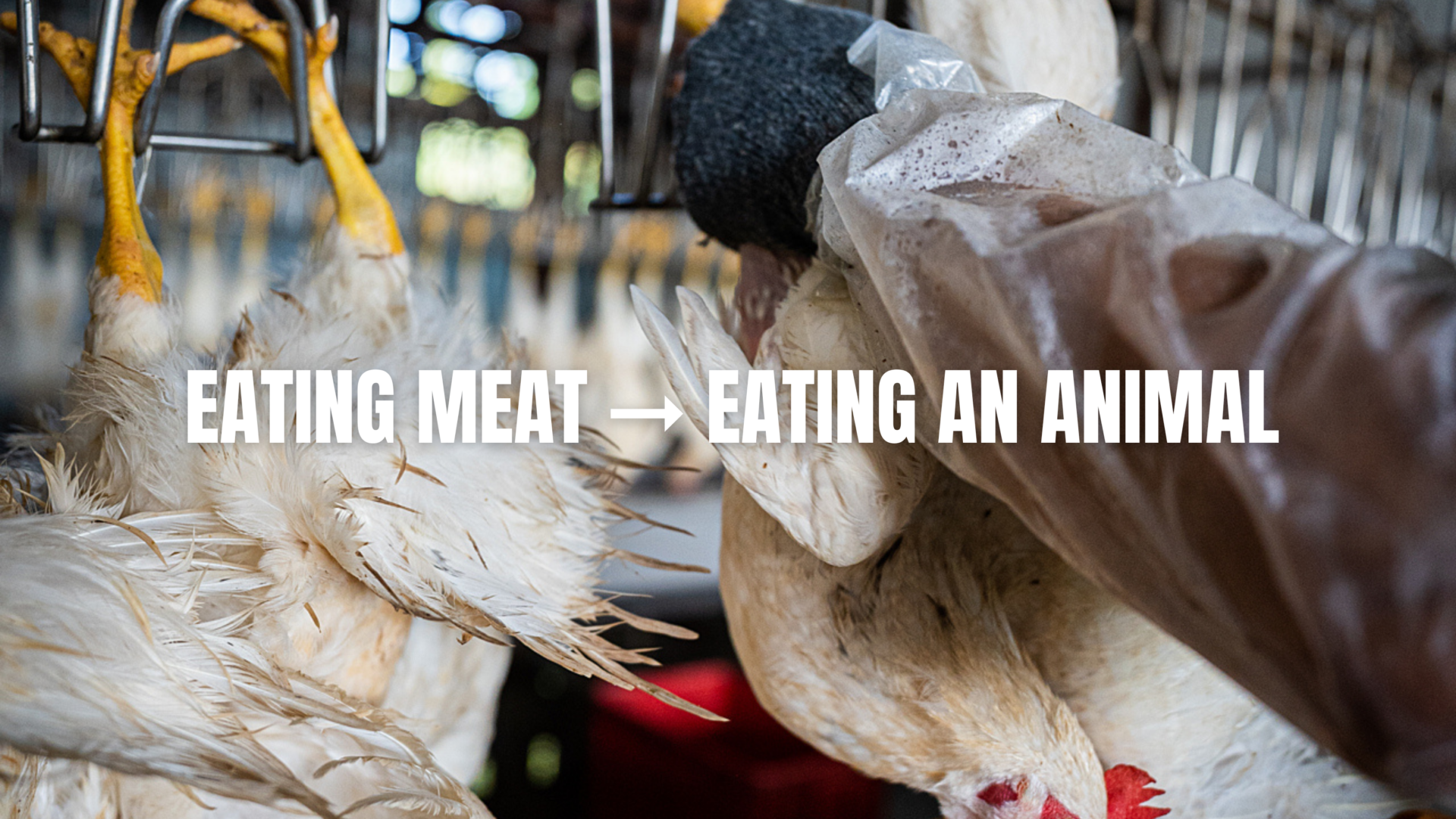
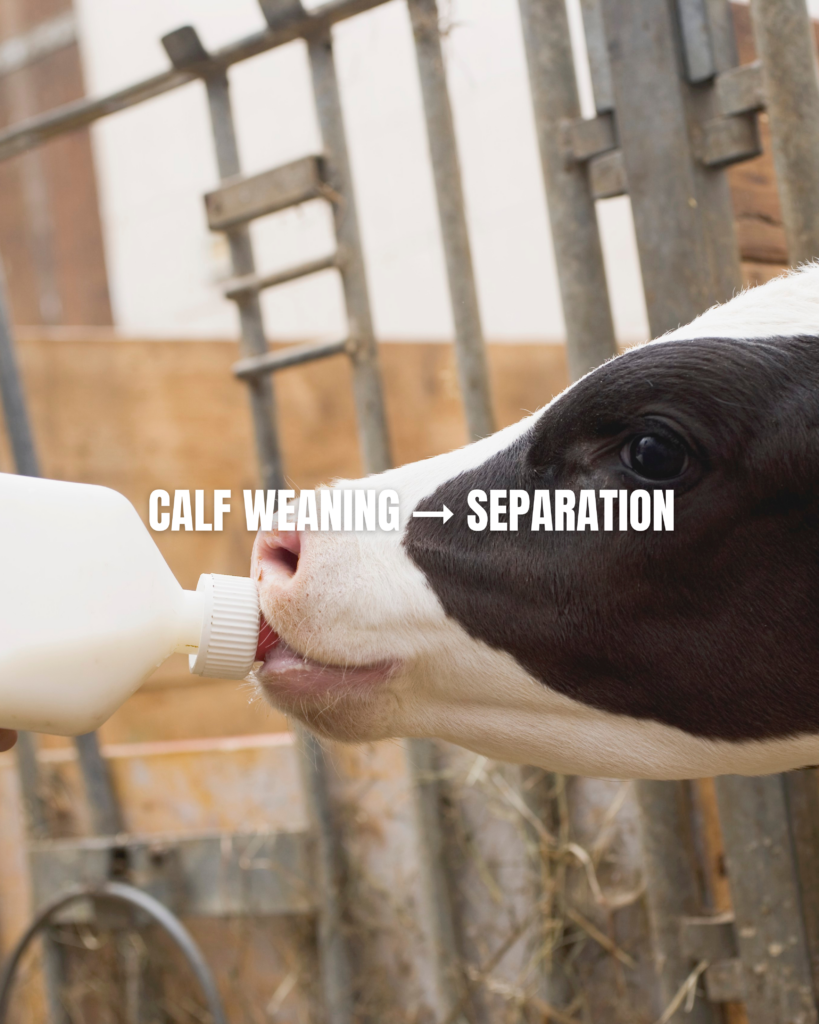
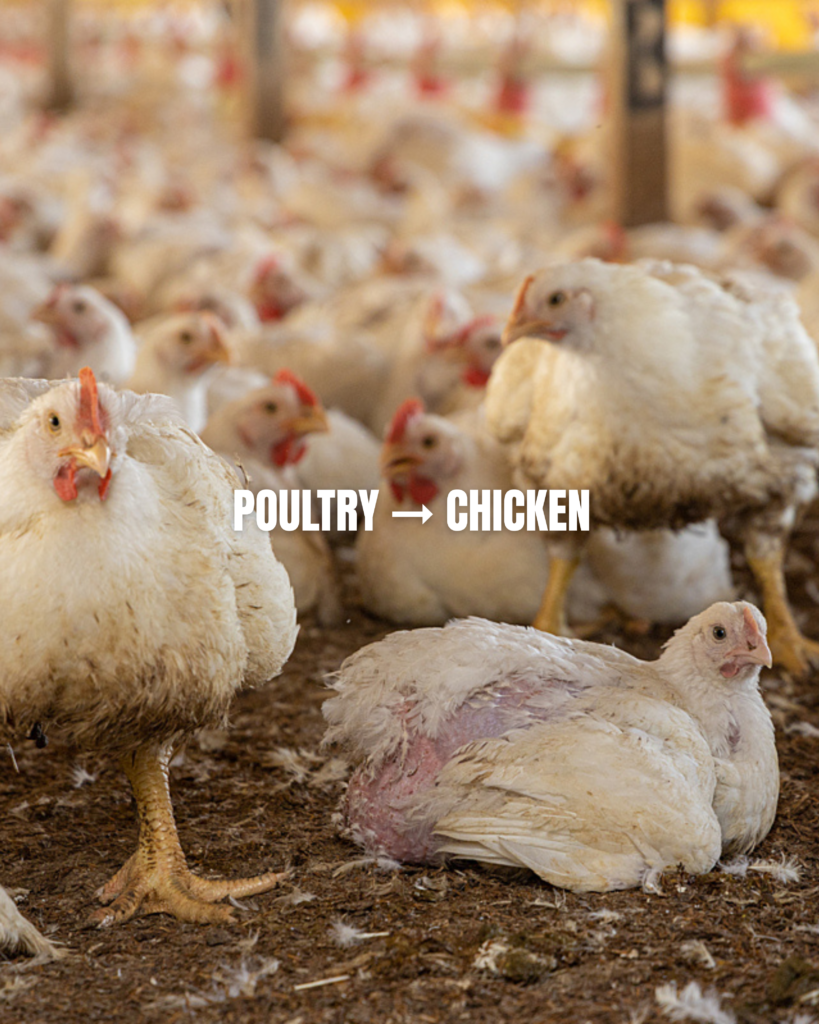
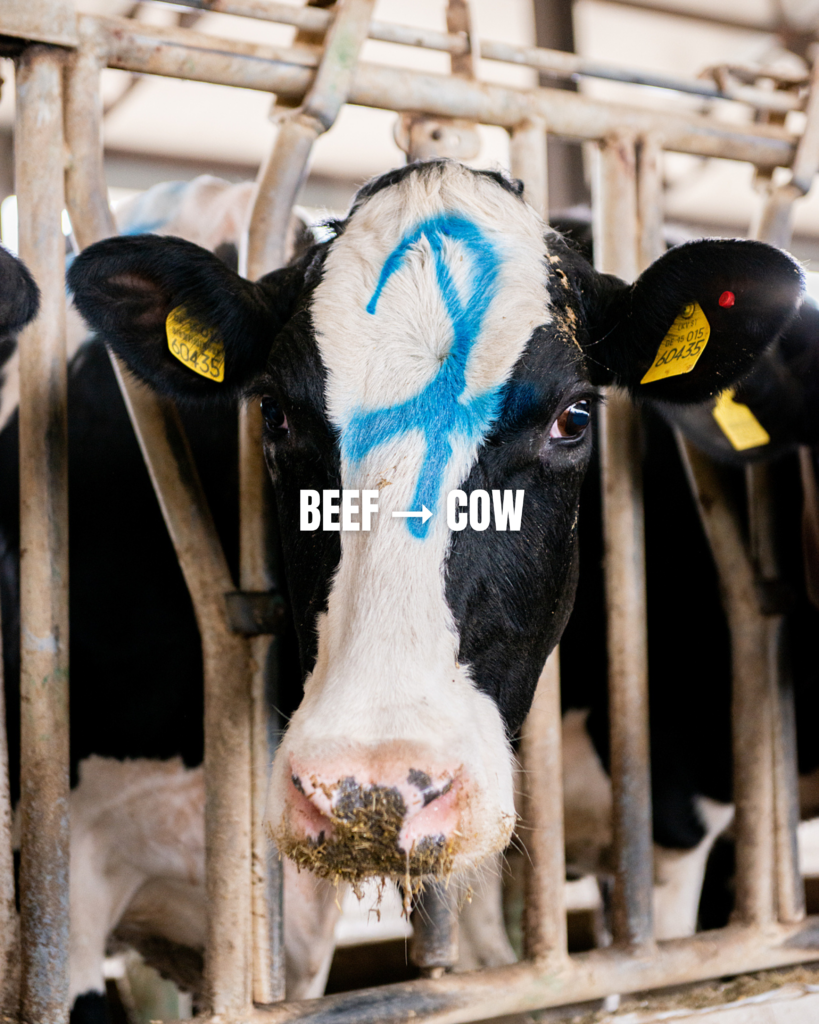
In the examples above, did you notice how the animal disappears?
Separation from mum ➔ Weaning
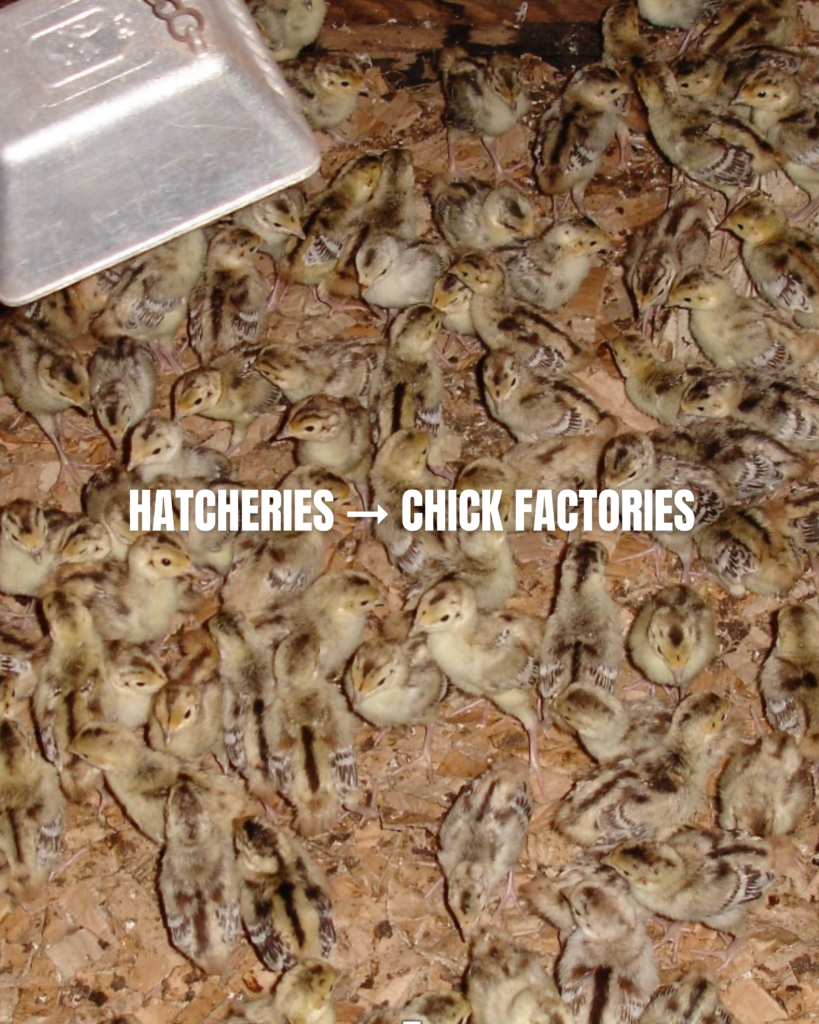
Chick factories ➔ Hatcheries
Pig ➔ Pork
Eating an animal ➔ Eating meat
Animals who are hunted ➔ Game
Chicken ➔ Poultry
Cow ➔ Beef
Exploited mother ➔ Dairy cow
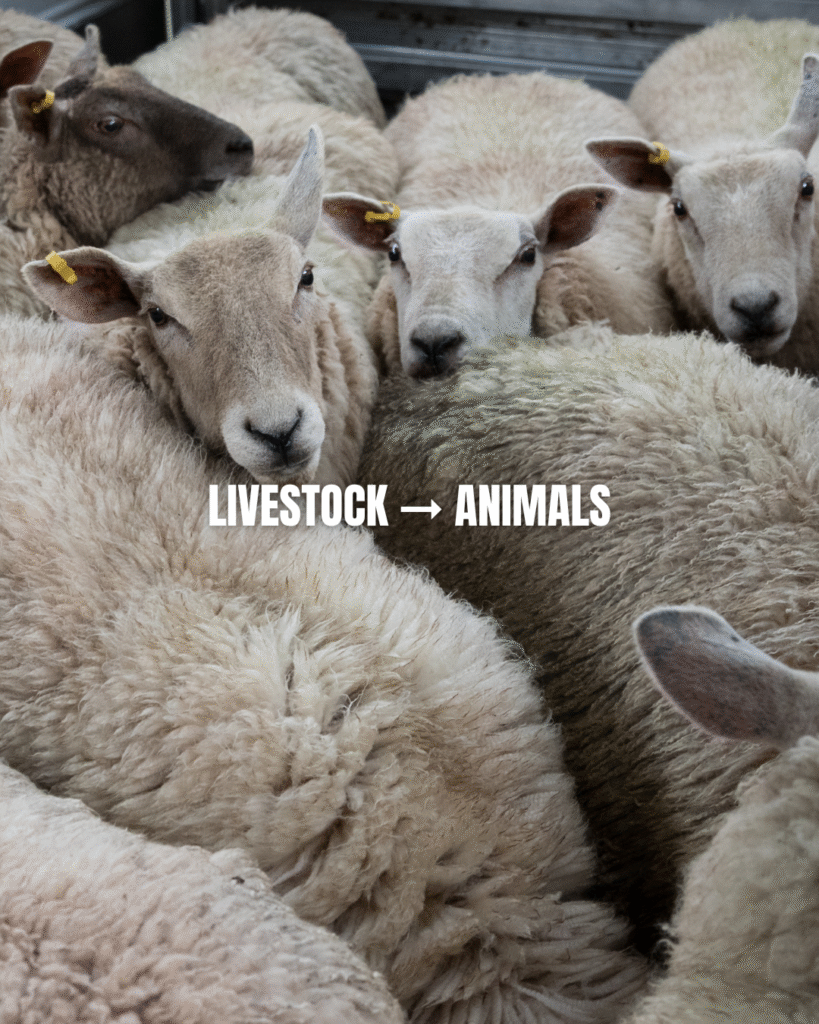
Adult sheep ➔ Mutton
Unintended victims of fishing ➔ By-catch
When the individual disappears from our words, it becomes easier for their suffering to disappear from our concern.
From individual to inventory
Animals confined on farms are selectively bred for rapid growth and high ‘yield’. Chickens farmed for their meat grow so quickly that they cannot stand, forced to lay on dirty litter, causing skin irritation and soreness. Mothers in the dairy industry are forced to produce such high quantities of milk that their legs sometimes buckle beneath them. Pigs are trapped in systems designed for efficiency, not for their needs.
Yet the language surrounding these practices centres productivity, not the individual.
The chicken becomes a “broiler”.
The worn-out mother becomes cheap “beef”.
The pig becomes “pork”.
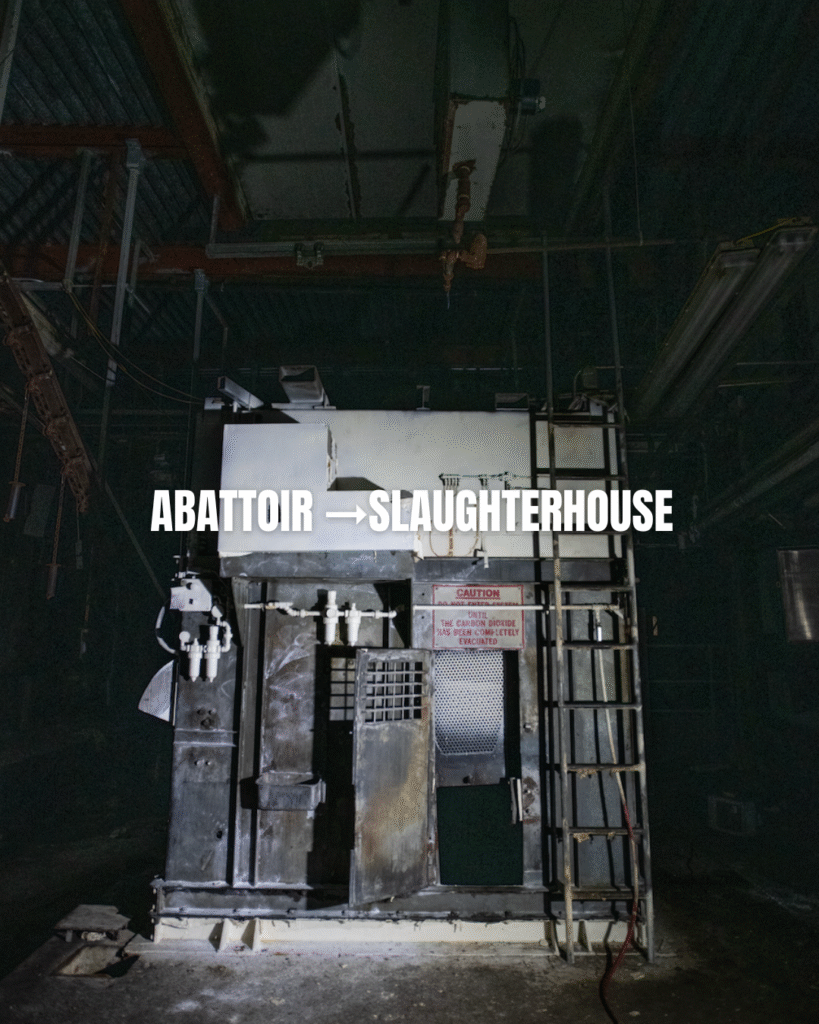
Animals in slaughterhouses experience unimaginable horror. Animal Aid investigations have found sheep being improperly stunned and going to the knife whilst conscious. We’ve witnessed ponies being killed in front of one another. In yet another example, a lamb desperately tries to find an exit, all too aware of what’s coming next.
Yet the language surrounding slaughter is hugely sanitised.
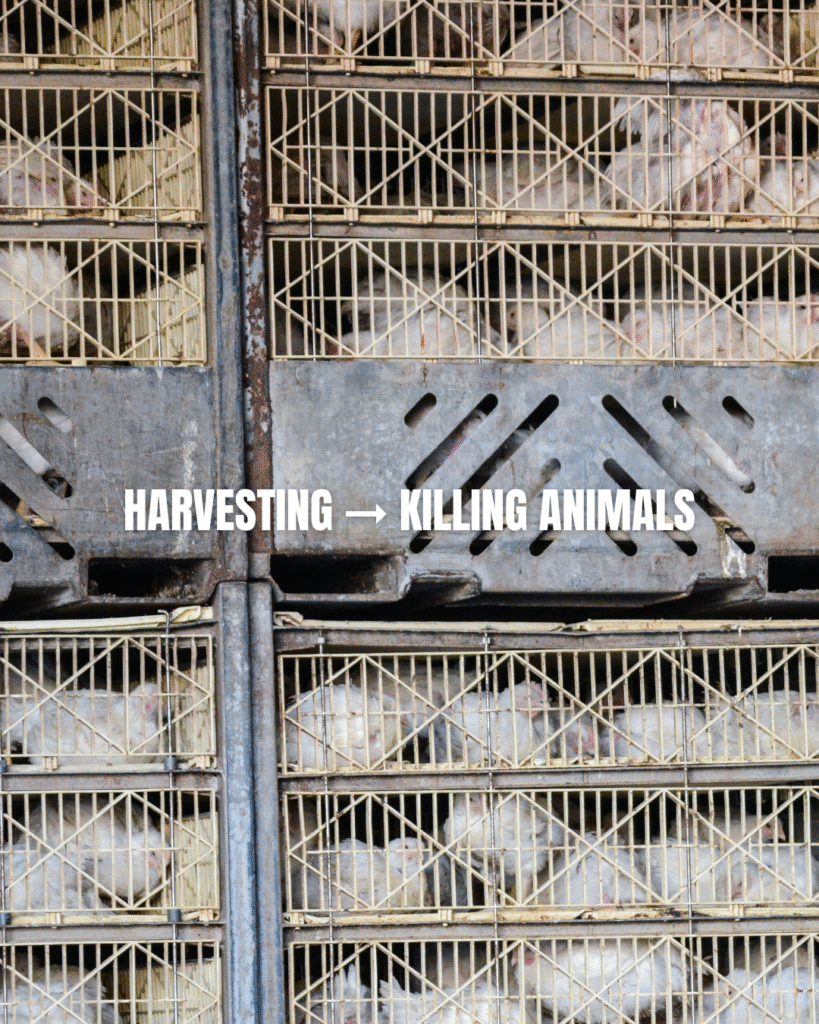
Killing becomes “harvesting”.
Cutting up their bodies becomes “processing”.
By the time their flesh reaches our plates, the transformation is complete. The connection between the living individual and the final product has been carefully, deliberately severed.