Christmas is a season built on warmth, generosity, and togetherness. A time when many of us try to live our values a little more brightly.
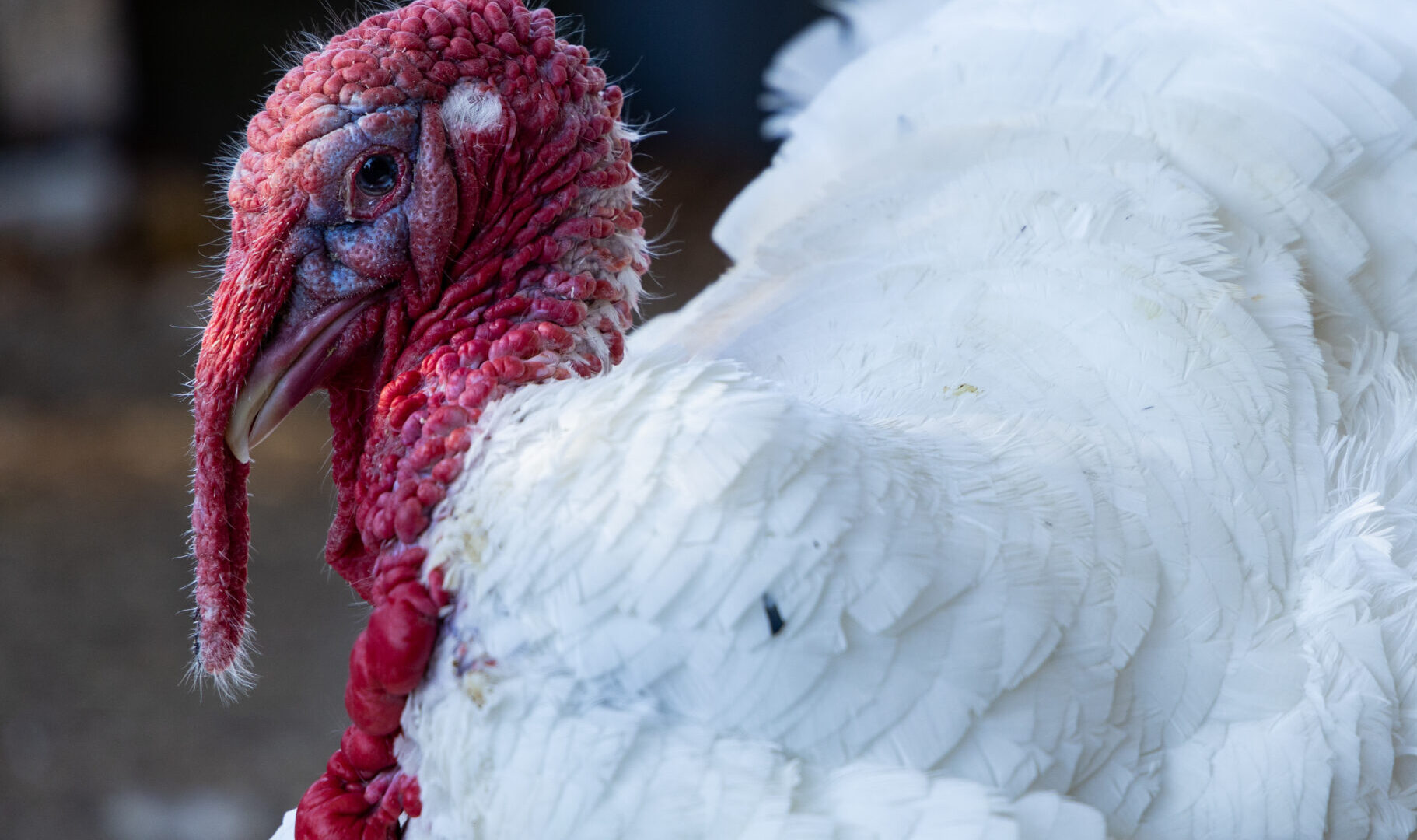
Turkeys are gentle, curious birds who form strong friendships and communicate in over twenty distinct calls. They recognise familiar faces, enjoy exploring new spaces, and their heads even change colour depending on how they’re feeling. Like many of our animal companions, they each have their own personality and way of experiencing the world.
Yet the system that produces most Christmas turkeys prevents these sensitive individuals from living the lives they’re naturally drawn to.
A system that works against compassion
Modern breeds have been pushed to grow far larger and faster than nature intended, which means natural mating is almost impossible. Instead, turkeys are routinely forced into artificial insemination, an invasive procedure they cannot understand or consent to.
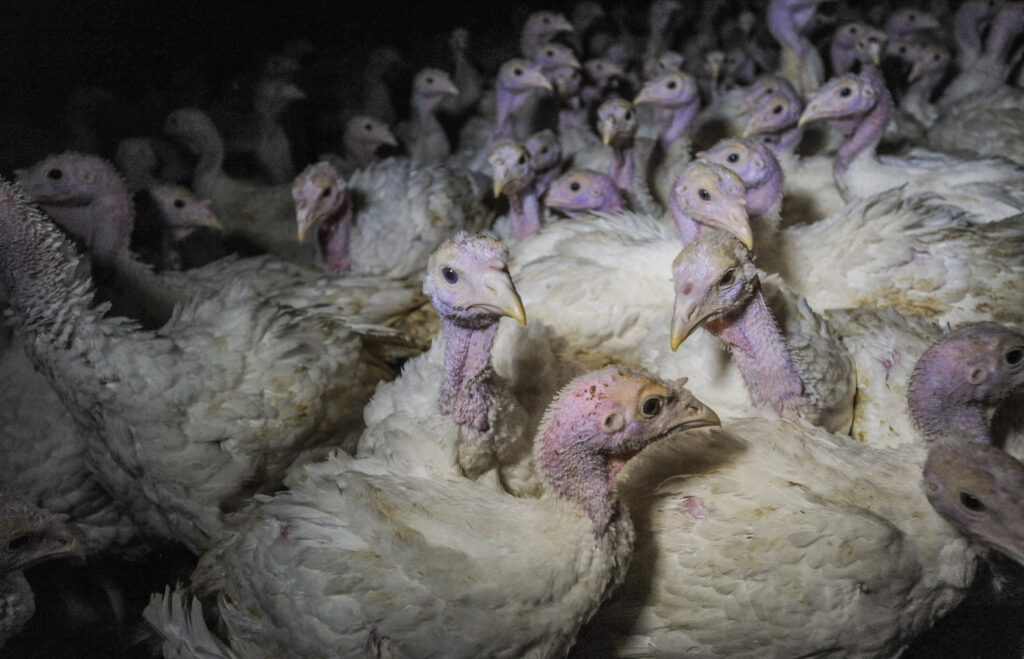
Government rules allow only a small patch of floor space per bird, leaving inquisitive young turkeys with nowhere to explore, stretch their wings or express the playful behaviours they show when given the chance.
For parent birds, life is equally restricted. Their eggs are taken to hatcheries, and once their bodies can no longer be used by the system, they too are killed. None are allowed to raise their young.
Labels don’t always reflect lived experience
Even birds raised under “free-range” or “higher-welfare” labels may spend the entire winter indoors. Many undergo the same painful mutilations and face similar overcrowded, barren conditions that fall far short of the images shown in advertising.
A short life, cut shorter still
Turkeys can live for more than ten years. Those raised for Christmas are usually killed at only 12–26 weeks old — still young and playful by nature.
Most are exposed to gas that causes panic and breathlessness. Others are shackled upside down and stunned in electric water before their throats are cut. When the system moves at such speed, some birds are not effectively stunned, meaning they can reach the scalding tank alive.
A kinder Christmas is within reach
For many of us, Christmas is about compassion, connection and celebrating the good in our lives. Choosing a kinder Christmas meal is one way we can extend those values to our animal cousins.
By stepping away from supporting a system that restricts and harms these gentle birds, we help create the kind of world we want to celebrate — one rooted in care and fairness.
Image credits:
Molly Condit / LEAP / We Animals
Jo-Anne McArthur / Djurrattsalliansen / We Animals