
On a day where we celebrate primates, their uniqueness and their close genetic proximity to humans, it is chilling to think of how some humans choose to trade, treat, torture and kill these animals. If the human race cannot safe-guard and protect animals which are so similar to humans, can we have any hope that other animals will be safe from the harms inflicted by us?
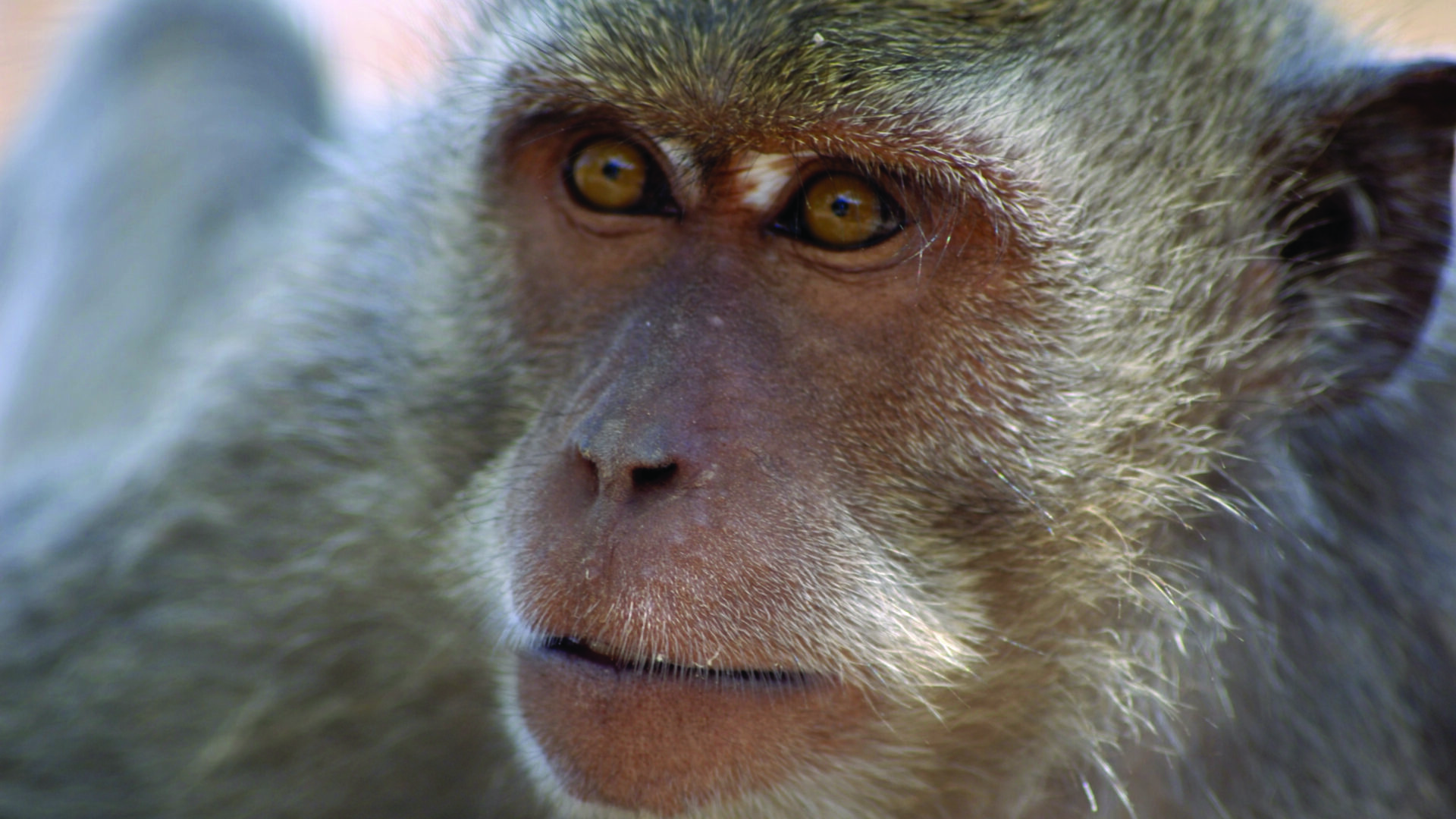
Today is ‘International Primate Day’
1st September is 'International Primate Day', a day to celebrate the uniqueness of all primates and to reflect on our use and abuse of these wonderful animals - man's closest relatives.
Non-human primates, often referred to as monkeys, are abused and killed in British laboratories on a daily basis, year after year*. This is not only unethical, but scientific evidence is mounting as to the unreliability of these experiments.
*In the official statistics, the number of animals used and the number of experiments (called procedures) conducted in any year are not always the same. Some animals will be used in more than one procedure.
In 2023, in Great Britain, 1,815 primates were used in laboratories. There were 52 marmoset and tamarin, 47 rhesus monkeys and 1,716 cynomolgus monkeys.
Where do they come from?
These intelligent animals, each uniquely individual, are seen merely as stock. They are as subject to the forces of supply and demand as a box of washing powder, a test-tube or a bag of apples. They are part of a global industry, where money rules and they are seen as numbers on spreadsheets.
The latest official statistics for the animals being used in laboratories in Great Britain (in 2023) state that:
- All of the 52 marmosets and tamarins used in Great Britain were born in the UK.
- All of the 47 rhesus monkeys used in Great Britain were born in the UK.
It is likely that they were born at the MRC Centre for Macaques which describes itself as ‘a primate breeding unit established in 2003 to house and breed rhesus macaques, funded by the MRC with support from the Wellcome Trust.’ The website explains ‘The monkeys are used in basic and applied research within the academic sector in the UK, funded by the major grant-giving bodies. The unit houses about 250 animals including breeding stock and youngsters. The breeding programme is planned so that supply and demand are matched, to prevent in-breeding and to ensure there is no need to import animals.’
- The supply of Cynomolgus moneys, (long-tailed macaques) paints a very different picture. Of the 1,716 used in Great Britain, 15 were born in the UK, 376 were born in Asia and 1,325 in Africa. Transported from countries such as Vietnam or Mauritius, these young animals would have been subjected to long, gruelling journeys across land, by air and possibly even sea. This issue was highlighted in the national media last year in an article which begins:
‘Monkeys flown into the UK for laboratory testing were so badly injured that their crates were smeared with blood, photographs suggest. The long-tailed macaques endured journeys of up to 25 hours from Mauritius and Vietnam, transported in cramped wooden crates too small for them to stand upright. After quarantine in the Netherlands, the macaques were driven to Brussels airport before being flown to Manchester airport.’
Transport stress in imported primates was investigated by academics in 2004. They looked at behavioural changes in a group of Macaca fascicularis (long-tailed macaques) who were ‘transported by air from standard breeding conditions and then re-housed in standard laboratory primate conditions. The animals were studied prior to their departure, immediately after their arrival, and 3 weeks after that.’ How the animals spent their time and how their groups’ social structure was disturbed were monitored. The authors state:
‘Changes in behaviour occurred which reflected heightened levels of stress in the study group. It was also clear that although there was some adjustment of behaviour, after an initial change on arrival at the new establishment, there was no return to levels observed at the breeding facility within the first month.’ The authors conclude; ‘as a whole, the process of international air transport and re-housing in laboratory conditions may result in the compromising of the welfare of the study animals.’ (our emphasis)
Despite knowing the stress these animals are forced to endure, before they are even subject to the experiment, more than two decades after this paper was published this grim trade continues.
According to a 2024 paper about wild populations of long-tailed macaques ‘In 2022, long-tailed macaques (Macaca fascicularis), a once ubiquitous primate species, was elevated to Endangered on the International Union for Conservation of Nature (IUCN) Red List of Threatened Species.’ They cite several reasons for this, including ‘overutilization for scientific, commercial, and recreational purposes’.
The 2023 stats outline how primates are used in laboratories in Great Britain:
Of the 1,716 long-tailed macaques used in 2023, all but 30 of the animals (1,686) were used in ‘regulatory’ procedures. There were 1,883 procedures in total. They were conducted for ‘routine production blood-based products (127 procedures). ‘other efficacy and tolerance testing’ (62 procedures) and ‘toxicity and other safety testing including pharmacology’ (1,694 procedures)
Regulatory procedures are those required by law. Regulatory procedures are the subject of our ‘Roadmap to phase out animal testing’. Toxicity testing is done to try to determine how toxic a substance is. The tests do not result in the publication of a research paper, unlike other areas of research, so there is no publicly available information. There is even more secrecy surrounding these tests than other areas of animal experiments. We very rarely know how these animals are treated, unless the establishment is the subject of an undercover investigation.
One example of how animals have suffered comes from a report from Animal Defenders International.
“one monkey displayed aggression towards the others and so was housed alone. When this animal was taken out the cage to be dosed by oral gavage, he vomited faeces, which he’d apparently eaten in his cage. He then had a nose bleed. After one dosing session a technician pointed out that the monkey had laid down and recovered after a few minutes. As recovery was rapid after being returned to his cage, it is possible that all the clinical signs were a result of stress rather than an effect of the test compound.’
The scale of suffering is immense. As in common with all other animal experiments, primate experiments generate data that cannot be reliably translated to humans. This makes the experiments both cruel and unreliable.
As well as outlining more about the global trade in long-tailed macaques for ‘science’ (including the main players in this grisly trade) the 2024 paper chillingly describes other ways in which these inquisitive animals are abused by humans: ‘Overutilization in combination with culling and extraction for the biomedical trade has resulted in local extirpations (extinction)…Trade in long‐tailed macaques takes many forms including the capture and export of whole animals and/or their biological specimens for biomedical and toxicology research, skulls for ornamental accessories, skin for hats, meat for traditional medicine and food, and pets for private owners and for entertainment use, especially for the growing trend of abuse in social media. This is exemplified by primates, especially long‐tailed macaques, being one of the most common species seen in online animal cruelty content