
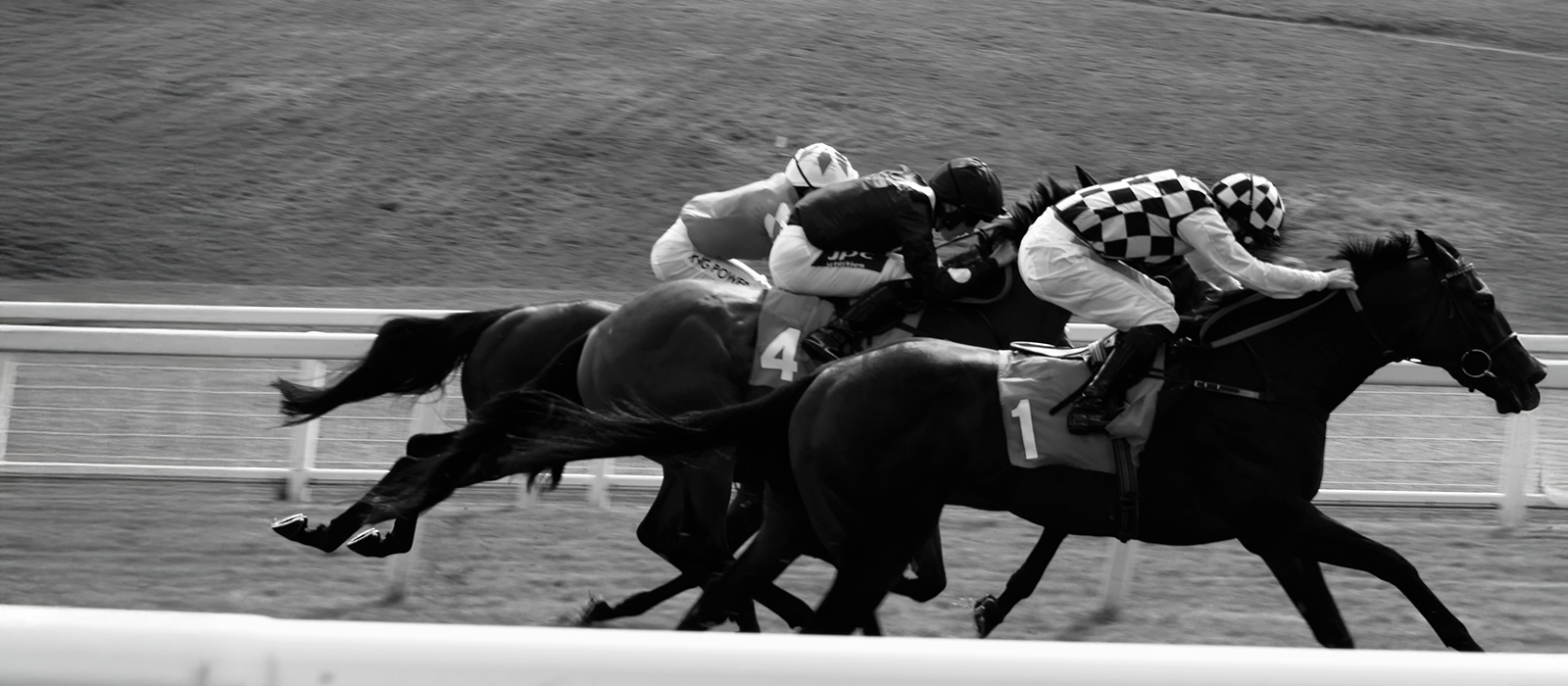
Horses are exploited and abused every single day in the racing industry. Far from the happy fairytale the industry would have you believe, these innocent animals endure gruelling training regimes, are routinely whipped and subjected to painful contortions using equipment designed to control and manipulate their bodies. They experience excruciating injuries and are at constant risk of death – whether on a racecourse, in a knacker’s yard or in a slaughterhouse.
Horses are thinking, feeling, sensitive animals who have a value all of their own, regardless of the profits they may earn for those who force them to race. They deserve to live free from the abuse and suffering that is rooted into the foundations of racing. And we are determined to help them.
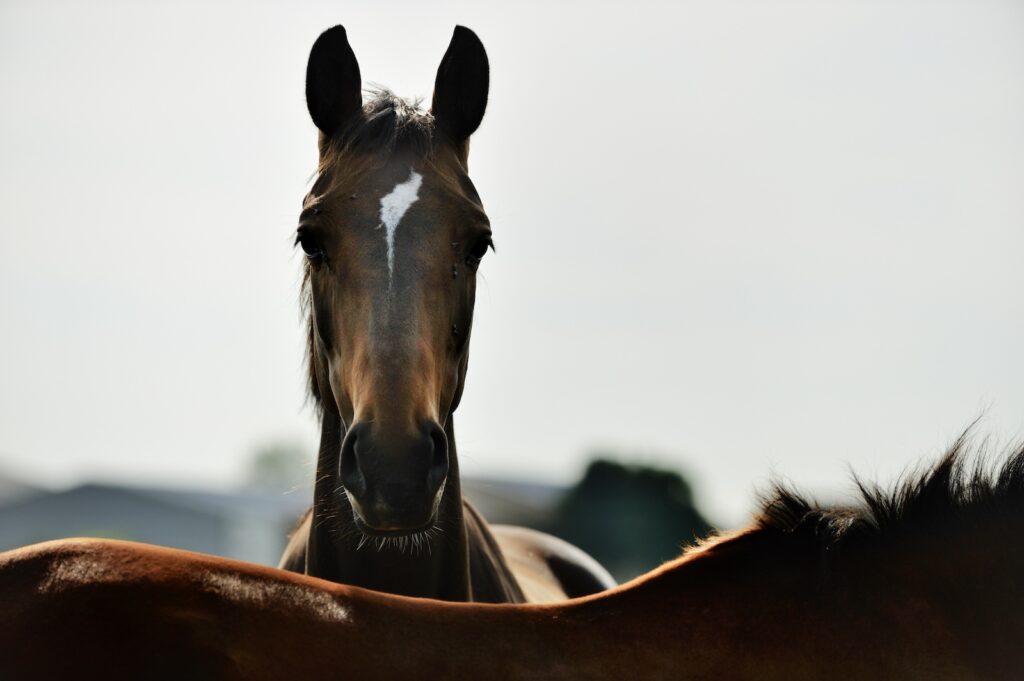
Horses suffer horrific, sometimes life-ending injuries due to racing. These include broken necks and backs, heart attacks, bleeding lungs, and spinal paralysis, to name a few. Although some are survivable, owners and trainers of horses may kill them anyway if their earning potential is impacted by injury.
Animal Aid operates Horse Death Watch – the only publicly available record that names every known horse killed due to injuries sustained on British racecourses. Since 2007, more than 3,000 horses have been killed – not including the unknown number of horses killed in training or because they fail to make the grade.
Horses are the only animal whose regular public beatings are televised for entertainment. Currently, the British Horseracing Authority (BHA) allows horses to be whipped six times in a flat race and seven times in a jump race. These are arbitrary amounts, which are regularly exceeded with an average penalty of just a four-day suspension for the offending jockey.
Whipping a horse hurts them, it’s how jockeys bully a performance out of a horse who is already running for their life. It is inexcusable and is one standard practice that the BHA could end today if they had any intention of living up to their own claims of valuing horses’ welfare.
The life of a horse in the racing industry hurts at every stage – not just at the racecourse. Horses are naturally social animals, who when left to govern their own lives enjoy rich bonds, particularly between mother and child. Horses bred for racing, however, are separated from their mothers earlier than they would be naturally, with many sold at ‘weanling’ or ‘yearling’ sales.
Having lost her child, the mother, referred to as a ‘broodmare’ within the industry, will be impregnated again so that she can produce more offspring for sale. Her pregnancy is controlled down to when her foal is delivered by injecting hormones and other drugs and subjecting her to long periods of artificial light during winter months. Her body has been turned into a money-making machine for an industry that only wants to sell her children.
Male breeding horses, or stallions, live similarly bleak and isolated lives. Separated from other males, they can be made to impregnate three mares per day during the 6-month breeding season. They can also be subjected to long, cramped, and gruelling journeys to travel to mares who are in season in different hemispheres.
In 2021 the BBC aired a documentary called The Dark Side of Horse Racing, which featured Animal Aid undercover footage of horse slaughter in England. The documentary exposed the practice of slaughtering horses who had very recently raced and earned their owners and trainers thousands of pounds at ‘prestigious’ events. The appalling scenes of horses being so quickly sent to slaughter prompted the British Horseracing Authority (BHA) to declare that no horse who had raced in Great Britain would enter the food chain again.
This is a cleverly worded statement – as it excludes the many horses who the industry is still responsible for. These include horses who have raced in different countries, never raced at all, or been used for breeding, for example. Regardless, hundreds of horses with racing industry passports are still sent to slaughter each year.
A 2024 RTÉ documentary also revealed horrific abuse and fraudulent practices at Ireland’s only licensed horse slaughter facility, Shannonside Ltd. This slaughterhouse has now been suspended, resulting in huge numbers of horses being exported before they are slaughtered – adding more suffering to their already unimaginable pain.
The Cheltenham and Aintree Festivals are regarded by racing fans as two of the most prestigious in the calendar, they are also the most dangerous. Animal Aid monitors and records racing death tolls in Race Horse Death Watch, where you can see the latest mortality rates by course. Cheltenham holds the record for the most horses killed in British racing in a single day, and Aintree’s Grant National is celebrated as the most dangerous horse race in the world. Injury and death are at the heart of what the industry is selling, and we campaign to end it every day, not just during the ‘big festivals’.
Defenders of horse racing often cite the following myths in order to justify the sick spectacle of forcing horses to race.
“If the horses didn’t like it, they wouldn’t carry on running after their jockeys fall off”
Horses are herd animals. They feel safer when part of a group, especially in the noisy, often unfamiliar race day environment.
“The horses enjoy the challenge”
They are not equal to the challenge. The modern industry breeds horses to be lighter-boned and nimble for speed, which increases the risk of fractures and breaks, particularly in jump races like the Grand National.
“The horses are treated like kings”
It is still a regular practice to kill a horse in the racing industry when they are no longer considered useful – something that has not happened to a King of England since the 17th century.
“Horses in the wild die too – death is natural”
There is nothing natural about whipping highly inbred horses to force them to run beyond their physical limit and jump a series of life-threatening obstacles.
Around 13,000 foals are born each year in the British and Irish racing industries. Many of these will never even see a racecourse, let alone win a race. This creates a huge ‘surplus’ of horses who are unwanted by the industry and unprovided for.
For horses who don’t make their owners and trainers big cash prizes, their futures are vulnerable. Horses are valued for the profits that can be made for humans, not for their inherent worth as sentient beings. The industry allocates roughly £135 per horse leaving racing – this would probably cover a few weeks of hay, if that. Many horses don’t ever see a penny of this, as the money is put into projects and schemes instead of directly helping horses.
This lack of aftercare means they are bought and sold at auctions like possessions, often entering into a downward spiral of neglect where they are sold from person to person as their ‘cash value’ decreases. They are paraded at auctions, waiting to see if anyone will bid for them, their welfare often spiralling until they are shadows of the ‘kingly’ image the industry would have you believe. Often, their lives are filled with mistreatment, further exploitation and ultimate abandonment.
Behind the statistics and industry’s glossy PR campaigns, are thousands of individuals who deserve better; who were forced to race for their lives and lost their lives in the process. Horses deserve to live free from fear and exploitation because their value does not depend on prize money.
The horse racing industry depends on one thing: you. If every single member of the public refused to bet on – or attend – horse racing, the industry would cease to exist.
The horses have no choice about their involvement in this barbaric excuse for a ‘sport’, but you do.
Take action for horses
There's nothing entertaining about exploiting animals. Take action today for a kinder tomorrow.