
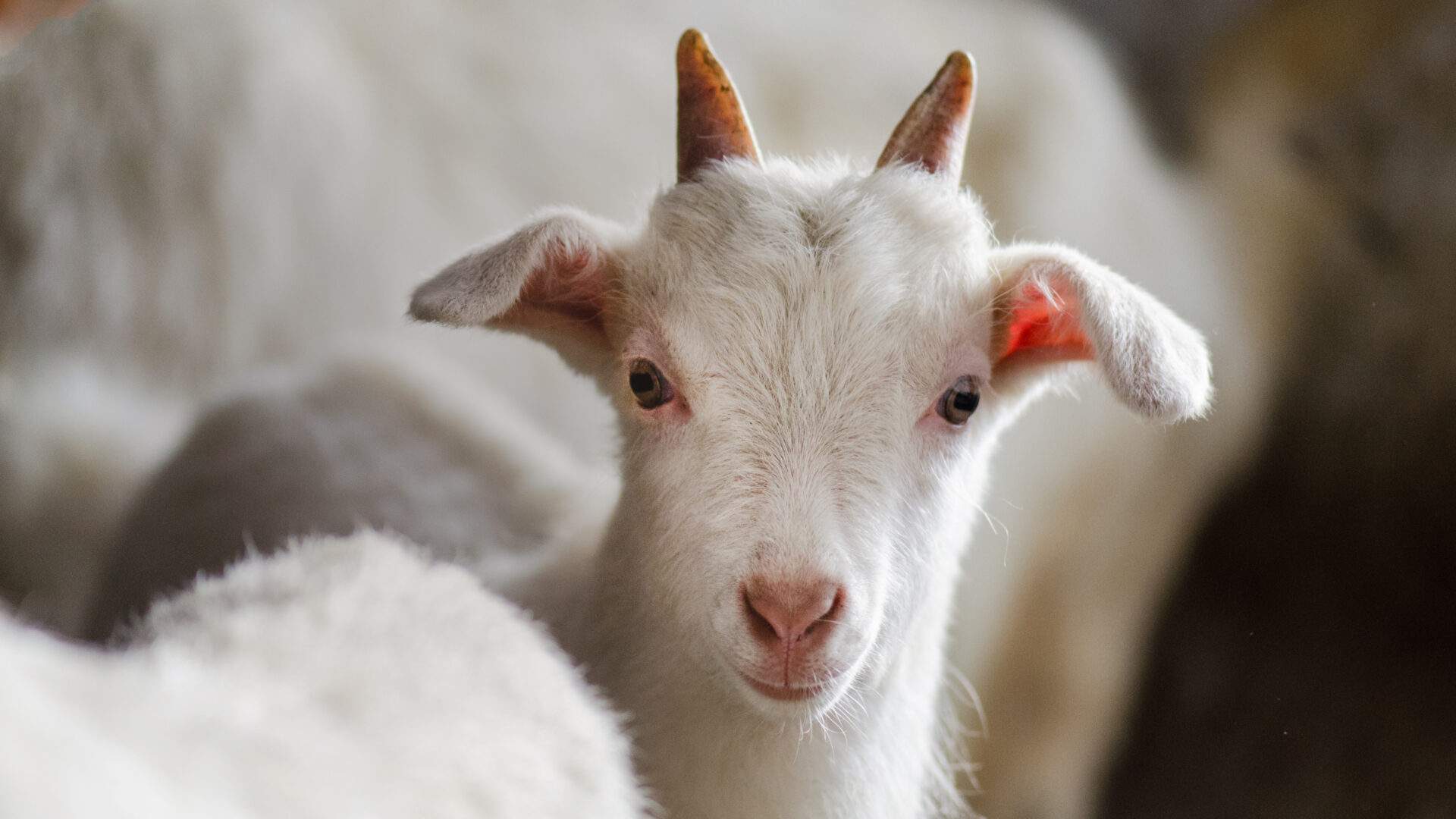
Goats are curious and agile creatures who will form close bonds with humans if given the chance, just like cats and dogs. Different breeds of goats have adapted to all sorts of terrains, from the forests of Turkey to the high altitudes of North America. Sadly, farmed goats are valued not for their personalities and skills but as commodities.
There are around 100,000 farmed goats in the UK, 40,000 of whom are exploited for their milk. Many people think that the milk, cheese and meat from goats is a specialist market but demand is increasing, especially as consumers look for so-called healthier alternatives to cows’ milk. But farming goats is no less cruel than other forms of animal farming.
Photograph by Come Closer Project / We Animals
Like dairy cows, goats must be pregnant in order to produce milk and, like all farmed animals used for breeding, their natural reproductive systems are manipulated by modern medicine. Hormone implants force young female goats to come into ‘season’ sooner than nature intended, so that they get pregnant sooner and start producing milk. Some females are impregnated by a ‘stud’ billy goat but an increasing number are being artificially inseminated (AI), which the industry boasts about for increasing conception rates. But the process of AI is always distressing to animals, forcing goats to stand on their front legs while farmers deposit sperm into their vagina.
To meet growing demand, a female goat will endure a constant cycle of pregnancy, birth, separation from her kid, and milking – just like dairy cows. This puts an enormous burden on her body and her health, leading to painfully swollen udders and infections like mastitis. At worst, goats are unable to walk or stand properly – at this point she’ll likely be killed for being commercially inconvenient.
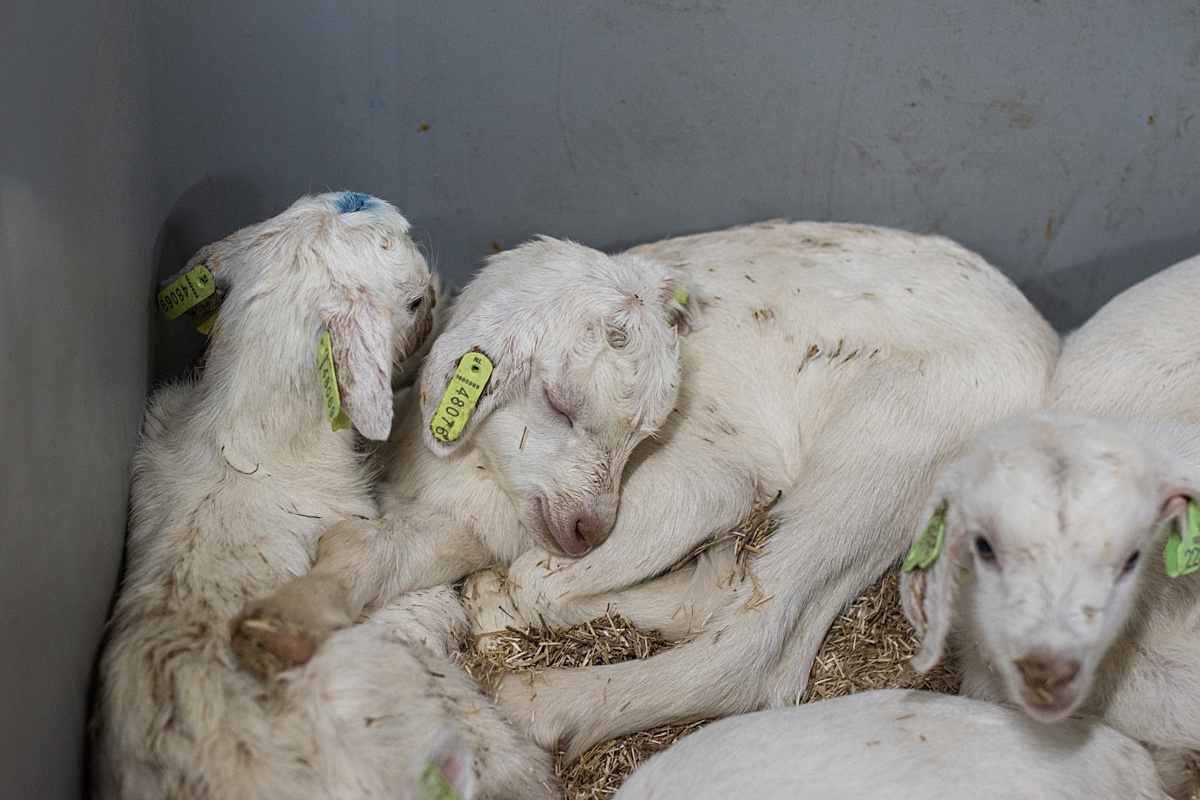
Goats form close bonds with their young (known as ‘kids’) and the pair would stay together for life in natural conditions. In fact, goats’ maternal instincts are so strong that they’ve been known to foster orphaned kids, lambs and calves! But on modern goat farms, this bond is immediately destroyed with kids being removed from their mothers shortly after birth, so that the mother’s milk can be taken for humans instead.
While female kids will likely join the milking herd, to endure the same cycle as her mother, male kids (known as ‘billy goats’) are useless to the dairy industry because they cannot produce milk. Aside from the very few who may be selected for breeding, tens of thousands will be killed shortly after birth.
Killing very young goats, simply because they were born male, is a carbon copy of ‘dairy cow’ industry whereby tens of thousands of calves are slaughtered for the same reason. Some UK companies are trying to rebrand this cruelty like the micro-tannery who remove the skins of these unwanted male goats, incorrectly claiming that leather is a “natural” by-product. There have also been attempts to promote meat from baby goats, replacing lamb as the “new family favourite” but failing to acknowledge that suffering is just as inherent in sheep farming as it is in goat farming.
The size of goat farms vary from a few hundred to several thousand individuals, and almost all will be permanently confined indoors. In natural conditions, goats are agile and inquisitive, and like to explore, climb, and jump – hence why they are so well adapted to tough, mountainous terrain! But on UK farms, they are denied all these instincts.
As demand grows, the industry will become increasingly intensive just like we’ve seen with cows, pigs and chickens. This means more and more goats being kept in ‘zero grazing systems’ (housed all year round) with no access to fresh air, sunlight, or pasture. The industry claims that this is better for animals, because goats are not adapted to British weather – their feet, for example, are best suited to rocky terrain and not soggy, wet fields – but this ignores the stress, boredom, and risk of disease that comes with boring, cramped, and often filthy indoor housing.
The government admits that “when goats are ill, they soon lose the will to live” and yet farmed goats are vulnerable to several serious diseases. These include a fatal brain disease known as ‘scrapie’ (related to ‘mad cow disease’), anthrax, bluetongue, and foot and mouth. When housed indoors – which most goats are – parasitic diseases are common due to conditions and can affect kids more during the stressful separation from their mothers, leading to diarrhoea and dehydration.
When stressed, all animals’ immune systems are compromised due to changes in chemicals in the body. This makes it harder to ward off infections, especially for farmed animals who are housed in poorly ventilated sheds in close proximity to other similarly stressed individuals. The only ‘treatment’ for goats who are suffering, or suspected to be suffering, from these diseases is to be culled.
In natural conditions, goats can live between 15-18 years but when farmed, this is reduced to just 6 years of age. For breeding females, this is when their milk yield reduces and they are no longer a ‘profitable commodity’. Goats destined for meat production will be slaughtered between 12-20 weeks of age, or as soon as they reach the most profitable weight.
Most goats will be stunned with electric tongs placed on either side of the animal’s head. Another method is the penetrative captive bolt, which is shot deep into the goat’s skull. The aim is to render the animal unconscious (and thus unable to feel pain) but the effectiveness of both methods is precarious: electrical stunning depends on the current used, how long the tongs are applied and where they are applied, while the bolt gun can take several, excruciatingly painful attempts. Crucially, even if stunning is ineffective in only a small number of cases, this is still tens of thousands of animals being slaughtered whilst alive and conscious. Goats are then shackled by the hind leg, hoisted into the air and ‘bled out’.
UK law states that all animals must be stunned before slaughter. However, there are exceptions, such as non-stun slaughter for religious purposes. In 2022, 25% of goats slaughtered were not stunned prior to killing making them the most commonly non-stunned species followed by sheep (23%).
Compared to cows, farming goats for their milk is relatively small with 40,000 ‘dairy goats’ compared to 1.8 million ‘dairy cows’. Because of this, there is much less attention paid to their suffering. Many people believe – thanks to misleading propaganda from the industry – that goats’ milk is a healthier, kinder alternative to cow’s milk but this is false.
Goats are also frequently likened to sheep, with less research carried out on goats’ needs specifically. For example, mutilations like castration and ‘disbudding’ (where a hot iron is used to burn skin tissue and prevent horns from growing) are carried out when animals are just a few days old, but the long-term effects on kids – compared to lambs – has been studied much less. Undoubtedly causing a similar level of pain, guidelines suggests that pain relief should be used but this is not a legal requirement. Because anaesthetic costs money, it is always more profitable for the farmer to mutilate animals without it.

Take action for goats
Killing an animal can never be considered humane because animals' lives are as important to them as ours are to us. Take action today for a kinder tomorrow.